

Winter Soldiers Expose Chilling Lies of the Bush Regime
By Malcolm Shore, March 24, 2008
On the one hand, there is the Iraq you read about in the New York Times.
It is a volatile nation, where U.S. troops struggle mightily to keep Sunnis and Shiites from blowing each other up; where a weak and unreliable national government undermines American efforts to export democracy, requiring the military to stay longer than it would like to; where U.S. soldiers are paying the price because their Commander-in-Chief made the strategic blunder of underestimating the enemy. In this Iraq, the stresses of combat yield the occasional excess-such as the torture of prisoners at Abu Ghraib, or the massacre of unarmed civilians by U.S. Marines at Haditha. But certainly, there is no pattern of war crimes carried out against the Iraqi people. The Iraqi people, in fact, only rarely exist, except as perpetrators of violence against themselves.
And then, there is the real Iraq”
It is the scene of premeditated serial crimes against humanity carried out by the U.S. military for the last five years, in darkness and broad daylight alike. It is a place where death, degradation, and destruction occur by definition at the hands of the U.S. military. It is a place where Iraqi people live, and die, in their millions, while still more millions have been made homeless, as a result of the U.S. war and occupation.
Last weekend’s Winter Soldier hearings marked a rare instance in which the real Iraq-or at least a substantial portion of it- was displayed before the American population and media, if only they dare to listen and observe.
In Silver Spring, Maryland, in the shadow of the world’s biggest war criminals, hundreds of disillusioned veterans gathered, and more than 50 testified, about the daily nightmare they unleashed upon the people of Iraq and Afghanistan. Together with a few Iraqi citizens who testified in person or by video, they called for an immediate end to the wars and occupations in those countries. And into the historical record they entered frank, detailed accounts of atrocities committed over and over again against the civilians of Iraq and Afghanistan by the U.S. military, which, as was made crystal clear by the soldiers” testimony, views these civilians as literally subhuman.
“We are told we are fighting terrorists,” said Michael Prysner, during his testimony. “The real terrorist was me, and the real terrorism is this occupation.”
By way of understatement, this outlook is not exactly in line with the mainstream media’s depiction of the Iraq war and occupation. Which is to say, of course, that Prysner’s perspective was vindicated by overwhelming evidence presented during the four days of testimony. Taken cumulatively, the Winter Soldier hearings left observers with a collage of images and sounds capturing the ruthless, murderous cruelty of the U.S. presence in Iraq: A mother, father, and two young children murdered at a checkpoint. The commanding officer’s conclusion: “If these fucking hajis would learn how to drive, this shit wouldn’t happen.” A sick detainee at Abu Ghraib shackled and thrown face down by his captors, who mused, “You can’t spell abuse without “Abu.”” One home raid after another after another, in the dead of night, with doors kicked in, men, women, and children zip-tied , and men disappeared with sandbags over their heads. Marines disguising feces and chemical poisons as food, and giving it to Iraqi children along the roadside. Soccer fields turned into mass graves housing hundreds of dead bodies. Soldiers proudly displaying severed heads of dead Iraqis, proclaiming, “We really fucked him up, didn’t we?” A diabetic detainee pepper sprayed, denied insulin, and incarcerated in the hot sun, leading to his death. The entire city of Fallujah declared a free-fire zone, resulting in at least thousands of Iraqi casualties.
 This, of course, is only scratching the surface of the atrocities exposed this past weekend, and that fact is both an indictment of the comprehensive brutality of the Iraq and Afghanistan wars and a testament to the significance of the Winter Soldier event. Clearly, it is beyond the scope of this article to give a detailed account of even most, let alone all, of the soldiers” testimony. But among those which stood out, and which are particularly worthy of brief summary, are the following:
*Chris Arendt’s strikingly youthful appearance was made all the more chilling when he referred to himself as a former “concentration camp guard” at Guantanamo. With disgust, Arendt recalled the dehumanizing absurdity of practicing to shackle detainees, in preparation for the “big game” of shackling actual detainees. He said , to applause from the audience, that he considered imprisoning human beings for five years away from their friends and families, without ever explaining why, to be torture in and of itself. “If that wasn’t enough,” Arendt said, “there were other methods to make sure we got around to torturing people.”
Arendt testified that detainees were kept in rooms 10 to 20 degrees in temperature, blasted with loud music, and shackled to the floor by their hands and feet. Arendt also described how detainees viewed as unruly would be pepper sprayed and forcibly removed from their cells. “These are all on tape,” Arendt noted. “The government makes sure all of these are on tape.” As he began to describe a prisoner who was subjected to such a procedure, he seemed to abruptly stop his testimony, and it seemed unclear exactly why-if he had simply run out of time, if he was too emotional to continue, or if another factor was at play.
*Scott Ewing, who served for three years as a cavalry scout in the U.S. army, described his unit’s “block-by-block” raid of the entire city of Talafar in September of 2005. Ewing said tactics were particularly brutal in the Sarai neighborhood of the city, which the U.S. military had identified as an insurgent stronghold. “We were told to search aggressively to teach the residents a lesson not to harbor terrorists,” Ewing testified. The result of those orders was doors kicked in, homes ransacked-and nothing found in the way of weapons. The Army then moved northward, and continued to terrorize innocent Iraqis.
Ewing described one incident in which the military rounded up every male of military age and detained about 500 Iraqis in a barbed-wire enclosure as their families watched across the street. A “masked man,” as Ewing described him, then walked the line of detained Iraqis and gave either a thumbs-up or thumbs-down. In the end, 50 men were zip tied and taken away, with the crimes they were accused of written on their hands. Ewing said he had no idea what happened next to these 50 men . “It’s hard for me to believe,” Ewing said, “that the Iraqis who witnessed this could take seriously our version of justice and democracy.”
Ewing concluded his speech by noting, ironically, that “The only war our country has really waged well is a propaganda war on its own people.”
*Former Sergeant Kristopher Goldsmith’s Sunday testimony was some of the heaviest of the weekend, because of his description of the tremendous personal transformation he underwent through witnessing and participating in crimes against humanity.
Goldsmith recalled seeing the smoke from the Twin Towers on 9/11, and how-as a teenager- he stood in a pizza place the next day and said that the entire Middle East should be decimated with nuclear weapons. “I joined the Army to kill people,” Goldsmith said bluntly.
At the age of 19, Goldsmith was deployed to Sadr City. “After going to Iraq,” he said, “I quickly learned it wasn’t at all how I thought it was going to be.” Goldsmith showed video footage of Iraqis examining the bloodied, mutilated, and tortured corpses of their fellow citizens. He noted that U.S. soldiers would often send photos and videos of dead Iraqis home to family members to brag about their kills. Today, Goldsmith said, friends sometimes ask him if he wants to go see horror movies such as Saw IV. “I tell them no, this is what I see when I watch those movies,” Goldsmith said. “And I can’t bear to be reminded of that.”
In addition to the murder of Iraqi people, Goldsmith pointed to other crimes committed against the people of Iraq. He noted the nighttime curfew imposed on the residents of Sadr City by U.S. soldiers, and pointed out that because of Sadr City’s intense heat, the affect of this curfew was to hold an entire city hostage. “Essentially, during the summer months, Sadr City was a prison,” Goldsmith said. “3.2 million Sadr City residents were prisoners of war.”
Goldsmith also said he had, on more than one occasion, witnessed U.S. soldiers deny pregnant women access to hospitals.
After returning to the U.S. from Iraq, Goldsmith was so disturbed by what he had seen and done that he started drinking heavily. Then, when Bush announced the troop surge last January, Goldsmith was ordered back to Iraq. On Memorial Day of 2007, the day before he was to deploy, Goldsmith attempted to commit suicide. He was ultimately given a discharge that notes the suicide attempt as “misconduct.”
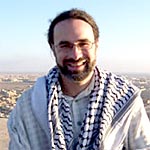 As he ended his testimony, Goldsmith addressed his commanding offers. “I have one message to you, and that is something that is internationally understood around the world: peace,” Goldsmith said, flashing the peace sign. While that may understandably seem to many to be a relatively muted sign of protest, one has to remember that this is the same man who, less than seven years earlier, was arguing that every resident of the Middle East should be wiped out.
*The testimony of Dahr Jamail, one of the few truly heroic and courageous independent journalists who has risked his life to tell the truth about the Iraq War, was especially gripping and infuriating as he talked about the mass murder of civilians in Fallujah in 2004. Jamail noted that one of the first things he observed upon arrival to Fallujah in April 2004 was bullet holes in ambulances; targeting doctors and ambulance drivers, besides obviously being morally reprehensible, is illegal under international law. Doctors Jamail spoke with at Fallujah General hospital told him that 736 people were killed in Fallujah, the vast majority of them civilians.
But even the April 2004 massacre paled in comparison to what happened in the city in November of that year, shortly after Bush was re-elected. During “Operation Phantom Fury”, the entire city was declared a free-fire zone, and Jamail said American forces slaughtered about 5000 Iraqis; again, the overwhelming majority were civilians. He added that the Pentagon estimated 30 to 50 thousand civilians were inside Fallujah when the U.S. siege began. Jamail noted that, during the siege, the U.S. used weapons such as cluster bombs and white phosphorous, which are also banned under international law.
 *Jason Lemieux, a former Marine who served 3 deployments in Iraq, testified about how wanton slaughter of the Iraqi people was sanctioned by his commanding officers from the moment the invasion of the country began. “By the time we got to Baghdad,” Lemieux said, “I was explicitly told by my command that I could shoot anyone who came closer to me than I felt comfortable with, if that person did not immediately move when I told them to do so. Keeping in mind that I don’t speak Arabic.” During an April 2004 battle in Anbar province, Lemieux said, his commanding officer declared any Iraqi on the streets to be an “enemy combatant.” That officer later told Lemieux’s unit that 100 of the “enemy” had been killed. “To the best of my knowledge, that includes all of the people who were shot for simply walking down the street in their own city,” Lemieux said.
Eventually, Lemieux said, the Rules of Engagement were altered to the point where any Iraqi carrying a shovel, talking on a cell phone on a rooftop, walking the streets after curfew, or using binoculars was considered fair game for U.S. soldiers to shoot. In one incident, Lemieux said he witnessed a Marine firing indiscriminately at cars that were hundreds of meters away from the scene of a roadside bombing.
The Testimony: Systematic Crimes Against Humanity Exposed
*Former Marine Jon Turner began his testimony by ripping his war medals off his chest and throwing them on the floor. He spent the next fifteen minutes demonstrating what motivated him to do so. Turner brought home the horror of the Iraq war by showing a video of his executive officer clearly bragging, “I think I just killed half the population of Northern Ramadi. Fuck the red tape, it doesn’t fucking matter.” He showed pictures of the splattered brains of an Iraqi who was murdered inside his car.
Turner said his first confirmed kill came on April 18, 2006, when he shot a civilian in front of his friend and his father as the man returned home. Turner said his commander congratulated him, as was standard practice when a soldier claimed his first Iraqi life. Turner showed a picture of his third confirmed kill, a man riding a bicycle.
Turner also joined many other soldiers in recounting 3 AM home raids that terrified the Iraqi populations. After kicking in families” doors, the soldiers would brutalize them. “If the men of the house were giving us problems,” Turner testified, “we”d go ahead and take care of them anyway we felt necessary, whether it would be choking them, or slamming their heads against the wall.”
Turner ended with an emotional apology to the people of Iraq. “Until people hear what is going on with this war,” he said, “it will continue to happen and people will continue to die.”
*Finally, there was war and occupation as told through the eyes of an Iraqi teenager named Zamzam. A video interview with the 16-year-old girl was played during Saturday testimony. Zamzam described how she fled her country to Damascus after her family was terrorized during a 2006 raid of their Baghdad home. Zamzam said she was sleeping in preparation for a mid-term examination the next morning, with her sister and mother in the same room, when they were jolted awake by the sound of their front door being bombed open. Walking to the kitchen, she saw six soldiers. Terrified, she tried to hide in her room with her sisters, but soldiers pushed the door open, and forced her to sit on broken glass. Later, she watched as her brother-in-law was zip tied and taken downstairs.
One of the most poignant moments of Zamzam’s testimony came when she described a conversation she had with one of the American soldiers. “Couldn’t you just knock the door?” she recalled asking him. “I would open it.” Zamzam said the soldier told her that, because she was just a young kid, she couldn’t understand.
“What if I had done something like this to your house in America?” Zamzam asked the soldier. But he just kept repeating that she was too young to understand.
“At that point,” said Zamzam, “I just realized he’s the kid. He could not understand. He took the instructions from the captain.”
These days, Zamzam is overcome with despair, living in an empty Damascus apartment with no friends, no job prospects, and no school. “I’m without a future,” Zamzam said. “All I see in the future is darkness.”
Breaking Through Lies And Illusions
The angry, emotional, and vivid testimony provided by Zamzam, by Dahr Jamail, and by dozens of U.S. veterans last weekend preserves a horrific truth at a time when the government and media are doing their best to erase that truth. To understand the importance of the Winter Soldier event, one must only juxtapose this testimony against the March 19 issue of the New York Times, which looked at the five-year-anniversary of the start of the Iraq war. The articles in the front-section of that edition generally focused on the general chaos and Civil War within Iraq, or the exorbitant financial cost of the war and occupation. Needless to say, the concept-or even the phrase-“war crimes” was not used once in any of the articles. In fact, if a reader from another planet were to suddenly land on earth and pick up the March 19 New York Times, he or she might well think that the United States had gone into Iraq to stop massive violence, rather than carrying it out.
To give just one example, Max Becherer’s piece, “The Lost, In Mind’s Eye,” bemoans the loss of Lance Cpl. Greg Rund, a Marine killed in Fallujah on December 11, 2004, without any mention of what Rund and his fellow soldiers were doing in Fallujah at the time; namely, wantonly massacring thousands of Iraqis. Only Stephen Farrell’s piece, “Dark Hints Amid the Joy,” provides some sense of an ongoing American occupation, but even there the description of America’s role in Iraq is subtle and there is no discussion of the systematic atrocities its soldiers committed against the Iraqi people.
Not surprisingly, the New York Times has thus far devoted zero coverage to the Winter Soldier hearings.
Will Winter Soldier Be Transformative?
Clearly, then, Winter Soldier: Iraq and Afghanistan is extremely significant, because it goes a long way towards shattering the silence and illusions about the Iraq and Afghanistan wars that are harbored by far too many people in the U.S. But significance is not the same as impact. This begs the question likely on the mind of everyone in the anti-war movement: How big an influence will Winter Soldier have on the level of resistance to the Iraq and Afghanistan wars, and to the government waging them? And what will be the nature of that influence?
The first place people often look to evaluate the impact an event will have is to the major media. Well, thus far, with a couple of notable exceptions, the media has primarily blacked out Winter Soldier, which is all the more astonishing considering that the event was closed off to everyone but media (and veterans). As of March 17, there was literally no coverage of the event in the New York Times, the LA Times, the San Francisco Chronicle, CNN.com, the USA Today, or the Associated Press. Even Fox News, which often covers anti-war events when virtually no one else does, in order to smear the organizers of these events as traitors, ignored Winter Soldier.
 Among the rare exceptions to the rule of media silence on Winter Soldier were the Washington Post, the Nation, and Time Magazine, all of which produced articles that featured-as at least a major theme of their stories-the fact that soldiers were testifying about atrocities committed by the U.S. military.
Then again, the media also largely blacked out the original Winter Soldier event in 1971, as Vietnam Veterans Against the War (VVAW) member Barry Romo noted during his opening remarks at the latest Winter Soldier. And yet, the first Winter Soldier event nonetheless exerted a big impact on the anti-war movement, by bringing together anti-war veterans from across the country to network with one another and further galvanize the GI resistance movement.
During a public gathering to watch the testimony in New York City on Friday, a member of the City College chapter of the Campus Antiwar Network (CAN) described the chain of events set in motion by Winter Soldier: Hundreds of additional veterans joined VVAW. Spin-off hearings where veterans testified about the atrocities they had witness and committed sprung up throughout the country. Congress eventually called for an investigation into war crimes, and the Vietnam Veterans officially presented Congress with demands to end the war and initiate formal war crimes inquiries.
More than 50 people attended that gathering the Friday evening at Judson Memorial Church, and the audience included many college-aged youth, and also several middle-aged, white-haired folk. Watching the live streaming of Winter Soldier testimony proved impossible, because the IVAW Web site was continuously overloaded, which one CAN member attributed to the fact that tens of thousands of people were accessing the site across the country in order to watch the hearings. Other New York City gatherings to watch Winter Soldier, which were posted on the IVAW Web site, were much smaller: About ten people showed up on a Saturday afternoon in Chelsea, while only 3 turned out in midtown Manhattan the next day; it was not clear how well, or how far in advance, word had gotten out about these events. At these different New York City gatherings, many people said that hearing, from the mouths of U.S. soldiers themselves, about the atrocities they committed was very powerful, and could contribute greatly to building sentiment against the war. Others were unsure or skeptical, wary that only a relatively small portion of Americans would see the testimony.
Cheryl Wertz, of Peace Action New York State, said it was difficult to predict the impact of Winter Soldier so soon after the hearings ended, noting that the affects of the first Winter Soldier were not felt immediately. “Whatever real impact Winter Soldier will have,” said, “is not gonna be felt this weekend.”
Building On, and Broadening, Winter Soldier: Iraq and Afghanistan
If, indeed, time will tell how much influence Winter Soldier will have in generating active resistance to the Iraq and Afghanistan Wars, the jury may also be out on the type of influence the event will exercise on the anti-war movement, and on society more broadly.
Here, some weaknesses of Winter Soldier: Iraq and Afghanistan, including in comparison to the original Winter Soldier event, must be acknowledged. Whether, and how, these weaknesses are addressed may go a long way in determining the ultimate impact of the 2008 Winter Soldier.
The first, and most glaring, shortcoming of Winter Soldier is that while the veterans clearly denounced the wars and occupations in Iraq and Afghanistan, many nonetheless expressed being proud of their service in the military, or at least did not feel compelled to speak out against it. Many of the veterans who testified seemed to be of the opinion that their service in the Armed Forces could be separated from the acts they committed during that service. Some of the panelists even addressed ways that veterans who opposed the wars but still supported the military could get involved in Iraq Veterans Against the War (IVAW).
A quick review of U.S. military history shows that the Iraq and Afghanistan wars are anything but an aberration. To give just a few examples: In the U.S.-Filipino war, Americans troops routinely murdered and tortured civilians. In World War II, the U.S. military became the only entity in the history of the world to use nuclear weapons, dropping two atomic bombs against civilians, killing hundreds of thousands of civilians at the time and hundreds of thousands more in years to come, due to radiation exposure. During the Vietnam War, American troops decapitated, raped, disemboweled, and tortured men, women, and children, and killed millions of Indochinese.
All this is to say that it is hardly an accident that the atrocities spoken about by Iraq and Afghanistan veterans occurred while these veterans were serving the United States military: these war crimes were a reflection of the role of that military in the world, presently and historically.
In addition to the moral problems posed by expressing pride in serving an institution that commits one atrocity after another, there is also the simple fact that the more inspiring and captivating movements of change tend to be the more comprehensive: Resistance that limits itself to speaking out against individual wars and occupations-as critical as that exposure is-cannot be as galvanizing a force as resistance that condemns the entire package of U.S. militarism and imperialism that has yielded these wars and occupations.
Some of the veterans” testimony did, in fact, suggest a broader sort of defiance. For example, as noted, Jon Turner began his testimony by throwing his medals to the floor, announcing: “There’s an expression, “Once a Marine, always a Marine.” But there’s also an expression, “Eat the apple, f the core.” I don’t work for you no more!”
 Michael Prysner’s testimony was perhaps the angriest of the entire weekend. ” Racism within the military has long been an important tool to justify the destruction and occupation of another country,” Prysner said. “It has long been used to justify the killing, subjugation, and torture of another people.” Prysner also connected the wars in Afghanistan and Iraq to a larger system of imperialism. “The ruling class, the billionaires who profit from human suffering care only about expanding their wealth, controlling the world economy,” he said. “Understand that their power lies only in their ability to convince us that war, oppression, and exploitation is in our interests.”
Prysner ended his presentation by declaring, “Our enemy is not 5000 miles away. They are right here at home. If we organize and fight with our sisters and brothers, we can stop this war, we can stop this government, and we can create a better world.”
Now, isn’t that a far more inspiring call to action than saying, “I oppose the occupation but I support the military”?
The second shortcoming of Winter Soldier is not primarily a weakness of the event itself, but rather a societal obstacle that needs to be overcome: the fact that, in contrast to the 1971 Winter Soldier, the 2008 event was not rooted in and anchored by a mass counter-culture movement. Those who have seen the film about the first Winter Soldier will note that many of the soldiers who testified sported long hair, and in any case, were dressed very casually, in contrast to the 2008 Winter Soldier, in which some testified in dress shirts and ties.
The point here is not to identify fashion faux-pas of the current crop of anti-war veterans. The point is part of the reason that the 1971 Winter Soldier ultimately had the impact that it did is because the event took place within a larger context of massive, society-wide, and broad-ranging defiance of government and authority. Huge sections of society, by that time, were demanding not only an end to the Vietnam War, but an end to the oppression of Black people, of economic exploitation in the United States and around the world. These movements of change helped give Winter Soldier a massive burst of momentum that, in turn, fueled greater opposition to the Vietnam war, but also the whole package of oppressive policies and actions of which that war was a part.
So, the question of how much impact Winter Soldier can have in the weeks and months to come is bound up with a larger question: Will the American people finally step forward to repudiate not only the Iraq and Afghanistan wars, but also the Bush Regime that launched them? Will these wars increasingly be come to seen not as isolated atrocities, but rather part of an entire package of war, torture, and repression in the name of empire? Will the spread of orange-the color of resistance to the Bush Regime-become to 2008 what long hair was to 1971? These questions are among those whose answers will ultimately determine how big of a ripple affect Winter Soldier has.
No matter what, last weekend’s hearings constitute an extremely important event, and one that provides a foundation for further resistance. Whether and how that foundation is built upon may depend, in large part, on whether we create an entire culture of resistance that both fuels, and draws inspiration from, the Winter Soldier hearings.