
July 29
AT FIRST LIGHT IN…DILLING, BEFORE HER CHILDREN WAKE UP, RAYAN
HAMMAD PICKS UP A WATERING CAN AND HEADS TOWARDS HER SMALL
HOME GARDEN filled with seedlings of okra and rocket. After a 2-year siege that led
to famine, Hammad’s garden, a jubraka, has become more than a safety net: It is a vital
source of food for her family and daily ritual that helps her endure the uncertainty of
war: “For me, simply entering the jubraka gives me a sense that life is still going on.
When I see the plants growing each day, I feel hope, as if they are telling us that we are
still capable of enduring….” Hunger levels have been particularly severe in…Dilling, S
Kordofan, which RSF and SPLM-N subjected to brutal siege warfare to try and drive out
SAF and its allies. As supplies disappeared from markets, and fields outside town have
become too dangerous to work, residents…turned to their jubraka for essential fresh
produce. Though home gardens are nothing new, the war elevated their importance as a
means of survival and social solidarity and exchange….Still, while the food produced
has become invaluable, their gardens alone have not been enough to stave off hunger,
especially as conflict makes it difficult to access seeds and farming tools…. “Today we
need real support,” Wahed Ahmed, forestry and agriculture specialist. “[Authorities
should be] providing seeds, protecting trees, helping displaced families establish new
jubraka so they can become self-reliant.” In S Cordovan…people have relied on their
home gardens for generations….crops contribute to food security while providing a
source of income, as surplus produce can be sold to help meet household needs. Ahmed
said the food harvested from kitchen gardens is diverse, including vegetables such as
rocket and pumpkin leaves; grains and seeds like sorghum and peanuts; fruit, including
guavas, lemons and pomegranates.
Hammad, 29, university graduate and women’s rights activist, said her family long
depended on their jubraka for food, especially since the quality of market produce is not
always good….their dependence increased as Kordofan, which sits between RSF’s
western stronghold in Darfur and SAF’s main territory in central and east Sudan became
the epicentre of the war…. Drone strikes and shelling made open-field farming
increasingly dangerous, while disruption to supply chains sent food prices soaring.
“What grows in front of your house became more important than anything that you
could buy from the market. That is when we realised the true value of the jubraka”.
A similar story was shared by Noray al-Din, 55, a widow supporting 5 children in
southeastern Sennar,…currently controlled by SAF but that faced brutal RSF offensives
earlier in the conflict. Al-Din said her family had a small jubraka before the war but
relied mostly on markets…. As food became harder to access, she expanded her garden
and began planting a much wider range of vegetables: “What grows in front of your
house became more important than anything you could buy from the market. That is
when we realised the true value of the jubraka”. Sammar Khater, 34, from Kernoi, a
remote area of N Darfur near the Chadian border, said her reliance on home gardening
grew after the town’s market was hit by drone attacks believed to have been carried out
by RSF….her family expanded their jubraka, planting okra, molokhia, rocket, pumpkin,
tomatoes, legumes….they also began exchanging any surplus with neighbours to obtain
other necessities. Musab Ibrahim, 29, a humanitarian volunteer worker from Dilling,
said exchange of crops between neighbours turned home gardens into communal places
where people gather and support one another: “It has become a space for social
solidarity”…it gives individuals and communities in Dilling hope amid the fear and
hunger created by RSF sieges. Hammad said gardening fosters communal solidarity,
reflecting a long-standing culture of cooperation that shaped how communities across
Sudan respond to hardship: “It is a space where family and neighbours come together,
share coffee and divide the harvest when the time comes. During the siege, we used to
give part of what we grew to families in need and to neighbours. The jubraka makes us
feel that life is still going on, despite the difficult times, there is still something we can
produce. When we see the crops growing green amid the news of war and displacement,
we feel a little hope.”
While entire communities benefit from home gardens, interviewees said women have
long been at the centre of tending them. They added that this role has expanded during
the war as many men have been displaced, killed, or drawn into fighting.
“Women became responsible for the jubraka from start to finish,” said Noray from
Sennar. “We plant, irrigate, fight pests, and harvest. Sometimes we spend long hours
working, but we are at peace because we know it will feed our children.” Dilling
resident Amina Adam…said her children chipped in to help care for their garden after her
husband left home because of the war. “The jubraka is like a member of the family – it
became a place where children gather and spend time,. Watching plants grow day by day
gives me the feeling that life is still possible.”
While the importance of kitchen gardens has grown immeasurably over the last three
years, interviewees said sustaining them in the middle of a war has become increasingly
difficult. Repeated displacement has forced many families to abandon their homes,
leaving large numbers of jubraka untended. Others have been damaged or destroyed by
shelling and drone strikes. Further challenges include limited fresh seeds – gardeners
depend on old stock from before the war that have a much smaller yield – and a lack of
water for irrigation. “Most of the seeds available have been stored for years because of
the war. Their productivity is low and prices are high, and many families have no
guarantee they will germinate….increased tree-cutting during the conflict by armed
groups and families needing firewood or supplementary income has undermined home
gardens. Trees traditionally planted around a jubraka provide shade and help soil retain
moisture. As they disappeared, the ground has become drier, temperatures within
gardens have risen, and pests have become more prevalent.
Economist Hytham Fathi warned against viewing home gardening as a complete
solution to the hunger crisis, saying they can only partially offset the economic collapse
caused by the war. Fathi described what has emerged as a survival economy formed in
the absence of the state, sustained by community effort and highly fragile. Without
institutional support, he warned, it risks becoming a form of managed collapse. Still, for
Noray in Sennar, the value of a jubraka extends far beyond the food it produces; “The
jubraka won’t solve all problems, but it helped us survive, provide food, and preserve
our dignity in very difficult conditions.” The New Humanitarian
UN REPORT LINKS BOEING 727s TO RSF, US MILITARY CONTRACTORS….
business network transported mercenaries, weapons and drones for RSF according to a
draft UN report to be published in Sept. The findings provide additional important
details about the role the aircraft played in supporting RSF,…accused of committing
genocide in Darfur. “The Panel received reliable information from 4 sources that the
aircraft transported RSF fighters and mercenaries, as well as military equipment,
including drones and weapons.” It cited 2 eyewitnesses in Nyala, RSF’s main military
and logistics hub in Darfur, and communications from 2 member states as sources. A
Reuters investigation published July 15 traced 3 aging Boeing aircraft operated by
companies linked to Steven Shaulis, former US Army Special Forces soldier and
longtime US govt contractor, from an airport in Chad to logistics hubs used by RSF in
Sudan, Libya and Somalia. …one of the planes had RSF fighters onboard when it was
destroyed in May 2025, but much remained a mystery about cargo. The news agency
found no evidence Shaulis or his companies had been sanctioned or accused of
wrongdoing by authorities. The UN report was compiled by Panel of Experts on the
Sudan, a group mandated by the Security Council to monitor an arms embargo imposed
on Darfur in 2004. The report said 3 727s, 1 sold in Brazil to a Shaulis-linked company
and 2 acquired from Michigan-based Kalitta Charters II, appeared in Chad 2024 and
operated out of N’Djamena. …no movement by any of the 3 planes had been logged
since they arrived in N’Djamena. It suspected the Boeings were taking “deliberate steps
to avoid detection while in flight.” Jan-July 2026 multiple Boeing 727s and some
Ilyushin II-76 transports landed in Nyala at night. Reuters tracked movement…from
N’Djamena to RSF hubs in Libya and Sudan using satellite imagery, cell phone data and
open-source video, but found no record of flights on trackers that monitor signals
aircraft broadcast while in the air. “RSF utilized N’Djamena-Nyala air corridor to
transport fighters, foreign mercenaries and military equipment, including drones and
weapons, into Darfur”. Shaulis and business partner Craig Munro are joint owners of
Contractor Airways, S African company that bought 2 of the 727s…. Al Mayadeen
NO SAFE OPTIONS FOR THOUSANDS SHELTERING IN KEY CITY AS RSF
ADVANCE. Thousands…poured into el-Obeid hoping to find shelter…found themselves
under threat again, amid warnings the paramilitary are preparing to descend on the
army-controlled city. UN IOM said it has become a key refuge for people escaping
ongoing violence in surrounding areas. Satellite imagery shows the main displacement
camp expanded significantly with…dozens of new arrivals each day:”Families have run
out of safe options to protect themselves,” Mohamed Refaat, IOM. “Many have been
displaced before and are again forced to leave behind their homes, livelihoods and
support networks.” UN and G7 foreign ministers issued warnings RSF may be
preparing to attack the city, raising fears that atrocities akin to…the massacre in el
Fasher could be repeated. Thousands were killed in mass executions after the
paramilitary overran SAF troops…in one of the worst atrocities since the war began.
Fears of similar reprisals…have grown for weeks and verified footage shows dozens of
heavily armed RSF troops in armoured trucks in Nyala, vowing to “liberate” the city.
RSF launched a record number of drone strikes in June…. Satellite images show that
despite the strikes, el-Obeid’s displacement camp continued to swell, with hundreds of
new tents…83,000 civilians fled fighting in other parts of the state….400,000 people are
facing food shortages, following sustained effort by RSF to cut off supply routes for
months, creating a “functional siege”…. Aid stations told BBC Verify flights carrying
aid arriving via the airport stopped. …food and water shortages have been exacerbated
by RSF drone strikes on infrastructure….footage last month showed a massive explosion
at a fuel station in the heart of the city, while satellite images show damage to power
stations and supply warehouses in the market district….”Every day we are seeing new
arrivals due to fighting…. It is not possible to get the exact number of people arriving on
a daily basis, but it would be about 80 or 100 households daily.” RSF fighters and
leaders repeatedly vowed to move on the city. Recent footage place fighters within 24
mi of the city. UN High Comm for Human Rights said many displaced people who
sought shelter in el-Obeid faced suspicion and hostility from locals over fears RSF
sympathisers are infiltrating. Sudanese military appears to be digging in and building a
defensive berm around the city….this appears to be defensive and aimed at keeping
attackers out. Nohad Eltayeb, Sr Research Asst at ACLED: “It is the critical juncture
connecting RSF-controlled western territories with military-held central and White
Nile….The joint EU/G7 warning of atrocities in el-Obeid urged “external actors” to
suspend “armed, logistical, or financial support to the parties to the conflict”. European
Parliament expressly named UAE as key backer of RSF. Alan Boswell, Crisis Group
Horn of Africa Group dir, suggested the flurry of early Western interventions may be
motivated by the failure to avert the el-Fasher massacre….”Many are trying to turn up
the volume on those warnings to prevent another round of mass atrocities in el-Obeid.
The key is if world leaders will put enough pressure.”
July 26
KHARTOUM (2025): SUDANESE FILMMAKERS TURN WAR INTO INTIMATE
PORTRAITS. Drawing from footage shot in Sudan and Nairobi, 4 filmmakers use
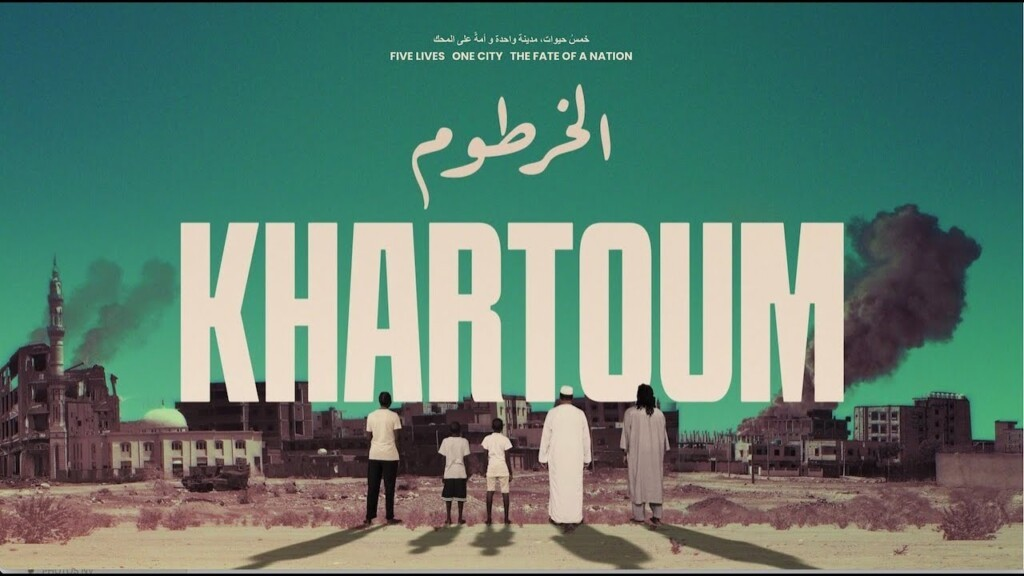
they chronicle war, displacement and resilience through deeply personal stories
unconventional, experimental methods to inject whimsy into a devastating reality.
Khartoum (2025) presents vignettes of 5 people finding a way forward after war breaks
out, irrevocably upending the lives they know. Rawia Alhag and Ibrahim “Snoopy”
Ahmad were selected by Sudan Film Factory and Native Voice Films…for short
cinematic stories about daily life in Sudan. Alhag’s pitch centred on best friends, Wilson
and Lokain, whom she noticed…just outside Omdurman. The 11 and 12-year-old boys
lived on the streets and collected plastic bottles for a meagre profit. Snoopy’s story
followed Majdi, a civil servant who questioned his integrity working for a military-led
govt and harboured a passion for racing pigeons. In collaboration with Timeea
Mohamed Ahmed and Anas Saeed and creative direction of Philip Cox, they began
work.
The outbreak of war…forced the team to reconceive what seemed a straightforward
project. They remained committed to telling the characters’ daily lives. “We had to
make sure someone actually tells the story of the people on the ground,” said Snoopy.
“The majority of the news was the bombing, the areas RSF was taking over, but not like
a personal perspective what people were going through – how they were eating, getting
money, surviving in these war zones, dealing with RSF personally and decide to leave.”
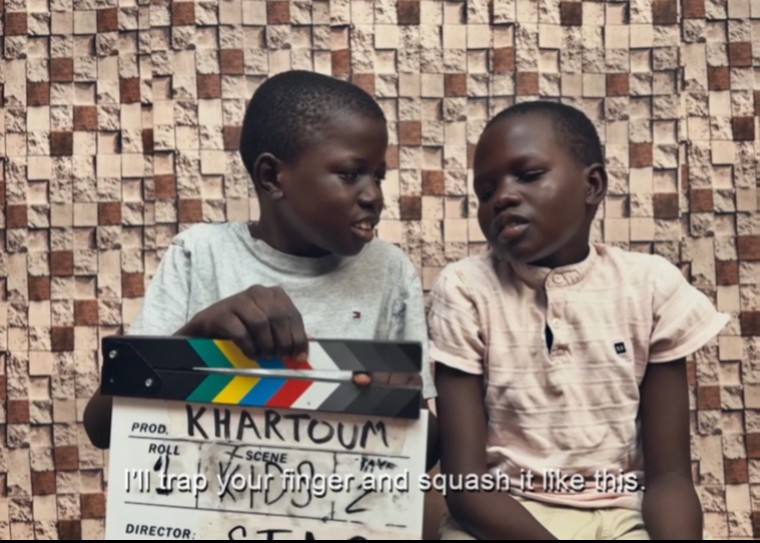
With Khartoum inaccessible, a green screen became their substitute landscape….Rawia
took the boys to the park before asking them to reflect on anything difficult. By
combining interviews, reenactments of good and difficult memories, animation, candid
dialogue, the production makes the characters’ dreams the most salient thing. Khartoum
is impactful for how it exposes racism and classism in the production process and on
screen. “There’s this under layer of racism in Sudan. You can see it clearly in Majdi and
Khadmallah. Majdi, lighter-skinned, upper-class guy works for the govt, and
Khadmallah, college graduate couldn’t find a job and ended up a tea vendor. Even the
characters held preconceptions about each other…because their different backgrounds
did not facilitate interaction in public. The characters are Wilson, Lokain and Majdi,
Khadmallah and Jawad. Khadmallah is a tea vendor from Nuba Mtns with a strong
intellect for maths. Jawad is a Resistance Committee volunteer with an affinity for his
motorcycle and outspoken about seeking purpose.
The directors intended everyone be on the same plane of power and respect. They lived
and cooked together and built mutual trust. Back in Khartoum, these people probably
would have had no reason to challenge inbuilt preconceptions about one another; but
here they momentarily become as close as father and son or boyfriend and girlfriend
despite where any of them started.
Snoopy paused on his favourite moment in the film when Wilson and Lokain pass an
older man a bottle….it subtly acknowledges the recurring cycle of bottle collecting. The
classism inherent in this scene, as well as the racism in others, are aspects “the general
audience doesn’t see clearly, that’s why we were always trying to push this.” Alhag
added that the military dictatorship under al-Bashir sought to Arabise and Islamise parts
of the population, for which the ICC issued warrants for war crimes, crimes against
humanity and genocide. That campaign of mass violence fed into the civilian-led 2019
revolution and al-Bashir’s deposition. The moment that stayed with Alhag was off
screen…filming young boys at a market in Omdurman. It was the 2nd time a group of
people passing got angry the directors were representing Sudan with darker-skinned
bodies and street kids thought of as dirty, uneducated, parentless, generally disrespected.
“People thought we shouldn’t film this because Sudan is supposed to be the clean
places, the lighter-skinned people. Lokain, Wilson even Khadmallah – they don’t
represent that.”
It starts with Khadmallah: “from a place where the earth and the trees sing. I’m a
Sudanese woman who dreams without fear.” Wilson and Lokain fixated on a lion “that
roams Khartoum, and we’re on its back.” Majdi wavered on an idea of himself as a
coward or a brave man. Jawad spoke his fear of being without a home: “I want to be
known, to have purpose, to be someone who is loved”…. each character had the chance
to play out their aspirations…through a magical tree growing in Nuba Mtns, an oversized
pigeon soaring over Khartoum, a fierce lion that outpaces surrounding violence and a
motorcycle that yearns solely for Hollywood. Dabanga
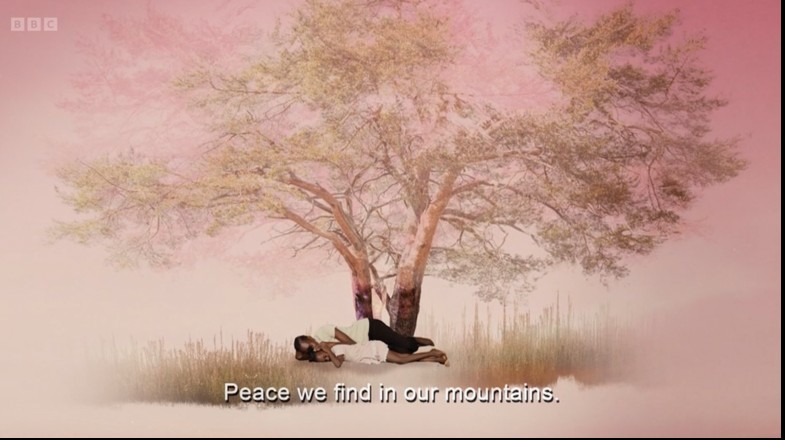
homeland in the Nuba Mtns
July 24
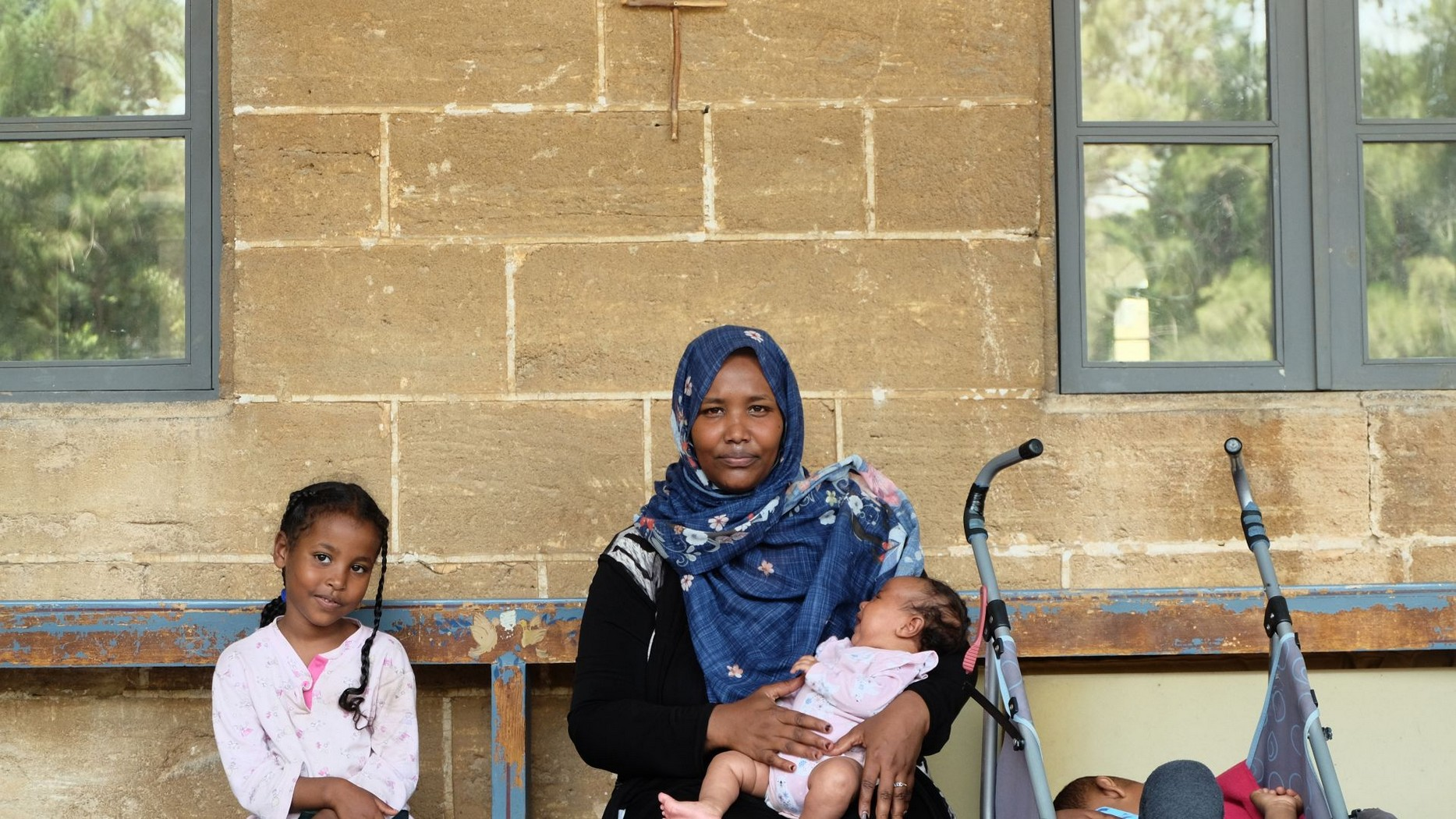
RUFAIDA, 28, SHIFTS HER 2 MONTH OLD SON FROM HER RIGHT ARM TO
THE LEFT. The afternoon heat hangs over the courtyard of St Joseph Church in Beirut.
Around her, damp clothes flutter from railings and plastic chairs, children weave
between piles of mattresses and laundry baskets. Their laughter occasionally echoes
through the church grounds before being drowned out by conversations and scrape of
chairs across stone floors. Rufaida barely takes her eyes off him. She looks exhausted.
Dark circles sit beneath her eyes, and she speaks in the weary cadence of someone
surviving on only a few hours’ sleep: “The baby is crying a lot. I don’t sleep. He wakes
everyone up, so I leave the dormitory and come walking outside so no one is disturbed.”
But despite all this “I am very happy. Every time I am stressed, I look at the baby and
he gives me some relief. I can forget about the war for a second.” Rufaida fled to
Lebanon from Sudan a year ago, sits alongside husband Mohammad. Soft-spoken and
reserved, he listens carefully as she speaks, his hands clasped together on his lap. They
share the makeshift shelter with 250 other displaced migrant workers, the majority
Sudanese, alongside…men, women and children from Bangladesh, Pakistan and S Asia.
Since renewed conflict between Hezbollah and Israel began, 1.5mn people have been
internally displaced in Lebanon, including…the large migrant worker community.
In Khartoum, fighting…destroyed her family home and killed her father. Her mother
died before the conflict began, leaving her to move in with her uncle, the only close
family member left. It was through him she met Mohammad. The pair got to know each
other through months of phone calls and texts, speaking across hundreds of miles as war
engulfed Sudan. Rufaida made a promise: she would complete her pharmaceutical
studies at Univ of Khartoum before joining him in Lebanon. To reach Beirut, Rufaida
spent 3 months navigating a country fractured by conflict, travelling between cities in
search of documents and permissions she needed: “My process was very difficult
because of the war. I had to go to many cities to try and arrange my papers and my
passport. I went to different places, because on the road…the Red Sea there were a lot of
militias, so I travelled to avoid it.” If caught overstaying, she could face deportation to
Sudan….They married and began building a life together. Mohammad worked as a
concierge in a residential building, a job that came with a small private room. For the
first time in years, life seemed to be settling into a routine. Rufaida’s plans to work in a
pharmacy were temporarily put on hold by her pregnancy, and the couple started
to…prepare for the arrival of their first child: “For 3 years I have been witnessing war in
Sudan, I lost my house and I am seeing it all over again.” When the war reached
southern Lebanon, air strikes…forced the young family from their home.
The building where they lived has been destroyed as part of Israel’s campaign of
domicide in south Lebanon. She delivers her words calmly, as though the repetition of
loss has become difficult to react to. On the night of the attack, with highways clogged
by thousands of people fleeing, Mohammad and Rufaida managed to secure seats in a
van bound for west Beirut. Unable to find shelter, they spent the night sleeping on the
waterfront. But with Rufaida pregnant, it quickly became clear they could not remain
there. The couple set off on foot, embarking on a gruelling 12-hour journey across
Beirut in search of somewhere safe….They eventually reached a shelter run by Offre
Joie in Beirut, they were refused accommodation because they were not Lebanese. The
refusal appeared to contradict a directive issued by Lebanon’s Min of Social Affairs
stating shelters should be open to “individuals and families of all nationalities”. St
Joseph Church has become a refuge, a community centre and for many displaced
migrant workers, one of the few places where they know they will be welcomed.
Today, the atmosphere is very different. Instead of the crack of a plastic bat and
Bollywood music spilling across church grounds, rows of mattresses line floors and
laundry hangs from railings. Men slouch on plastic chairs littered around the church,
scrolling through phones. Women carry blankets and wash clothes in plastic tubs. Only
children seem able to break the subdued mood, darting between adults and filling the
space with bursts of laughter. “When the war escalated, we immediately had large
groups of Sudanese and So Sudanese come here,” Father Michael. “They showed up
because they would ask community leaders what to do, and were told to come here, as it
is the first place they trusted….that’s very beautiful, because people thought they would
be welcome here, and they were.” However, the strain of being a first port of call for so
many displaced migrants is beginning to show. Supplies are low and tensions
occasionally flare….the church reached capacity of 250 people on the 2nd day of the
war. “We’ve turned away 100 people in the last few days. It’s a disaster.”
Mohammad says daily life has become increasingly difficult, particularly since the
arrival of their son: “We do not have enough clothes, especially now that the baby is
growing. my wife’s nutrition is not great. Sometimes she gets constipated, and the baby
becomes ill. We need more protein and vegetables. The diet is a huge concern.” Living
in crowded conditions, surrounded by uncertainty, has taken a toll on people’s mental
wellbeing. “Because of the atmosphere and mental health problems, small problems
become big ones. I said good morning to someone, and they didn’t like it. There are no
big fights, but there is an underlying tension.” Both understand why tempers sometimes
fray. Many of those sheltering at the church fled war, lost homes and spent months or
years living with uncertainty. Small problems become big ones. At Karatina Hosp they
were repeatedly overlooked in favour of Lebanese patients. “We were there to get papers
so she could give birth, but we were ignored, and Lebanese people were allowed into
consultations first.” Their experience is increasingly common among Sudanese migrants
in Lebanon, many of whom have found themselves uprooted more than once, first by
war in Sudan and then conflict in Lebanon.
There are 164,097 migrants living in Lebanon, 14,854 Sudanese nationals. That
represents only a small fraction of 4.4mn Sudanese who fled their country….Some, like
Rufaida, arrived on tourist visas. Others found jobs as concierges or domestic workers,
under Lebanon’s kafala sponsorship system, which ties a migrant worker’s legal
residency to their employer. Human Rights Watch described the system as…a form of
modern slavery. 3,800 Sudanese found asylum in Lebanon as registered refugees with
UN Refugee Agency. 82,000 refugees were resettled worldwide last year, despite 2.9
mn in need of resettlement. UNHCR says resettlement remains a “limited protection
tool” reserved for refugees “facing acute protection risks,” and depends on willingness
of 3rd countries to accepting refugees.
“I regained strength while giving birth. The whole process has kept me going”.
Mohammad is searching for work though hampered by chronic damage to his Achilles
tendon worn down by years of manual labour. “I have to do surgery on my ankle but I
cannot…. It is preventing me from working. My foot is swollen, and the doctor said I
have to refrain from certain work, like manual labour, and this is affecting my chances
of getting a job.” After having lost his home and work, he wanted to find daywork to
support his family. Now…he points to the swelling in his heel, seemingly overwhelmed.
Even so, he still imagines a different future for his son: “We want him to pursue a career
and education, and grow up in a safe environment. Our child will not live a life like
ours.” At the mere mention of Ahmad, a gentle smile returns to Rufaida’s face. Her tired
eyes drift back to her son, fast asleep in her arms. For a few brief seconds, the wars that
followed her across 2 countries seem far away. Al Jazeera
July 23
RIGHTS & FREEDOMS DEFENCE GROUP CALLED ON TASAIS GOVT TO
RELEASE WOMEN HUMAN RIGHTS DEFENDERS UNDER HOUSE ARREST IN
NYALA. Tasais, the political and civil arm of RSF, formed a parallel govt to official
authorities in areas under its control, covering most of Darfur and parts of Kordofan.
Azra Mohamed Ahmed, member of the defence group, told Sudan Tribune the Tasais
govt is holding female activists and human rights defenders inside houses in Nyala
without allowing them to communicate with their families. She demanded release of the
detainees including lawyer Majda Hassan Ali Al-Amin, Darfur Bar Assoc. Al-Amin, co-
founder of Sudan Women for Women Development Org, was arrested with others in
Feb, days after organizing a seminar on women’s issues. Authorities accused them of
belonging to the army and providing it coordinates. RSF routinely arrests civilians and
activists on suspicion of collaborating with the army, holding them in facilities that lack
basic services….Al-Amin and other female rights defenders faced detention and
enforced disappearance for months on allegations of collaborating with the military. The
group petitioned for their release, noting authorities freed some defenders after long
delays while keeping Al-Amin and others in custody.
CIVILIANS INCREASINGLY CONCERNED ARMED GROUPS FIGHTING
ALONGSIDE MILITARY COULD TURN INTO THREAT TO THE ARMY, reviving
memories of how the war began…The concern stems from growing influence of militias
operating in areas under…al-Burhan. RSF was once part of the state’s security structure
before rivalry with the army escalated into open warfare. “It’s the same old mistakes, it’s
only a matter of time before they turn on each other,” 30-year-old Sudanese writer.
Among the most powerful armed groups operating alongside the military are Joint
Forces coalition of former Darfuri rebel factions; Sudan Shield Forces led by former
RSF commander Kaykal; Baraa ibn Malek Brigade. The groups have grown…equipped
with heavy weapons, artillery, anti-aircraft systems, drones. “The govt technically
banned them from carrying weapons, but…you still see them everywhere.” 50-year-old
father in Khartoum. Joint Forces established a visible presence in the capital, while
Baraa ibn Malek fighters have been seen around Khartoum. In al-Jazira, Sudan Shield
Forces…asserted control over territory they previously fought to capture alongside RSF.
“They act like al-Jazira is theirs,” activist in her 20s. “I would never trust any of them.
You don’t know where their loyalties lie.”
The fears are rooted in Sudan’s long history of govt using armed groups as proxies in
wars across the country. Under al-Bashir, the govt armed Janjaweed during the Darfur
war in the 2000s….reorganized into RSF, giving its commander, Daglo, a powerful
position within state security apparatus. Daglo broke with Bashir during the 2018-19
uprising and became an ally of Burhan. Their partnership collapsed as both competed for
control of Sudan’s military and political future, ultimately leading to the war. Burhan
ordered militias to withdraw from Khartoum…. armed fighters remain visible in the city
and areas under military control. The army sought to bring groups such as Baraa ibn
Malek Brigade under greater control. The group is associated with Islamist elements
from the Bashir era and faced US sanctions. …there has been little indication the groups
are prepared to surrender their independent structures in the near future. “They’re all
mercenaries looking out for their own interests,” diplomat in Sudan. “If they ever feel
short-changed, they’re out,” saying Joint Forces are “the next Hemedti”. For civilians,
the immediate concern is not only the presence of multiple armed groups but the
possibility that competing interests could lead to a new confrontation. “People are scared
another war between them…could break out at any moment,” 40-year-old accountant,
describing behavior of some fighters who “walk around with their chests puffed out, like
they’re looking for trouble”. Joint Forces face suspicion in…northern Sudan, where
some residents compare their presence to RSF. The group includes fighters from Darfuri
communities that have themselves been targeted by RSF violence. Its leadership
includes Darfur Gov Minawi and Finance Min Ibrahim, former rebels who fought
against Khartoum before joining forces against RSF. Kaykal’s forces control much of al
Jazira. …fighters under his command participated in attacks on villages…carried out
ethnic violence against people accused of supporting the rival force. “If anyone is
following in the footsteps of RSF, it’s actually Kaykal….what happens when he decides
he wants something Burhan won’t give him?” Almayadeen
July 22
EGYPT AND SUDAN BRACE FOR WATER CRISIS AS ETHIOPIA TIGHTENS
GERD FLOWS. Egypt braces for tough times amid receding Nile River levels in Sudan
and decline in the amount of water released from Grand Ethiopian Renaissance Dam.
Egyptian water experts warn of severe repercussions from the failure of Ethiopian
authorities to release sufficient amounts of water…amid delayed rainfall in the Horn of
Africa. Foreign Min described his country’s water security as an “existential issue”.
Egyptians’ current alarm over…water security is rooted in the declining river level in
Sudan, the country the river crosses before it reaches Egypt. Sudanese water officials…
referred to a drop in water level as of early July. This drop in the water level is
negatively affecting water intake stations in Khartoum…. A leading water expert earlier
described the drop in the river’s level in Sudan as “very shocking”. Nader Nour El Din,
prof of water resources at Cairo Univ, expected the current hydrological year to be the
beginning of a series of lean years.
Egypt has been making the GERD issue a central point of its intl diplomatic
engagements, since construction of the $multibillion hydroelectric dam began. Excess
water discharge from the dam caused flooding in Sudan and parts of Egypt. …Egyptian
Ethiopian rivalries over Horn of Africa and Red Sea influence intensified. GERD falls at
the centre of such rivalries….Ethiopia repeatedly defended its right to utilise its water
resources and operate the dam as it sees fit. …officials maintain GERD is essential for
powering development in their country where 40% of the population lives in poverty.
Egypt says it does not oppose Ethiopia’s development, but only wants to ensure this
development would not come at the cost of its people’s water security. Local experts
warn Ethiopia’s failure to coordinate on operation of the dam will make things worse.
“Coordination…is crucial for minimizing negative effects on downstream states,
particularly during droughts and extended droughts,” Abbas Sharaki, prof of water
resources and geology at Cairo Univ “Ethiopia’s unilateral actions on operation of the
dam will cause crises in downstream states.” The New Arab
ARMY ANNOUNCED…FULL CONTROL OF MAJOR HIGHWAY LINKING
KHARTOUM WITH EL-OBEID…UNDER SEIGE BY RSF. The capture of Al Sadarat
hwy will help the army move troops, weapons, fuel and supplies and block RSF’s push
to seize el-Obeid. About half a million people are trapped in the city, where UN warned
of a humanitarian catastrophe, with residents facing intense RSF drone attacks…the
forces have taken control of the export route of Omdurman Al-Abyd, referring to Al
Sadarat hwy. Capture of the hwy restores “a direct connection between the capital and
Kordofan for the first time in months. And the move reduces pressure on el-Obeid….
largely isolated by RSF positions, while potentially opening an important trade route for
livestock and agricultural products from Kordofan. For civilians, this road could
improve humanitarian access to communities affected by this ongoing war.” Al Jazeera