
TWO CRITICAL BILLS, S.935 & H.R.2059, WOULD HALT US WEAPONS SALES TO
UAE until the President certifies UAE is no longer providing material support to the
RSF. This is a simple, concrete step: No more weapons transfers until support for
atrocities stops. But these bills will not move without public pressure. Will you take 1
minute to contact your Members of Congress and urge them to co-sponsor? No
Business With Genocide are teaming up with friends for a week of walking the halls of
Congress and securing more co-sponsors for key bills. Congress has the power to act.
But they will only act if we demand Congress step up. Decolonize Sudan
April 27
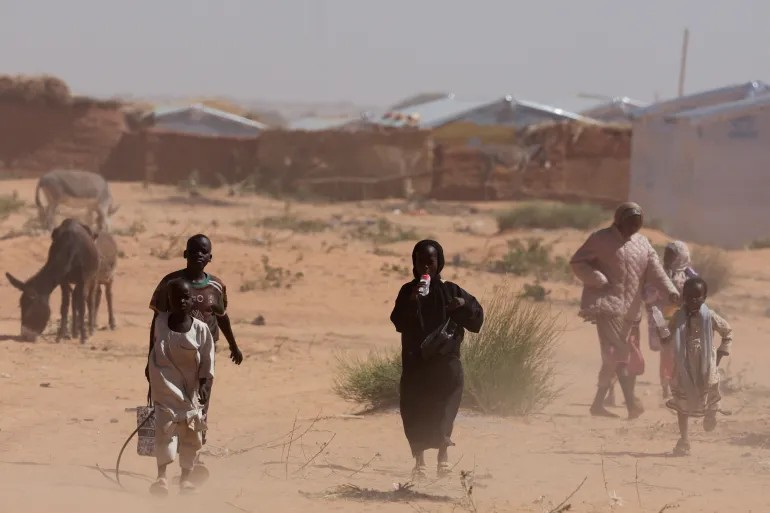
THOUSANDS HELD BY RSF IN EL-FASHER. Hundreds of women and children and
dozens of doctors detained in poor conditions, Sudan Doctors Network. 20 doctors,
1,470 civilians and 907 military personnel are being held in dire conditions in multiple
detention facilities in the city. …RSF has been accused of numerous crimes against
humanity during the conflict… Until it fell to RSF, el-Fasher was the last stronghold of
Sudan’s army in sprawling western Darfur. RSF is reportedly committing severe
violations inside detention centres in el-Fasher, “killings during torture and
interrogation, as well as ethnically motivated killings”. 370 women and 426 children are
among those held in facilities including Shalla Prison, a children’s hospital and cargo
containers. The network warned that captives “are subjected to grave abuses, includingfield executions” and suffering from injuries caused by shelling without receiving
medical care. The detention centres faced a cholera outbreak since early Feb, with poor
environmental conditions, lack of clean water and malnutrition making the spread of
diseases more rampant. Al Jazeera
HOW ONE SURGEON MAINTAINED HOSPITAL CARE AMID SUDAN’S
CONFLICT. As Sudan’s healthcare system teeters on the brink of collapse, doctors like
Dr. Jamal Eltaeb and Dr. Osman Ismail Osman are battling against impossible odds to
keep hospitals operational and save lives. For Dr. Eltaeb, an orthopedic surgeon at Al
Nao Hosp in Omdurman, the war…forced him to make heart-wrenching decisions daily.
With dwindling medical supplies, frequent bombings, and a flood of patients, Eltaeb has
become a symbol of resilience in a country where healthcare is on the verge of collapse.
“You choose… as if you can decide who will live and who will die,” reflecting on the
impossible triage decisions he faced after a strike on a nearby market left 100 injured
and 8 dead. Al Nao Hosp, once a tranquil facility with 100 beds, became a lifeline for
countless wounded as fighting…intensified. Despite being targeted 4 times by RSF,
Eltaeb and a small team of volunteers fought to keep the hospital running. Power
outages lasted weeks, forcing the hospital to rely on fuel from the army to operate
generators. Essential medications like antibiotics and pain relievers ran out, leaving
doctors to perform surgeries with limited resources. Al Nao is one of the few hospitals
still standing. 40% of the country’s hospitals are no longer operational, dismantled for
parts or repurposed as military bases. Across town, Dr. Osman, Al Shaabi Hosp,
surveyed the ruins of what was once a critical facility for emergency cardiac care. Al
Shaabi bore the brunt of some of the fiercest battles:“We’ve lost cardiac catheterization
machines worth $2 million each since the war began.” Despite modest government
support, the hospital remains closed, a stark reminder of the devastation. While some
nations pledged aid for reconstruction, concerns loom that escalating conflicts in the
Middle East…could divert attention and resources away from Sudan’s recovery.“We
were already at war, and now we are entering a new conflict, and the issues are piling
up.” Yet, amidst the chaos, doctors…continue to fight for their patients and their country.
Their unwavering dedication serves as a beacon of hope in a nation grappling with
unimaginable loss and destruction. As the world’s attention wavers, Sudan’s healthcare
professionals are a testament to the enduring power of humanity in the face of adversity.
AP/AfricaNews
IMAGES OF BLOOD SPILLED DURING EL FASHER MASSACRE THAT SAW
10,000 PEOPLE KILLED CAUSED A MOMENTARY FLURRY OF MEDIA
ATTENTION, THE WORLD’SMOST DEVASTATING WAR WAS QUICK TO BE
RE-HIDDEN…. It is often termed the forgotten war, as though one could simply forget
150,000 killed, 14m displaced, 11,000 missing and 33m in need of assistance. “Bloody
unacceptable is what it is. Unacceptable that the world focuses on other crises and leans
into it entirely to find solutions: why not here?” Denise Brown, UN Resident
Coordinator. The 3rd Intl Sudan Conference organised by Germany, France, UK, US, AU and EU
took place in Berlin. The scale of the crisis continued to be underrepresented in media
as well as diplomatic efforts, while Sudanese voices in discussions has been largely neglected.
…the search for solutions for ending the war remain elusive. Following intl failure to
…pursue concrete solutions, Kholood Khair and Hend Kheiralla were sceptical. Unless the war
is reframed as an attack on civilians aimed at rolling back gains made during the 2019
revolution, rather than a war between generals, the conference ‘will remain an exercise
in optics and not a genuine pathway to peace.’ SAF and RSF aim to erase all hope of a civilian
led government. Yet conferences in London and Paris in 2 years appeared to miss the point
when they excluded all Sudanese representatives. This resulted in uninspiring diplomatic
outcomes…between Egypt, Saudi Arabia and UAE all of whom stake a claim in the
region.
Frequently misrepresented as a civil war, the war in Sudan is rooted in colonialism and
hinges on expropriation of its natural resources by government elites and intl actors.
Sudan’s exports amounted to $5.09bn in 2023 and include crude oil, gold, animal
products, oilseeds and gum arabic. Despite Sudan’s wealth in natural resources, extreme
inequality caused by Al-Bashir, crony capitalism and systemic corruption kept entire
regions in poverty, leading to the 2019 revolution….subsequent intl inaction failed to
secure the civilian government Sudan so desperately needs. 3 years into the war that cost
millions of civilians their lives, including many in the Mediterranean or Greek prisons,
inaction and hypocrisy continued to dominate intl response. “The true scandal is not a
failure of intl peacemaking, but sustaining and escalation of this war by outside
interests” The Guardian. Saudi Arabia and Egypt are SAF’s key supporters…UAE is
funding RSF. …indirect EU involvement through supply of weapons, funding meant to
curb migration ended up in the hands of RSF. German Inst for Intl & Security Affairs
bluntly dashes any hopes of immediate sustainable steps towards peace: “….this is not a
peace conference. No one should raise their expectations too high. Even a humanitarian
truce, which US wants to broker with Egypt, Saudi Arabia, UAE is not currently in
sight.” 40 Sudanese civilian representatives were invited with the aim of building a new
civilian-led political order. This is much to dismay of the Sudanese government who,
along with RSF, were excluded from the talks. Although a diplomatic breakthrough is
unrealistic at this stage, it is hoped the conference will mobilise awareness and aid….Aid
budget cuts by US, UK and Germany, led to only 40% of humanitarian aid for Sudan
funded in 2025, a shortfall of €2.2 billion. Humanitarian aid is desperately needed to
fund life-saving work of community kitchens, ERRs and mutual aid groups. €1.5bn in
aid pledged at yesterday’s conference will go some way to fill the gap. What stands out
is the lack lustre approach to…accountability, abandonment of civil society, greed and
self-serving role of intl powers. The Left Berlin
STATUTE OF SUDAN’S DEMOCRATIC BLOC SIGNED IN PT SUDAN. 20
organisations and components of Forces of Freedom & Change signed the statute of the
Democratic Bloc…. The conference began with participation of all components of thebloc, Dep Chairman of Sovereignty Council Agar, ambassadors to Sudan including
Russia, Saudi Arabia and Egypt. El Mirghani, head of Democratic Bloc, welcomed calls
for national dialogue and free elections. He called for building a state that protects
citizens and upholds rule of law. …in which institutions are stronger than individuals and
systems, a fair judiciary, a police force that serves the people, schools that teach thinking
rather than obedience, hospitals that treat patients without discrimination. He stressed
the need for a strong national army that protects the homeland, democracy and
sovereignty and remains separate from politics. He called for full and equal citizenship
regardless of ethnicity, religion or region. He said all projects that sought to reduce
Sudan to one colour, ideology or region failed, adding that the country’s strength lies in
its diversity. Agar called on the government and forces supporting the current situation
not to be satisfied with those who attended but to seek to include all wishing to form a
large and broad bloc. He stressed that weapons are not a tool for democracy, 40 years of
war have brought nothing but destruction, that politics is the proper way to resolve
problems. Gov of Darfur Minawi said the meeting produced 3 decisive priorities that
cannot be postponed: building the bloc’s organisational structures, unifying political
discourse, opening the doors to national forces. He added that the Democratic Bloc will
not be just a transient political framework, but will become an effective force that leads
the battle for peace, carries aspirations of the people, and imposes a new reality based on
true national consensus, not exclusion or division. The head of the bloc and rep of
Democratic Unionist Party, El Mirghani, Sup Council of Beja Glasses, led by Turk, and
head of the Justice Movement Ibrahim, signed the statute approved during meetings in
Pt Sudan. Also signing were Sudan Liberation Army leader Minawi, Sudan Liberation
Forces leader Yahya and Sudan Liberation Army Transitional Council head Rasas.
Democratic Party, Revolutionary Front led by Hajo on behalf of Othman, Popular Front
for Liberation & Justice led by Daoud, and head of Democratic Alliance for Justice
Erdoul signed. Jadallah signed on behalf of Sudanese Alliance, Haroun, SLA Leadership
Council rep Ali Shakoush and Sudan Liberation Army leader Tambur. Revolutionary
Awakening Council led by Hilal and Amer signed, along with Democratic Bloc of Civil
Society and civil society organisations led by Zaki. Further signatories included civil
society reps led by Adib, IDPs and refugees led by Roma, Civil Assembly of Eastern
Sudan represented by Musa and Bashar on behalf of Together We Save a Nation.
Dabanga
April 26
DRONE HIT AID TRUCK IN N DARFUR DESTROYING ALL SUPPLIES ON
BOARD….The UNHCR-operated vehicle came under drone attack while transporting
emergency shelter kits to Tawila, home to 700,000 displaced people who fled fighting
elsewhere in western Darfur….all supplies were destroyed in the resulting fire. UNHCR
condemned the attack, warning it would leave 1,314 families in desperate conditions
without shelter at a time when humanitarian needs are already overwhelming. 127,000
people fled El-Fasher, N Darfur’s capital and the army’s last stronghold in the region,after it fell to paramilitary forces, with reports of mass killings, sexual violence, looting
and rape following the takeover. The New Arab
April 22
4 YEARS INTO DEVASTATING WAR, SUDAN REMAINS FIRMLY ON
DIPLOMATIC AGENDA….but meaningful political breakthrough remains elusive and
frustration is mounting. This bleak outlook assumes peace will only come once a
national ceasefire is negotiated among principal armed actors. That assumption
overlooks the reality unfolding on the ground. In Sudan today, there are tangible
reductions in violence, but they come from local actors, not formal negotiations. In the
early months of the war,..local communities quietly negotiated their own arrangements.
Tribal leaders, religious figures, youth networks and community members stepped in to
mediate, often at great personal risk. They facilitated localised ceasefires, non-
aggression pacts, humanitarian access and escape routes for civilians. They operate
within a profoundly fractured landscape. Years of war have entrenched polarisation, with
trust eroded and grievances growing. A national agreement may stop large-scale
fighting, but it cannot, on its own, repair fractures within society. Even if a peace
agreement were signed tomorrow, Sudan would still be far from real peace. This is why
local peacebuilding becomes indispensable. In places like Central Darfur, we’ve seen
what can be possible. When the war exploded youth trained in peacebuilding…worked
with elders and respected community figures to respond. They relocated civilians from
frontline neighbourhoods, protected hospitals and shared practical safety information
with communities under fire. They operated through locally respected intermediaries to
engage armed actors, contributing to a localised ceasefire that held for several weeks,
saving many lives amid brutal street fighting and creating a window for delivery of
humanitarian aid and essential services. Across Darfur, similar dynamics are playing out
with local peace committees and mediation structures, where community actors such as
tribal leaders and youth groups are leading. …these committees work continuously to de-
escalate disputes, shared access to resources and maintain a minimum level of
coexistence among communities, often without external recognition but with significant
personal risk. Although divided by front lines, political affiliations or areas of control,
they exchange information and engage with one another where most other forms of
connection have broken down. Less visible, but equally significant, is the resilience of
the peacebuilding infrastructure that these actors represent. Although divided by front
lines, political affiliations or areas of control, they exchange information and engage one
another where most forms of connection have broken down. This shared identity as
peacebuilders serves as a bridge to sustain relationships…critical for any future peace
process to take hold.
This is what progress looks like in Sudan’s war – not dramatic breakthroughs in far-
away capitals, but incremental gains in small villages: a road that remains passable, a
clinic with open doors, a conversation that does not collapse into violence.
Unfortunately, these incredible efforts remain under-recognised and under-resourced.Investing in locally grounded peacebuilding is relatively cheap and has proven results. It
builds on existing capacities. It reinforces high-level mediation because locally
grounded efforts can reconnect political processes to the realities they aim to address. It
ensures political agreements are not built in a vacuum but rooted in what is happening
on the ground. If intl efforts are to remain relevant, they must recognise the agency of
the Sudanese people as central to shaping their own peace. Peace will not come from
top-down diplomacy alone. It must also be built from the ground up by those who
continue, even in the midst of war, to choose dialogue over division. …the foundations
of peace are there. They do not emerge from outside ready-made, but can be fostered by
intl efforts. It is time to align our support with that reality. The New Humanitarian
COLOMBIAN MERCENARIES HELPED RSF FIGHT ARMY….An armed group in
Libya helped transfer former Colombian military personnel to fight with the RSF, UN
Panel of Experts on Libya said. The Subul al-Salam Battalion facilitated transfer of
recruits, mercenaries, weapons and fuel across the border….centered in Kufra, which
borders Sudan, Chad and Egypt. The UN report…detailed benefits RSF obtained through
Libya, including a rear base….an airbase and other facilities as transit points for
Colombian fighters.…the battalion supported RSF in June 2025 through units on the
ground, providing fighters and “escorting them across Libyan territory and access to fuel
and spare vehicle parts.” Its helped RSF advance on a triangle where Sudan, Egypt and
Libya meet.” Conflicts Insights Group found a network of Colombian mercenaries
backed by UAE provided “critical military support” to RSF, enabling them to capture El
Fasher: “This is the first research where we can prove UAE involvement with
certainty….We are making public what governments have long known…a direct link
between Abu Dhabi and RSF.” The organisation found evidence of the mercenaries’
presence at various staging points across the region, including at a military training
facility in Abu Dhabi. The fighters reportedly operated as part of Desert Wolves brigade
and drone pilots, artillerymen and instructors, including “training child soldiers.” Desert
Wolves were associated with a UAE-based company with documented ties to senior
Emirati government officials. AfricaNews/AP
April 21
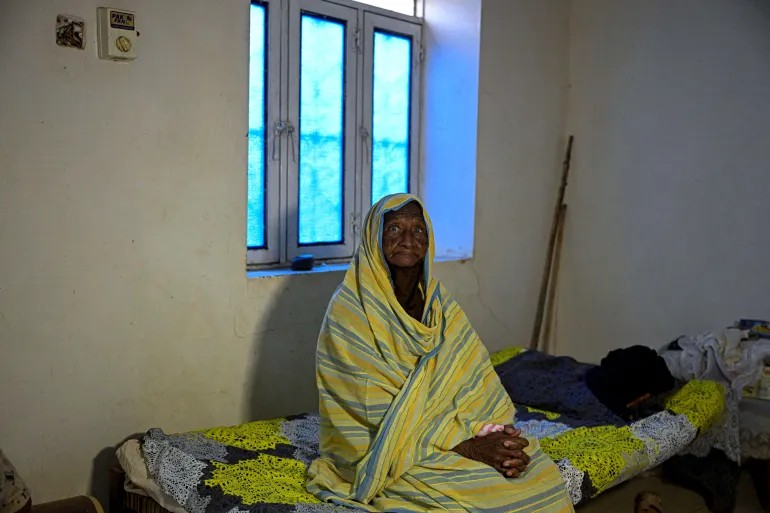
4 MILLION PEOPLE RETURNED TO THEIR PLACES OF ORIGIN IN SUDAN IN
HOPE OF REBUILDING THEIR LIVES. Although the war grinds on, 3.99m returnees
have been counted, mainly…in Khartoum and agricultural state Al-Jazira…UN Intl Org
for Migration….returning to find destroyed communities and an urgent need for
investment to rebuild basic infrastructure: “Many are returning because they believe
security has improved,..others are returning because life in displacement has become
unbearable.” However their return would prove unsustainable without “urgent
investment to restore essential services and rebuild infrastructure and revive
livelihoods”. Farmers are now returning to their fields to find irrigation systems and
equipment destroyed. Such conditions leave food production at breaking point against abackdrop of food insecurity. Millions…are surviving on just 1 meal a day, according to
NGOs, who warn that 3 years of conflict marked by violence, displacement and siege
tactics “systematically eroded Sudan’s
food system”. IOM had been able to reach 4m with humanitarian aid since 2023, but
“the scale of needs remains immense”, with 9 million people still internally displaced.
IOM is seeking $170m for its 2026 Sudan crisis response plan, but remained
“underfunded” by $97.2m. Al Jazeera
I HAVE WATCHED THE US CAST ITSELF AS NEUTRAL BROKER OF PEACE IN
SUDAN WHILE PURSUING POLICIES THAT PERPETUATE THE GENOCIDE.
The Treasury Dept issued terrorism-related designations….Despite acknowledging that
RSF- primarily armed by UAE – is committing genocide, instead of targeting RSF or
UAE sponsors, the designations fell on government officials and resistance actors
fighting to defend the country from RSF’s advance. US not only continues to arm UAE –
RSF’s primary weapons supplier – but have increased weapons sales and strengthened
diplomatic relations with UAE since RSF’s siege began. State Dept and American
weapons companies are actively profiting off this genocide, supplying Emirates with
billions of dollars’ worth of aircraft, bombs, ammunition, even after evidence surfaced
UAE was funneling arms directly to RSF. Washington has chosen to punish Sudanese
civilians through unilateral sanctions, a red list immigrant ban and aid cuts. US
convened “peace talks” that invite RSF and UAE to the table, treating them as legitimate
political stakeholders rather than aggressors. American audiences must demand an end
to this government’s silent complicity. US cannot continue to play public mediator and
private instigator in Sudan. US has an obligation to halt arms deals to UAE, uphold the
right to asylum and lift sanctions and designations that amount to collective punishment
of civilians. Suad Abdel Aziz, Sudanese American human rights lawyer and founder of
Decolonize Sudan
BENDING LOW IN BAKING SUN AND SHEATHED IN HEAVY PROTECTIVE
GEAR, HUSSEIN IDRIS SWEEPS METAL DETECTOR ACROSS VAST
MINEFIELD IN CENTRAL KHARTOUM that was once a park beloved by local
families….Khartoum is still littered with explosive remnants that authorities are
struggling to clear. 60-year-old Idris is part of the team slowly demining Al-Mugran
Park, where dozens of red skull-and-crossbones signs warn civilians to keep away. After
a long morning, Idris — a deminer for nearly 2 decades — finally puts his metal
detector down and lifts his visor to the blazing sun, high in the sky: “It’s hard work, but
thankfully we’re still alive, and the park can come back even better than before,” a patch
of sweat on his chest in the shape of his protective vest. They have been at it since Aug,
5 months after the army recaptured the area…. Khartoum, where fierce urban warfare
saw firebombs rip through homes and hospitals, was believed contaminated by massive
amounts of unexploded ordnance, rockets and shells that never went off. But in July,
when 2 soldiers accidentally set off an explosion, authorities discovered mines had been
intentionally planted across a massive 1.7 sq mi area, adding another obstacle to their
already gargantuan task.
Authorities cleared tens of thousands of explosives across the capital. Danish Refugee
Council with local organisation JASMAR handling Al-Mugran Park removed 12,000
pieces of explosive ordnance. But they have cleared only a fraction of Khartoum, where
2 other minefields have been found, and vast areas are still unsafe. The park’s strategic
significance is plain to see. It straddles the single western entrance into central
Khartoum, which RSF swept through in the early days of the war and held until the
army’s counteroffensive. “The mines prevented incoming troops from fanning out as
they approached through the bridge over the Nile,” Jomaa Ibrahim told AFP, though he
does not say which side laid the mines. As long as troops stuck to the street, they were
exposed to snipers posted on high-rises. If they spread out in search of cover behind
trees or bushes, they would meet the mines — designed not to kill, but to maim victims
and demoralise their comrades. The very first mine was found in a traffic island a metre
wide, apparently laid to target any fighter who might try to take cover behind a palm
tree. The street is littered with shrapnel and spent cartridges, potholes blown in the
pavement where artillery shells struck. …the team found 164 dangerous items: 19 anti-
personnel mines, small devices that take only a light step to explode, 7 anti-vehicle
mines. 80% of the area has been cleared. The minefield seems an easier task than the
post-apocalyptic wasteland that is Khartoum’s City Centre. Its biggest buildings have
been bombed beyond recognition, and bear telltale signs of artillery shells that tore
through the walls, not all exploded. Families returning to their homes found grenades
and mortars in their living rooms, and last month an explosive was found in front of a
kindergarten in Khartoum N. Dozens have been killed and injured after accidentally
setting off explosives. “As families begin to return, they are doing so into a highly
dangerous environment, often without awareness of the risks,” UN mine action chief
Rashid. AP/AfricaNews
April 16
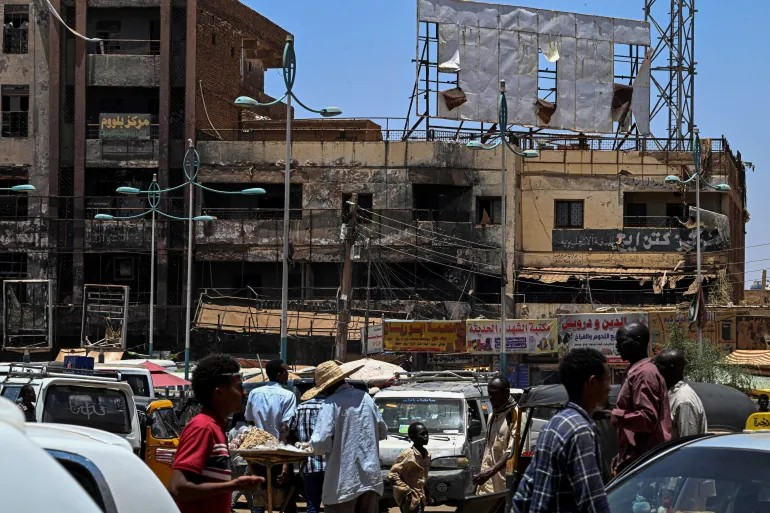
LIFE GRADUALLY RETURNED TO FRAGILE STATE OF NEAR NORMALCY
IN…KHARTOUM, AND CENTRAL REGIONS after the army regained control.
However, this relative stability has been accompanied by a sense of unsettling
uncertainty, as economic and living conditions continue to deteriorate, the military
deadlock persists in the Kordofan region, and the humanitarian crisis in Darfur has
worsened.
SURGE IN ONLINE ABUSE TARGETS SUDANESE WOMEN JOURNALISTS.
Sudanese Journalists Syndicate reported a sharp rise in digital harassment and violence
against women journalists, with 250 subjected to various forms of online threats and
defamation on social media platforms, particularly Facebook. It documented 25 cases of
direct threats and hate speech over the past year. Iman Fadl Ed Sayed, exec office and
secy for freedoms, told Radio Dabanga 80% of women journalists lost their jobs since
the outbreak of the war, reflecting a severe deterioration in their professional conditions
compared with before the conflict. She warned digital violence had become one of the
most dangerous phenomena,…escalating alongside the spread of hate speech. It often
takes the form of organised campaigns targeting women journalists via social media, and
in some cases involves…personal images and information for defamation. El Sayed
described the situation as “feminisation of the crisis” within the journalistic community,
saying women journalists had become the most vulnerable group during the war. She
said risks shifted from field-based dangers in early stages of the conflict to growing
digital and social threats, placing significant pressure on women journalists and
threatening their ability to continue working. …this form of violence leaves deep
psychological effects and directly impacts journalists’ ability to remain in the profession,
with some withdrawing from work or from public life altogether. 393 violations weredocumented in the 1st year of the war, rising to 596 the 2nd, while 590 violations were
recorded in Jan 2026. The RSF in Nyala detained a number of women, including female
journalists, and transferred them to prison. A report shows long rooted divide-and-rule
tactics, and hate speech continues to fuel the ethnic dimensions of Sudan’s conflict,
where online rhetoric translates into real-world atrocities. Misinformation, Propaganda
and the Battle for Truth in Sudan panel Feb 16 brought together activists, researchers
and journalists. Access Now, Build Up and The African Middle East Leadership Project
shared expertise on the spread of disinformation and erosion of independent media.