
January 28
KHARTOUM FACES WORLD’S LARGEST INTERNAL DISPLACEMENT, YET FRAGILE TREND OF RETURN EMERGING, despite shattered infrastructure. Sudan has moved to the forefront of the global humanitarian landscape, hosting the world’s largest internal displacement crisis. 14 million people have been forced from their homes within the country. Al Jazeera Arabic spoke with experts, officials and returnees to understand the Khartoum case…civilians are trickling back to the capital despite the destruction, driven by nostalgia and a fragile sense of stability following the govt’s return. The recent resumption of govt operations from the capital has sent a signal of potential stability. Adel El-Baz, African Centre for Consulting, views govt’s return as a direct invitation for citizens to follow suit. Osama Abdel Salam, Centre for Strategic Studies & Research, return of civilians naturally enhances security: “…filling of abandoned neighbourhoods with residents reduces the risk of negative phenomena, prevents theft and spreads an atmosphere of reassurance.” However, the infrastructure challenge is monumental. Saad El-Din El-Tayeb, Khartoum State: “government spent more than a year to clear the debris of war: We began cleaning cities of bodies and burnt vehicles, restarting water stations, rehabilitating power distribution lines.” Khartoum suffered the largest looting operation of electrical infrastructure in history. 15,000 electrical transformers were stripped, with looters targeting the copper. …authorities are diverting available electricity to critical facilities like hospitals and water stations, while encouraging solar energy. …return is often emotional. Rimah Hamed fled Khartoum when hospitals closed and security collapsed. She recently returned to herfamily home: “The primary motivation was nostalgia, Sudanese character is sentimental. People returned because they missed their homes.” Hamed found her neighbourhood transformed. Her house was empty, stripped of essential items, with no running water or electricity: “There was only 1 water source… where everyone went to fill up. But gradually, neighbours started coming back. The neighbourhood began to regain its social features, and life returned little by little.” Hamed observed the community developed a “psychological immunity” to the harsh conditions, adapting to shortages through grassroots initiatives. While emotionalties drive some to return, sustainable reintegration requires tangible resources. Tom Ndahiro, genocide researcher, suggests “relative peace” is the baseline requirement – the situation has improved enough to survive the night. Experts outlined a hierarchy of needs for a sustainable return:
- Security: A trusted leadership to organise resettlement and prevent chaos,
- Shelter: Even temporary structures like tents, provided they offer safety,
- Essentials: Food security and access to clean water are non-negotiable,
- Power: Electricity is viewed as the decisive factor for economic stability.
Rami Mahkar, journalist, emphasised security must come first: “Without security, the displaced are forced to move again.”…the presence of functioning shops for food and supplies is critical for those trying to rebuild their lives. As Sudan attempts to turn the tide on the world’s largest displacement crisis, the durability of return remains untested. …returnees are currently fuelled by resilience and longing, hoping to rebuild what the war has destroyed. Al Jazeera
January 26
RECONSTRUCTION UNDERWAY, GRASSROOTS INITIATIVE…TO TURN KHARTOUM INTO GREENER CITY. Volunteers are working to plant 1,000 trees around Khartoum in the hopes of restoring pre-war glory. “The initiative began with questions like, why don’t we have fruit trees in Sudan? Why aren’t these trees in our
streets and neighborhoods? These questions were presented as an initiative on social media, very well received by young people,” Mugtaba Montaser, founder Green Khartoum initiative. “The rebels destroyed everything, including the trees, so the importance of this initiative is to contribute to increasing the city’s green cover” Haitham Bahr, volunteer. The Green Khartoum initiative has especially inspired young people, who hope to help turn their damaged city into a welcoming environment: “We participated in the Thousand Trees Initiative to make Khartoum greener, and God willing, we hope to make Bahri, Omdurman and all parts of Sudan greener,” volunteer Moaaz Fathallah. Redaction AfricaNews/AFP
January 25
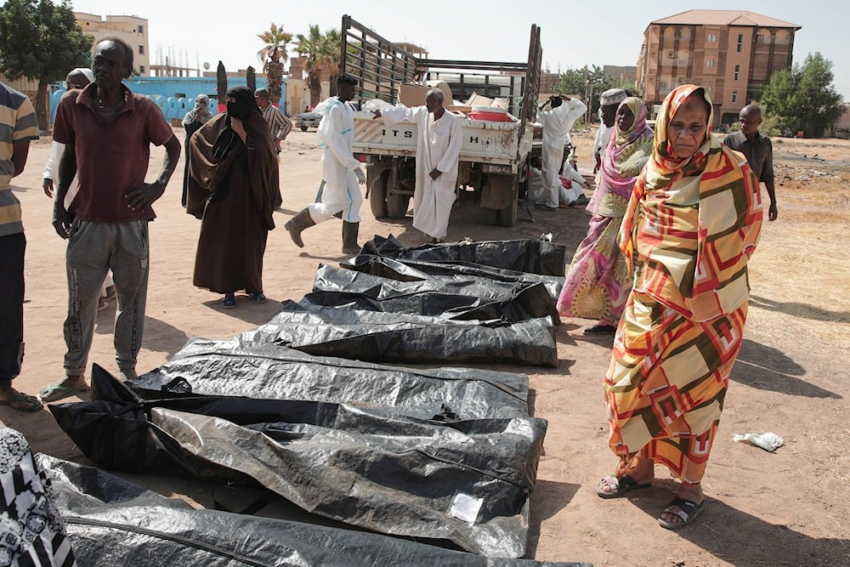
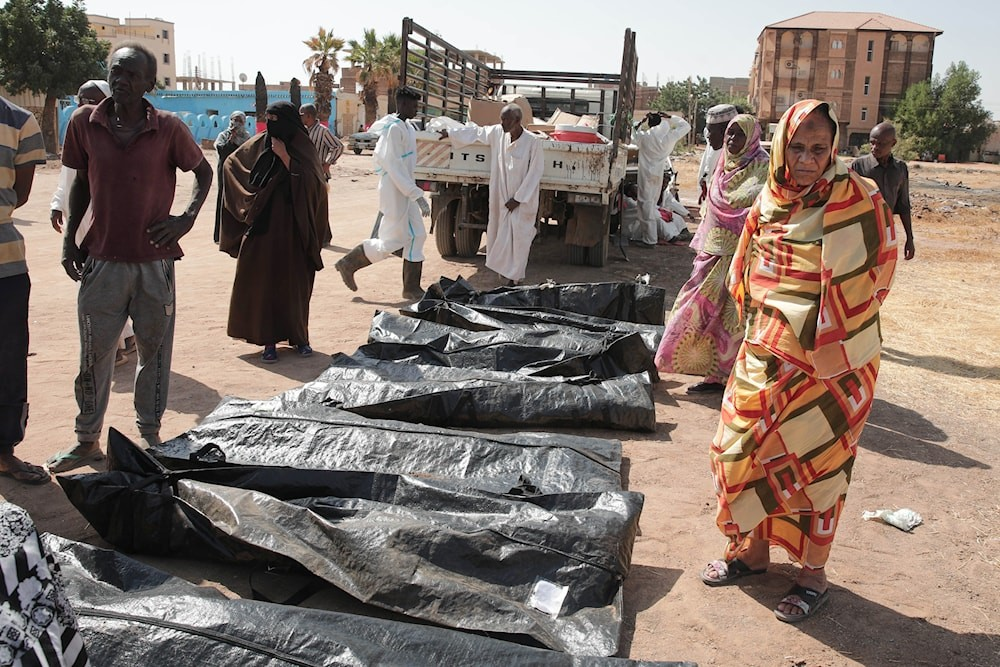
TWO MASS GRAVES FOUND IN KHARTOUM….assumed to have been there 2years before the army regained control. Discovered near Obeid Khatim St amid recent waves of attacks by RSF. The graves contain remains of thousands of people who died due to RSF attacks and were buried haphazardly….buildings in the neighbourhood were used by RSF as detention centres. Eyewitnesses added that civilians and military personnel who died under torture were transported by other survivors to be buried in large pits. Intisar Ahmed Abdel Aal, Sudan’s AG, said delay in opening the mass graves is due to the sheer number of victims: “Efforts are currently underway to open these graves and transfer the remains into official cemeteries. There is a very large number of people buried, while other bodies have been buried in schools, universities and public places….distribution of the mass graves across the country has added to the delay, with a high number in Wad Madani and central Sudan.” Days before the mass graves were discovered, dep prosecutor of ICC Khan accused RSF of digging mass graves to conceal “war crimes and crimes against humanity” committed in El Fasher, particularly in late Oct as the siege of the city by RSF reached its peak”. She explained the team relied on video and audio evidence as well as satellite imagery, and found the data “indicated mass killings and attempts to conceal crimes by digging mass graves”. She warned that people in Darfur were facing mass torture, the “fall of el-Fasher was accompanied by a systematic and calculated campaign to inflict the most severe suffering….sexual violence, including rape, is being used as a weapon of war in Darfur”. The New Arab
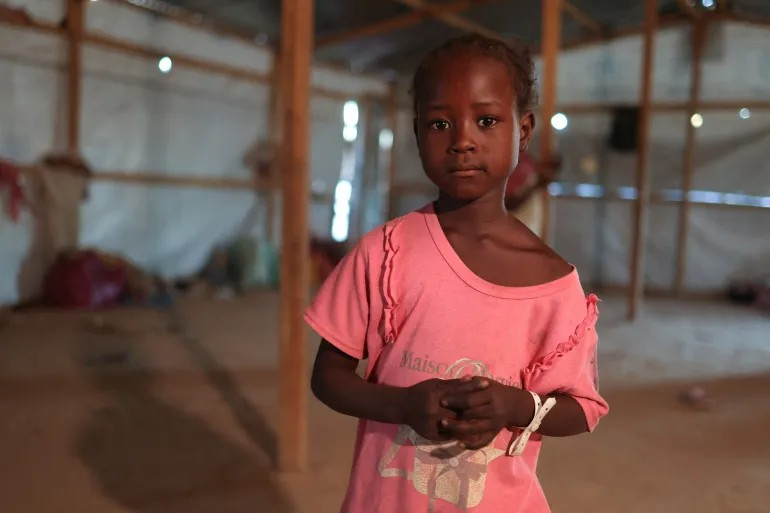
WOMEN BREAK TRADITIONAL RULES TO SURVIVE….Displaced mothers are forced into gruelling manual labour to feed families… In displacement camps in Blue Nile State, the war is reshaping social norms and introducing new realities forcing women into manual labour to survive. Rasha is a displaced mother. She ignored old boundaries and perceptions of what a man’s work is and started workingas a woodcutter to feed her children: “Carpentry is hard, …but the axe has become an extension of my hand. There are no choices left.” Her story is not unique. Thousands of women have become sole breadwinners and work under harsh conditions. Rasha’s earnings after a day of back-breaking labour under the sun are often enough to buy only a packet of biscuits. She spends the money on food and soap: “You want soap. You want to wash…As for clothes, we have given up hope on that.” According to UN OCHA, 30 million people from a population of 46.8 million are in need of humanitarian assistance. The population is facing acute food shortages and nutrition crisis, especially in Darfur and Cordovan…. disease outbreaks are worsening the situation. Sudan is dealing with the world’s largest displacement crisis with 13.6 million people forced from their homes….The war destroyed many aspects of life, and is now threatening the future of generations to come. Save the Children released a damning report confirming Sudan is enduring one of the longest school closures in the world, surpassing even the worst shutdowns of COVID-19. The data reveal a system on the brink of collapse, particularly in conflict hotspots. For Rasha and mothers like her, the choice is stark: break traditional norms and toil for a pittance or succumb to hunger. Al Jazeera
January 23
EMERGENCY RM IN GOLO, DARFUR, RENEWED OUTBREAK OF EPIDEMICS….resumed after a period of decline, with 2,576 cases of malaria, 211 new cases of dengue fever in Khartoum and Omdurman, 39 deaths in the capital as a result of dengue fever. Statistics showed the most vulnerable groups were the most affected, with 22 deaths among women and 6 among children, amid severe shortage of medicines and basic medical supplies. Dr El Sayed…told Radio Dabanga the outbreak of dengue fever and malaria is due to complete collapse of the environmental infrastructure, where accumulated waste, sewage overflows and stagnant pools turned into ideal breeding grounds for disease-carrying mosquitoes. She said with the onset of winter and decline of functioning health centres, concerns are growing…especially in displacement camps, in light of food shortages and weakened immunity. El Sayed appealed to health authorities to officially declare the outbreak, which would allow intl organizations and donors to provide urgent support. El Sayed stressed the need for urgent govt response focused on environmental health and improvement, with full transparency informing the public about treatment areas and methods of prevention. She called for strengthening institutional work through a national high committee with a unified protocol for diagnosis and supply, providing logistical support by rehabilitating disabled labs and empowering resilient medical staff. The real suffering lies in severe shortage of malaria and dengue fever medicines, these diseases are not inherently deadly and should not lead to deaths if the environment is healthy and medicines are available, but these medicines have become non-existent even in the black market. She pointed to recent spread of rat death phenomenon, which moved from Kassala Stateto the vicinity of Atbara R, of the possibility of an outbreak of deadly plague epidemic….it reached areas in El Gedaref State, rare and dangerous. The epidemiologist explained all these conditions suggest the effects of the devastating war and ongoing famine, as diseases, multiplicity of epidemics, appearance of skin rashes, and spread of deadly viruses have exacerbated the health situation. She stated “these viruses, upon entering the human body, cause serious illnesses, including plague—may God protect us—and other diseases. They transmit numerous epidemics, posing a significant threat to public health and the agricultural sector.” She emphasized all this stems primarily from the ongoing war. El Sayed renewed her appeal to all Sudanese…to exert all efforts to stop this deadly war by all known means, in light of the lack of response from the sides of the conflict to the current dire humanitarian situation.
KHARTOUM’S BAHRI TEACHING HOSP WELCOMING PATIENTS,… NEARLY 3 YEARS AFTER IT WAS WRECKED AND LOOTED….and heavily damaged, it was forced to shut its doors. “Bahri hospital, like other govt buildings and facilities, suffered damage amounting to 70%,” Galal Mostafa, dir. “The hospital is considered a referral centre providing distinguished services to all states of Sudan.” Staff members describe the reopening as a moment of relief: “We never imagined this hospital would reopen,” Ali Mohamed Ali, head of surgery. “If you saw it before it was restored, it was completely destroyed.” But the hospital is not immune to the war’s broader effects. Years of fighting destabilized Sudan’s economy, leaving the facility to face shortages and financial strain. Salah El Haj, CEO: “The financial crisis worsened, salaries and incentives have been affected, and the budget does not cover expenses.” According to Sudan Doctors’ Network, 40 of Khartoum’s 120 hospitals that shut during the war have resumed operations. Redaction AfricaNews/AP
January 22
AS CIVIL WAR CONTINUES, RECONSTRUCTION UNDERWAY IN KHARTOUM WHERE ARMY-BACKED GOVT PLANS TO RETURN GRADUALLY. Many roads in the city have been cleared, rubble is being removed, and cranes punctuate the skyline. PM Idris’ govt has been operating from Pt Sudan 700k away. Govt hqs have been refurbished, but many ministries remain abandoned, their walls pockmarked by bullets. For residents and businesses, many problems remain. Liberty St, Khartoum’s main commercial avenue, only a few of the looted shops reopened. “Many shopkeepers aren’t coming back,” Osman Nadir, appliance seller. …before the war, they used to obtain goods from companies on deferred payment terms or through specific credit-based arrangements: “Suppliers are demanding repayment for goods destroyed during the fighting.” 1/3 of Khartoum’s 9 million residents fled when it was seized by RSF. Over a million returned….But the airport remains closed, people have no money, and restoring water andelectricity remains the most urgent task. Tea-seller Halima Ishaq fled south when fighting began…and came back 2 weeks ago: “Business is not good. The neighbourhood is still empty,” the mother of 5 said. Ishaq earns 4,000-5,000 Sudanese pounds/day, less than 2 euros, 1/3 of her pre-war income. Another merchant, Abdullah Ahmed Abdel-Majid, said the market has not fully stabilised: “Before the war, business was active. Now people come, but when they see the costs, they leave.” Near the Nile, volunteers are repairing the National Theatre, once graced by Umm Kulthum and Louis Armstrong. A few k away, workers are clearing fallen trees from the red and yellow stands of Al-Merreikh Stadium…home to one of Africa’s oldest football clubs. UN estimates rebuilding infrastructure in Khartoum will cost at least $350m. Redaction AfricaNews
January 19
100 CIVILIANS KILLED, 18,000 FAMILIES DISPLACED AS RSF ATTACKS ESCALATED IN DARFUR AND S KORDOFAN, following attacks in west Sudan near the Chad border. The violence comes amid escalating clashes…in N Darfur, particularly Um Baru, Tina and Kornoy. RSF has sought to seize control of these localities in recent days. According to Tina local Emergency Rm and a community- based relief group, repeated RSF assaults Dec 22-Jan 16 targeted Tina and surrounding areas. The attacks struck public spaces and civilian institutions, resulting in large-scale destruction, including burning entire villages, and forced thousands of families to flee toward Chad. The relief committee issued an urgent appeal to humanitarian, regional and intl organizations, warning of a sharp deterioration in humanitarian conditions. Civilians are facing extreme hardships due to collapse of institutions and disruption of basic services, posing an immediate threat to thousands of residents. Al Mayadeen
January 18
7 KILLED IN DRONE STRIKE, RSF TARGETED POPULAR MARKET IN S KORDOFAN. 3 children and 2 women were killed, most of the wounded are women and children and many injuries are critical. Sud Doctors Network condemned the massacre, calling the attack a serious violation of intl humanitarian law and systematic crime against unarmed civilians….targeting residential neighborhoods, markets and civilian gatherings marks a dangerous escalation that deepens civilian suffering. The network held RSF commanders responsible, saying the strike deliberately targeted civilian facilities. It urged the intl community, UN and human rights groups to intervene to protect civilians, push for an end to attacks on populated areas and lift the siege. Dilling is entering the 3rd phase of hunger. Kadugli and Dilling have been under siege by RSF and SPLM-N since early months of the war facing repeated artillery and drone attacks. 3 Kordofan states witnessed intense clashes between the army and RSF, displacement of tens of thousands of civilians. MEM
12 SUDANESE GIRLS GANG-RAPED IN EASTERN CHAD. Refugees from Kounoungo Camp told Radio Dabanga the group of girls was accosted by the gang after they left camp to gather firewood, subjected to horrific gang rape. When other refugees noticed they had not returned to the camp, a search party went out and found them. Witnesses say 8 girls could be treated at camp’s medical centre, however “4 has such serious injuries they were urgently transferred to Guerda Hosp to receive intensive medical care necessary to save their lives”. Refugees appealed to Chadian authorities and UN High Comm for Refugees for increased security and increase the number of police officers and effectively secure the perimeter of the camps, while providing all logistical support to security forces to enable them to extend control and improve living and security conditions.
January 16
AL-BURHAN SAID WAR AGAINST RSF WILL CONTINUE UNTIL REBELLION AND SUPPORTERS ARE ELIMINATED. …the conflict…would not conclude until RSF and those backing them are defeated. The Gen’s hardline stance comes despite intl pressure to reach a settlement. A Quad group, US, Saudi Arabia, UAE and Egypt, proposed an initiative to end hostilities. That plan centres on humanitarian truce as a preliminary step toward permanent ceasefire and eventual transition to civilian rule. However, the Sudanese govt countered with its own peace roadmap….a comprehensive ceasefire to be jointly monitored by UN, AU and Arab League….simultaneous withdrawal of RSF from all occupied residential and urban areas. RSF fighters would be required to assemble in specific, designated camps rather than current positions. Sudan Tribune
January 14
WIDESPREAD DESTRUCTION, MASSIVE MILITARY SPENDING, PLUMMETING OIL AND GOLD REVENUES LEFT ECONOMY IN VERY DIFFICULT TIMES….The govt is eyeing deals for Red Sea ports and private investment to help rebuild infrastructure.… Sudan, already one of the world’s poorest countries before the war, “lost all sources of state revenue” when RSF overtook Khartoum. Fin Min Ibrahim “Most industry, big companies and all economic activity was concentrated in the centre,”…the heartland accounted for 80% of state revenue. Ibrahim’s ex-rebel group JEM battled Khartoum’s govt but has fought on the army’s side as part of the Joint Forces coalition.
Sudan, rich in oil, gold deposits and arable land, is suffering the world’s largest humanitarian crisis….Gold production is rising, “much has been smuggled…across borders,…going to the Gulf, mainly UAE.” Of 70 tonnes produced in 2025, only “20 tonnes have been exported through official channels”. 2024, Sudan produced 64 tonnes, bringing only $1.57b to the state’s depleted coffers, with revenue spillingout via smuggling networks. Agricultural exports have fallen 43%, with much of productive gum arabic, sesame and peanut-growing regions in paramilitary hands in Darfur and Kordofan. Sudan’s livestock industry…lost 55% of exports.
The war’s worst fighting shifted east to oil-rich Kordofan….oil revenues dropped by 50%, its most productive refinery Al-Jaili severely damaged. Determined to defeat RSF, authorities allocated 40% of last year’s budget to the war, up from 36% in 2024. Yet the cost of reconstruction…is immense: the govt estimated it would need $200b to rebuild. Sudan’s long Red Sea coast has drawn the interest of foreign actors eager for a base on the vital waterway, through which 12% of global trade passes. An early-stage project for an Emirati economic zone had been agreed “then the war erupted….I don’t think that project is going anywhere,” referring to widespread accusations of Abu Dhabi backing the RSF. Russians…wanted “a small port…they didn’t go ahead with that yet”. Massive public debt in 2023 reached 253% of GDP before falling to 221% in 2025. Sudan has known only triple-digit annual inflation. 2025 stood at 151% down from 2021 peak of 358%. The currency collapsed, trading before the war at 570 Sudanese pounds against the $US, to 3500 in 2026. Ibrahim joined the govt in 2021 as part of a short-lived transitional administration. He retained his position through a military coup. He is among officials sanctioned by Washington…. Redaction AfricaNews
January 14
ERITREAN PRES CALLS UAE MAIN DESTABILIZING FORCE IN SUDAN, foreign interference is obstructing the path to peace and civilian rule. Afwerki called regional players to support Sudan’s Transitional Sovereign Council, describing it a legitimate temporary body essential to guiding the country toward stability. Afwerki rejected the characterization of Sudan’s crisis as a civil war or conflict between 2 generals, urging the situation be understood in its historical context. He pointed to 3 decades of turmoil under NCP and popular uprising that led to the army assuming a guardian role. Eritrea presented a 3-year plan to the Transitional Council in 2022 to facilitate smooth transfer of power, but external interference, particularly UAE, disrupted these efforts. He criticized intl initiatives and unrealistic slogans from UN Sec Council and Quartet that prolong the crisis. Afwerki called Egypt and neighboring countries to play a constructive role in supporting Sudan’s transitional institutions, the only bridge capable of leading the country toward lasting peace, free from harmful foreign influence. Al Mayadeen
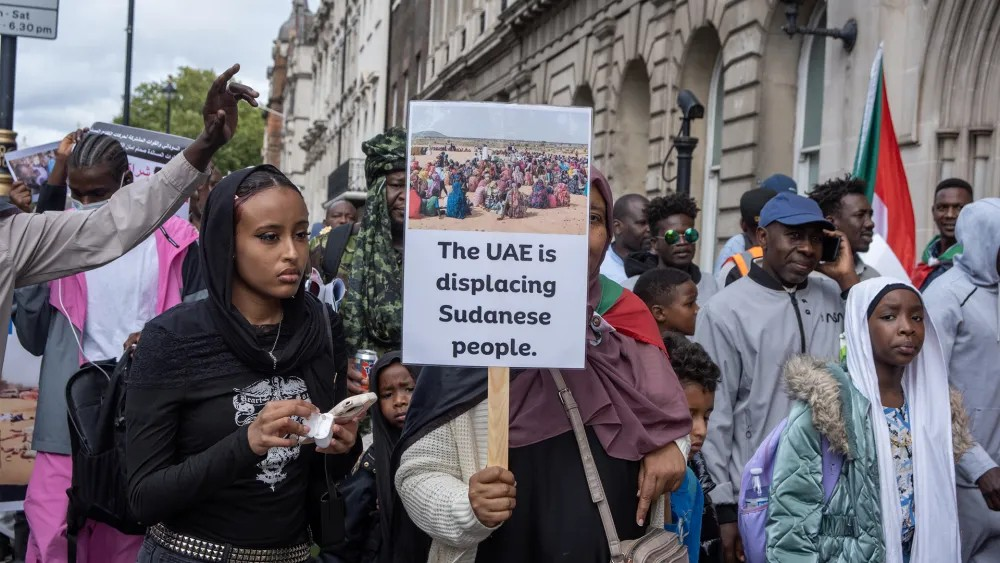
UAE ACCUSED…IN SUDAN’S CONFLICT….Sudanese officials repeatedly accused Abu Dhabi of providing extensive support to RSF including funding and military assistance, arguing this amounted to complicity in genocide…. The Sudanese govt took its accusations to the ICJ asserting UAE issued orders and support to RSF….analysts linked UAE to arming RSF forces, suggesting weaponsand ammunition entered conflict zones, violating UN embargoes, and some support has flowed through regional routes. In a May investigation, Amnesty Intl identified sophisticated Chinese-made guided bombs and howitzers used by RSF almost certainly re-exported by UAE, violating UN arms embargo. Crisis Research, Brian Castner, said the findings show extensive support that contributed to the conflict’s devastation. UN Sec Council Panel of Experts described evidence of arms transfers via the base in Chad, with flights from UAE suspected of carrying weapons to RSF, widely regarded as credible by sanctions monitors. Al Mayadeen
January 13
SUDAN TRIBUNE…REVEALING HORRORS AND ATROCITIES IN EL FASHER. This was followed by a military shift that “signaled the start of a harrowing chapter of human rights violations, with growing allegations of crimes amounting to genocide and ethnic cleansing…residents still trapped in the city. Field sources identified suspected mass grave sites.” It described shocking accounts of “secret burials, enforced disappearances, systematic destruction of evidence” clearly aimed at covering up the crimes committed. Witnesses…reported widespread presence of detention centres, where RSF fighters carried out murder, “rape, torture, starvation and extortion.” The testimonies paint a grim picture of the humanitarian situation with no communications and closed off to intl organisations. RSF detained most civilians in the city, leaving only a small number of elderly people, women and children. MEM
EGYPT’S POSTURE TOWARD CIVIL WAR IN SUDAN WAS STRATEGIC PATIENCE, Egypt’s Foreign Min framed it….the Egyptian presidency issued its most significant statement of the war in which it drew 4 red lines. They entailed preservation of Sudan’s territorial unity, rejection of parallel entities a direct swipe at RSF, protection of state institutions, and categorical refusal to allow any part ofSudan to secede. Cairo invoked its joint-defence pact with Khartoum, signalling the potential to get involved in the conflict militarily….There is a school of thought that Egypt reaped significant benefits from Sudan’s agony. Ahmed Kodouda, Impact Policy Group…observes the war provided a significant silver lining for Egypt: “Cairo managed the crisis to its advantage.” 2023, Cairo scrapped all customs duties on gold imports. The results were immediate and massive. …gold export boom in Egypt reached a staggering 2,746% jump in 2025. “Egypt’s gold reserves increased, a result of increased gold smuggling from Sudan. This influx of bullion acted as a crucial stabiliser for the Egyptian pound. By facilitating the export of ‘recycled’ gold to Dubai and Zurich, Cairo secured a steady stream of hard-currency liquidity it desperately needs. Khaled Mahmoued, Egyptian journalist, dismisses the idea that Egypt wants a fractured neighbour. The long-term threat of a militia state on Egypt’s southern border far outweighs short-term profits from smuggled gold…..Cairo’s early warnings to Sudanese leadership regarding RSF Dagalo: “You are building a state within a state. You are raising a lion that will eventually eat you.”
Beyond the absence of a neat, defendable corridor, regional calculus has turned decisively against Cairo’s interests. “UAE is on the other side, which wasn’t the case before. Americans who took the red lines on Libya seriously before are not taking them seriously on Sudan,” Emadeddin Badi, Global Initiative Against Transnational Organized Crime. This situation created a geopolitical headache for Cairo. UAE stands accused…of supplying RSF with advanced weaponry, drones and logistical support. Egypt…has been increasingly vocal in support for SAF. Cairo’s foreign min described it “at the heart” of Sudan’s national institutions, the collapse of which Egypt will “not accept.” This created tensions between Egypt and UAE. The Emirates remains a crucial financial lifeline for the Egyptian govt. RSF’s parallel govt is furious over Egypt’s bellicose rhetoric. “Egypt looks at Sudan as a backyard and one of the Egyptian provinces,” framing Cairo’s interest as a relic of old colonial mentality. For RSF, Egypt’s current policy is merely a continuation of this history, and SAF a mere tool of Egypt’s hegemonic ambitions. Hemedti repeatedly accused the Egyptian Air Force of direct intervention. Indeed, the relationship between RSF and Egypt has soured remarkably since Sudan’s war erupted. Cairo initially sought to mediate between SAF and RSF. But once Hemedti accused Egypt of treachery, it demoted RSF from a political partner to a militia….This partisan shift cracked the Quad, US, Saudi Arabia, UAE and Egyptian mediation group.
Cairo and Riyadh have drawn closer. Egypt and Saudi Arabia…share identical views on Sudan and Yemen. For Saudi Arabia, state failure in Sudan is a disruption to its Red Sea mega-projects, but for Egypt it is a terminal threat. Cairo is bound to its neighbour through deep institutional army ties, vital flow of the Nile and a long 1,200k border. If RSF pushes into the Nile valley, Cairo is… unlikely to send troops or jets into the fray. “I don’t foresee direct intervention except in veryspecific, critical stages,” Khaled Mahmoued. Cairo’s forceful rhetoric arrived long after damage was done….Sudan’s territorial integrity and sovereignty were already being dismantled. For months RSF had been busy with…state-building, appointing local governors and parallel administrative institutions to chip away at the internationally recognised SAF-led govt in Pt Sudan. Hemedti’s forces captured the border triangle where Sudan, Egypt and Libya meet. This placed RSF squarely on Egypt’s border. Cairo’s preferred toolkit will likely remain…intelligence, training and weapons. The true driver…was the fall of El-Fasher, that had far-reaching impacts on the geography of the war. It allowed RSF to shift attention, manpower and resources east and north, putting the capital and demographic centres at risk once again. For Egypt, another RSF advance means another exodus, another million refugees at its gates. If RSF scores more victories in Kordofan and pushes towards Nile Valley, Cairo will face a difficult choice of intervening directly and getting sucked into a brutal war with UAE proxies, or standing by as its red lines are quietly erased. The New Arab
January 12
BAHRI OBSERVATORY FOR HUMAN RIGHTS revealed testimonies indicating… secret graves inside the weapons camp in El Kadro and Jabal El Hamir of Hattab for victims believed to have died under torture. The Observatory published a report on the 1,000th day of the outbreak of the war. After the army entered Bahri, a new chapter was observed, represented by 3,000 detainees in Soba prison and Dar El Taibat without fair trials, and 500 judicial verdicts. 1,000 people are still among the disappeared most in custody of RSF, in addition to bodies still buried inside courtyards of houses and public squares in El Droshab and Samrab, awaiting burial worthy of human dignity.
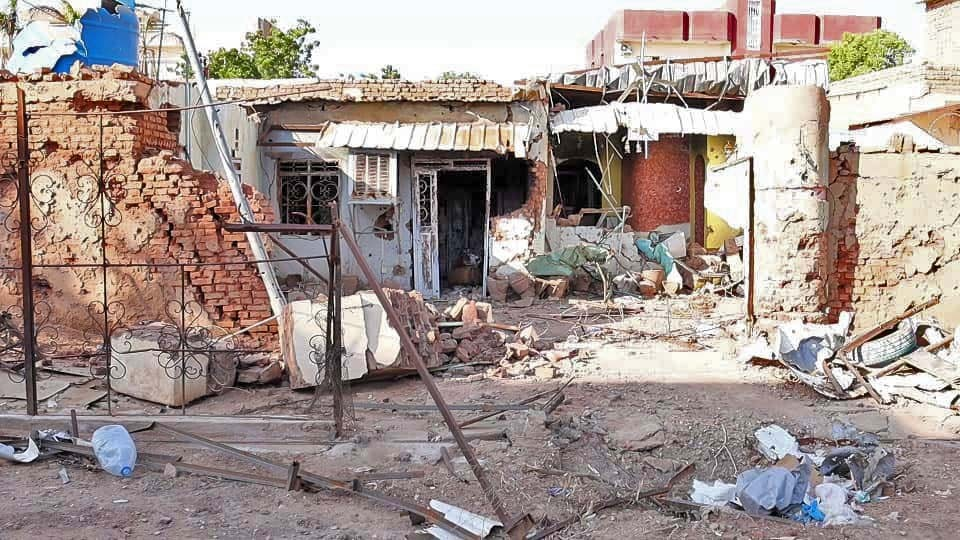
Since 2023, neighborhoods Hillat Khojali, El Baburat, Shambat, El Mazad, El Shabiya, Halfaya, El Samrab, Kafouri, El Ezba, Darduk and Nabta turned into open battlefields and forced displacement, after using civilian homes as military barracks, and exposing infrastructure and services to widespread destruction…targeting health facilities, burning El Baraha Hosp, storming El Darushab Hosp…looting pharmacies and medicine centers, destruction of a marine water plant,…prolonged power cuts….In light of this collapse, epidemics have spread, with 300 deaths recorded as a result of dengue and cholera, in the context of a health blockade and severe shortage of medical services….The Observatory pointed out that military operations affected vital facilities, including Jili refinery, Shambat and Halfaya bridges, which caused severe damage…and deepened suffering of the city’s residents. …what is taking place in Bahri cannot be considered collateral damage…but represents a recurring pattern of grave violations that require accountability and impunity. He reiterated his demand for disclosure of secret grave sites, release of those arbitrarily detained or subjected to trials, disclosure of the fate of the forcibly disappeared, guarantee of the dignity of victims, living and dead, and accountability of all those responsible for these violations. The Observatory expressed commitment to continue documentation and advocacy, that every testimony collected represents a step towards accountability, and Bahri, with its suffering, will not be just a passing page in the record of the war, but an ongoing issue that requires fairness, justice and restoration of rights. Dabanga
January 10
PM IDRIS ANNOUNCED GOVT RETURN TO KHARTOUM, after nearly 3 years operating from…Pt Sudan. It pursued a gradual return to Khartoum since the army recaptured the city. For close to 2 years, Khartoum, Omdurman and Khartoum N/Bahri was an active battlefield. Entire neighborhoods were besieged, rival fighters shot artillery across the Nile and millions were displaced. March-Oct, 1.2 million people returned to Khartoum. Many found a city with barely functioning services, their homes destroyed and neighborhoods pockmarked by makeshift cemeteries authorities are now exhuming. The war…killed tens of thousands of people in the capital alone, but the complete toll is unknown, as many families are forced to bury their dead in makeshift graves. Idris said the govt was committed to improving electricity, water, healthcare and education services. According to the UN, rehabilitation of the capital’s essential infrastructure would cost $350m. In recent months, the govt held some cabinet meetings in Khartoum and launched reconstruction efforts. The city witnessed relative calm, though RSF carried out drone strikes, particularly on infrastructure. Al Arabiya
January 6
WARRING PARTIES NEVER SAT FOR SUBSTANTIVE NEGOTIATIONS APART FROM HANDFUL OF MEETINGS….Those talks produced only days-longceasefires repeatedly violated, and a shared declaration of commitment to protect civilians widely viewed as meaningless. Indirect, informal or secret talks have taken place several times, but did nothing to quell the violence. Despite efforts by various would-be mediators IGAD, Saudi Arabia, Switzerland, US, Saudi Arabia, and others the conflict has proven intractable, with no signs either party is ready even to sit for a meeting, let alone agree to a full peace deal.
What explains the reluctance of the sides to negotiate after nearly 3 full years of war? s Internal power dynamics: Hardline elements within the Armed Forces and RSF harshly criticize or even threaten leadership whenever negotiations are considered….leaders fear being toppled by rivals if they appear weak or conciliatory. Their fears of internal criticism far outweigh fear of diplomatic consequences of disengagement. Prevalence of warmongering voices on social media: The warring parties invest heavily in producing and spreading war propaganda that inflames emotions and justifies continuation of the war…algorithms of social media platforms amplify the most divisive voices; pro-war posts go viral while pro-peace messages, neutral analysis and 3rd-party voices are drowned out. Incompatible war aims: The main parties previously shared power for a year after jointly toppling civilian govt in a coup in 2021….now they embrace maximalist war aims. …Sudan War Monitor
RAW MATERIAL NOT GOLD OUTSIZED INFLUENCE ON FIGHTING AS IT IS SMUGGLED TO FUND THE WAR EFFORT OF THE RSF. It is gum arabic, an essential, unsung hero in many products….a resin produced by the acacia senegal tree, which grows in a belt across Central Africa. The resin is powdered and used as an emulsifier and binder in nearly everything: soft drinks, ice cream, confectionery, chewing gum, adhesives, paint, cosmetic products. Intl corporate giants rely heavily on gum arabic, importing 200,000 tonnes in 2024, worth nearly $300m. When US imposed sanctions on Sudan, gum arabic was excluded from sanctioned products. There are 2 varieties: the more robust and commonly used hashab, and flakier, less- in-demand talha. Sudan’s climatic conditions are ideal to grow hashab.

Before war broke out Sudan was the world’s biggest gum arabic exporter with an estimated market share of 70-80%. Most of the world’s gum arabic comes from Sudan. “The trade has…traditionally [been] quite opaque, and there are no clear figures,” Joris van de Sandt, PAX. Post-April 2023, official export numbers from Sudan dropped drastically, but that does not mean the intl appetite for gum arabic has gone unsatisfied. Instead, export numbers from neighbouring countries have gone up,…indicating how this cash crop is exploited to finance the war. Most Sudanese gum arabic is smuggled out of the country, making it difficult to trace its origins. Some smuggling is done by regular Sudanese traders, who take their product over borders into Chad, So Sudan or neighbouring country. They do that to avoid having to certify their product is conflict-free, but also to evade levies by the Sudanese govt and RSF. Once the gum is smuggled to another country, it is mixed with locally produced gum and relabelled. But more insidious smuggling is done by RSF, which realised it could benefit by looting extracted gum to sell as well as imposing levies on traders. “RSF didn’t know anything about gum arabic; they just taxed people moving it, like any other good,” exporter Haisam Abdelmoneim. “Armed groups are controlling the routes,…controlling stockpiles, border crossings, extracting revenue. The biggest buyers of raw gum arabic are European companies, French and German firms leading. While these companies say they are undertaking due diligence to ensure their imports are ethically sourced, PAX researchers found otherwise: “European companies that import these ingredients, import something that has profited RSF, sustaining the war effort.” As fighting rages and RSF tries to raise more money for its war chest, the risk to farmers, tappers and everyone along the supply chain is worsening. “It’s a very important livelihood for millions of Sudanese people. But at the same time, it’s become a very insecure trade.” Despite the price for a tonne of hashab doubled, people who made a modest living off gum arabic – like all natural resources, the producers make the least money anyway are making even less. Al Jazeera
January 5
114 KILLED IN W DARFUR PAST WEEK: Attacks by army and RSF killed at least 114 people. 63 people were killed in RSF attacks around Kernoi, 51 killed in drone strikes by the Army on RSF-held Al-Zuruq. Meanwhile, fighting intensified around S Dilling as Army units moved to break a prolonged RSF siege. Drone strikes hit N Kordofan city El Obeid setting the main electricity station ablaze and triggering complete power outage.
WOMEN-LED PEACE BUILDING IN SUDAN. According to Women, Peace & Security Compact, gender-based violence is used systematically as a weapon of war, with a 288% rise in demand for survivor services in 2024. Ceasefire talks failed repeatedly despite mediation efforts. The collapse of basic infrastructure left millions trapped in famine-like conditions, while humanitarian agencies struggle to reach besieged populations. The war created one of the fastest-growing displacement crises in the world, forcing families to flee across borders.
Women remain largely absent from peace talks, despite having paid the highest price. Neither the Jeddah negotiations nor the Geneva discussions included women representatives. UN Women writes that women’s participation in peace agreements increases their durability by over 1/3, yet they are systematically excluded. Nevertheless, this does not stop Sudanese women from leading from the ground up. Peace for Sudan Platform, uniting 49 women-led organizations, demanded 50% representation in all governance and humanitarian efforts. Kampala Feminist Declaration informed regional dialogues in Addis Ababa, Kampala and Geneva. Emergency Response Rms–grassroots networks of 20,000 volunteers–are sustaining communities through food distribution, emergency care and civilian evacuation.
The real question is: why are women leading Sudan’s recovery alone? The intl community speaks of inclusion, yet continues to exclude those already trying to build peace. Sudan’s conflict exposes a deep contradiction between global commitments to women’s participation and the realities of intl diplomacy. Despite decades of advocacy, responses remain dominated by elite negotiations and humanitarian paternalism. Formal diplomacy excluded the people most capable of creating peace. The Jeddah and Geneva processes privileged military and political elites, while grassroots leaders were sidelined. Promises…to include women in peace and political structures were ignored. This erasure violates UN Sec Council Resolution 1325, a landmark intl agreement adopted in 2000. 25 years later, the Resolution’s goals remain largely unfulfilled.
Part of the problem lies in political fatigue and competing global priorities. Western and regional powers are divided by their own interests, some focused on counterterrorism and others on migration control, leaving Sudan’s peace process without a coherent intl strategy. Diplomatic efforts fragmented into parallel initiatives that rarely involve those most affected by the war. Funding flows primarily to intl NGOs, leaving local women-led networks underfunded. Hanin Ahmed, Emergency Response Rms told UN Gen Assembly: “The world must stop seeing Sudanese women as passive recipients. They are leaders, planners, visionaries.” Yet, less than 1% of humanitarian funding directly reaches them.
Today, intl attention has drifted elsewhere–to Gaza, Ukraine and climate disasters, leaving Sudan invisible. This neglect erodes not only Sudan’s social fabric but faith in global institutions. The credibility of the intl peace system collapses while women, who try their best to sustain communities with limited resources, receive neither funding nor recognition. Restoring peace in Sudan requires an immediate fundamental shift: from external power to locally driven, women-led transformation. Sudanese women have proven that sustainable peace grows from community resilience, not military negotiation.
1st, women’s grassroots networks must be recognized as political actors. A Women- Led Sudan Peace Forum of representatives from Peace for Sudan Platform,Emergency Response Rms and local groups, could serve as an institutional bridge between communities and formal mediators. With UN endorsement, it could monitor ceasefire compliance and coordinate humanitarian corridors, shape proposals for reconstruction. When women participate meaningfully, legitimacy grows, violence decreases, reconstruction accelerates. 2nd, inclusion without resources is merely symbolic; there is a need for direct funding to women-led initiatives. Sudan Women’s Resilience Fund could distribute micro-grants for community kitchens and education programs. AU and UN should establish a rapid response system to protect women from attacks and provide emergency evacuation. Protecting those who protect others is the most basic moral test for any peace agenda.
The women of Sudan have shown peace-building is not a distant ambition but an everyday act of courage. Their work offers a model for how intl policy could evolve —by investing directly in communities rather than militarized states. If the world truly believes in gender equality and human rights, Sudan must be the place where those values are put into practice. Aisha Hamad, Peace for Sudan Platform: “Our collective effort is pivotal in creating sustainable peace and reinforcing the central role of women in rebuilding Sudan.” Sudanese women are already acting by saving their communities without waiting for permission, and with courage and compassion. Will the world finally meet them with equal commitment? Org for World Peace.