
Tell Congress: NO arms sales to a government complicit in potential war crimes.
Pass the Stand Up for Sudan Act (H.R.2059, S.935) today.
November 28
FORGOTTEN CONFLICT, FORGOTTEN NATION. WILL ANYONE LISTEN TO
THE VICTIMS’ VOICES IN SUDAN? The ongoing conflict…has brought Sudan to its
knees. Millions of people have been displaced, lost homes and businesses, suffered
horrific violations, including torture, sexual violence and lost loved ones. The UN
declared Sudan to be the worst humanitarian crisis in the world, claiming tens of
thousands of lives and displaced 12.4 million people, including 3.3 million refugees.
Women and girls face unprecedented vulnerability, with a sharp increase in maternal
deaths, and 80% of hospitals in conflict zones non-operational, leaving many without
critical medical care, and cases of conflict-related sexual violence remain hugely
under-reported. UN Independent Fact-Finding Mission on Sudan 2025 War of Atrocities
describes the seriousness of the atrocities endured by Sudanese since the war started.
The report found both parties detained individuals arbitrarily without charge or legal
process and subjected them to torture, inhumane and degrading treatment and inhumane
conditions. The report found large scale of rape and other forms of sexual and gender
based violence, amounting to crimes against humanity, committed mainly by RSF but
also by SAF, and targeting women and girls based on their combined gender and
ethnicity. The violence has shattered not only the victims but also their families and
communities, leaving lasting impact for generations to overcome. The inability to seek
justice leaves victims…struggling on their own without access to reparations,
accountability or even medical assistance to address the wounds left by these violations.
We urge the African Commission on Human & Peoples’ Rights to keep documenting
human rights violations through the Fact-Finding Mission, to visit Sudan as well as other
places where Sudanese refugees sought safety in neighboring countries. We call on the
UN to impose embargo on Sudan to prevent influx of weapons from 3rd parties fueling
the war. Finally, we urge the political bodies, including UN Sec Council, AU and IGAD
to push SAF and RSF to end the atrocities, and carry out effective investigations into
violations committed and provide reparations for the victims. Al Taghyeer
November 27
HUNDREDS OF CHILDREN ARRIVED IN TAWILA, WEST DARFUR, WITHOUT
PARENTS SINCE RSF SEIZED CONTROL OF EL-FASHER LAST MONTH.
Norwegian Refugee Council said 400 unaccompanied children arrived but the real
number was likely much higher: “Children are reaching Tawila exhausted and deeply
distressed, often after days of walking through the desert. Many arrive terrified of the
armed groups they fled from or might have encountered on the road. Many became
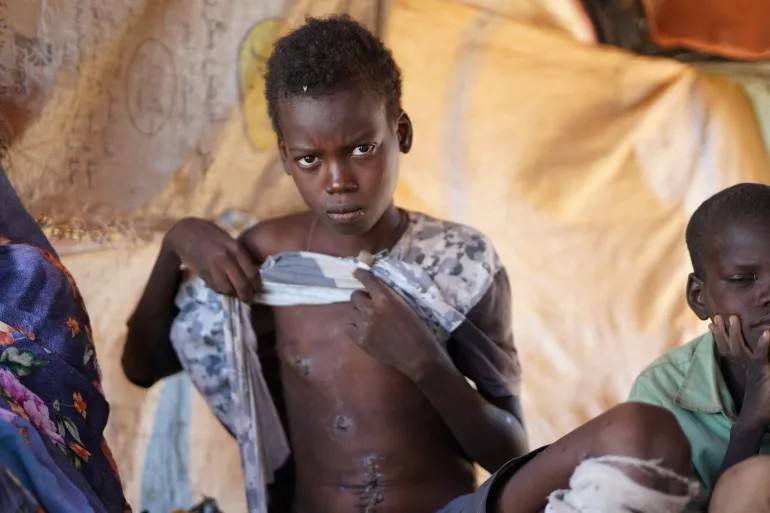
separated from their parents during the chaos of flight, while others’ parents are believed
to have gone missing, been detained or killed.” RSF seized control of el-Fasher Oct 26
after an 18-month siege that cut residents off from food, medicine and critical supplies.
The paramilitary group…has been accused of committing mass killings, kidnappings and
widespread acts of sexual violence in its takeover of the city. 100,000 people fled el-
Fasher since RSF’s takeover,…many seeking refuge in nearby Chad. NRC registered
15,000 new arrivals in Tawila…since Oct 26. 200 children are registered each day.
Nidaa, a teacher with the education programme, said children arrive showing “signs of
acute trauma. When we first started our classes, some children could not speak….
Others were waking up with nightmares. They describe hiding for hours, travelling at
night to avoid attacks and becoming separated from family in the chaos.” Humanitarian
groups said the heavily populated displacement camps are becoming overwhelmed with
new arrivals…. Sudanese American Physicians Assoc estimated 650,000 internally
displaced people…sought refuge in Tawila amid months of fighting. Nearly ¾ of
displaced residents lived in informal sites without adequate infrastructure, while less
than 10% of displaced households had reliable access to water or latrines: “These
conditions mean Tawila has effectively become a stand-alone crisis epicentre, not merely
an overflow from el-Fasher.” UN experts warned the deteriorating situation has opened
women and girls up to a heightened risk of sexual exploitation and trafficking. Displaced
children are increasingly vulnerable to being recruited to fight: “We are deeply
concerned at the alarming reports of human trafficking since the takeover…by RSF.
Women and girls have been abducted in RSF-controlled areas, and women,
unaccompanied and separated children are at elevated risk of sexual violence and sexual
exploitation.” Noting that families have been left without shelter, humanitarian aid and
access to basic services, including healthcare and education, the experts called for
“urgent action to end the human rights violations driving this suffering.” Al Jazeera
November 26
SUDAN MEDIA FORUM EXPRESSED DEEP CONCERN REGARDING FIERCE
CAMPAIGN AGAINST A NUMBER OF JOURNALISTS…. The measures taken
against journalists from criminal prosecutions to…laws carrying the death penalty
constitute exploitation of legal procedures that violate legality in criminal cases and
contravene international standards for freedom of expression and the press. This is
compounded by measures that deprive them of their citizenship rights,…preventing them
from obtaining identity documents and passports….a flagrant violation of fundamental
human rights…. We particularly condemn the blatant targeting of our colleague Rasha
Awad, editor-in-chief of Al-Taghyeer….we declare unconditional solidarity with our
colleague Shawqi Abdel-Azim, editor-in-chief of the investigative platform, colleague
Maher Abu Al-Jokh, and colleague Sabah Mohamed Al-Hassan, all…facing an escalating
campaign of harassment and persecution. Sudan Media Forum considers this attack…an
attempt to intimidate journalists and silence independent voices by wielding the law like
a sword against their necks. The word will not be silenced. The truth will not be buried.
Sudanese journalism, despite all the wounds, will remain on the side of its people.
Sudan Media Forum/Dabanga
ARMY REPELLED PARAMILITARY ASSAULT ON KEY SOUTHERN CITY, AS
WASHINGTON URGED BOTH SIDES TO ACCEPT CEASEFIRE PROPOSAL aimed
at stemming one of the world’s worst humanitarian crises. US Africa Envoy Boulos said
neither of Sudan’s warring parties accepted a new truce proposal from the Quad group
that includes US, Saudi Arabia, UAE and Egypt: “We appeal to both sides to accept the
humanitarian truce….” Recent days have seen renewed diplomatic activity after Trump
said…he would move to help end the war, following discussions with bin Salman. A
US-backed plan put forward on behalf of the Quad called for a 3-month humanitarian
truce, followed by permanent ceasefire and 9-month transition to civilian-led
governance. The army rejected the proposal which hinted at excluding both the army
and the RSF from Sudan’s post-war political roadmap. Burhan dismissed a plan put forth
by Boulos this month as “the worst yet”, accusing him of parroting UAE’s talking points.
Boulos spoke alongside UAE adviser Gargash, whose country repeatedly denied
widespread reports that it arms the RSF. Reports of atrocities have shocked the world
after the RSF seized El-Fasher…. Amnesty Intl accused RSF of committing war crimes
in El-Fasher, and said UAE facilitated their operations. The New Arab
November 25
HEAD OF RSF SAID HIS PARAMILITARIES WOULD IMMEDIATELY ENTER
INTO 3-MONTH HUMANITARIAN TRUCE, after Trump said…he would intervene to
seek an end to a war that has plunged the country into famine. …the Quad earlier this
month proposed a plan for a 3-month truce followed by peace talks. RSF responded by
saying it had accepted the plan, but soon after attacked army territory with a barrage of
drone strikes. Monday’s statement appeared to announce a unilateral ceasefire. It came
a day after Sudan’s army chief rejected the Quad’s proposals, and criticized the inclusion
of UAE, accused of arming the RSF, as a mediator: “In response to international efforts,
chiefly that of…Trump…I announce a humanitarian ceasefire including a cessation of
hostilities for 3 months,” Dagalo of RSF said Mon. His comments come…when RSF has
come under fire for brutal attacks on civilians in the aftermath of its takeover of…al-
Fashir. That takeover cemented its control of the Darfur region, and the force
subsequently stepped up attacks on Cordovan in a bid to take control of the country.
Army chief al-Burhan…accused the US proposal of aiming to weaken the army while
allowing RSF to maintain the territory it seized. RSF has been accused of genocide, and
both Dagalo and al-Burhan have been sanctioned by the US. Al Arabiya/Reuters
DOCTORS WITHOUT BORDERS…WITHDRAW STAFF FROM ZALINGEI HOSP,
CENTRAL DARFUR…following a shooting which left Min of Health stretcher bearer
dead, and 4 wounded. MSF called once again for RSF to guarantee protection of health
facilities and staff, saying the move is to ensure the safety of the organisation’s teams:
“Following this incident, and for the 2nd time this year, we have been forced to
withdraw staff from to ensure the safety of our teams,” Myriam Laaroussi, MSF
emergency coordinator. “It is unacceptable for armed confrontations to affect medical
facilities and humanitarian aid.” MSF teams provided critical services and support at
Zalingei Hosp in the emergency room, surgery, paediatrics, emergency obstetrics,
newborn care and inpatient departments, as well as in isolation tents for treating measles
and cholera outbreaks. “Since 18 Nov MSF maintained continuous, active engagement
with the Min of Health, community members, security agencies and different authorities
to work on the protection status of the hospital. During the withdrawal of our teams 3
staff will remain to liaise with authorities, continue to provide support for human
resources and supply medicines.” The ongoing violence disrupts access to healthcare for
hundreds of people in need at a time when MSF has been responding to a measles
outbreak. 1 April to 20 Nov MSF teams received 850 measles patients, 1/3 acutely
malnourished. “Many measles patients suffer from acute malnutrition, which increases
the risk of developing severe medical complications,”José Sánchez, MSF medical
coordinator. “Malnutrition combined with measles can be fatal. Weekly averages
escalated rapidly, from 3 cases in July to 22 in Aug, 43 in Sept, 57 in Oct and 62 in Nov.
It is essential our teams continue to provide urgent medical care at the hospital.” MSF
previously announced it was forced to reduce its teams and suspend all activities at
Zalingei Hosp following a violent armed assault 16 Aug that left 1 person dead, and
injured 5, including a Min of Health staff member. This suspension of medical activities
comes during a deadly cholera outbreak. “MSF cannot resume operations until all
parties provide clear security guarantees to protect staff and patients.” Dabanga
AMNESTY INTERNATIONAL SAID ATROCITIES COMMITTED BY
PARAMILITARY IN DARFUR TOWN CONSTITUTED WAR CRIMES. In a report,
the intl human rights organization indicated it collected testimonies describing the
barbarities perpetrated by RSF when their fighters took control of el-Fasher…. Atrocities
included execution of dozens of unarmed men and rape of women and girls…. others
had been taken hostage by RSF fighters for ransom, and that witnesses reported seeing
“hundreds of abandoned corpses” in city streets and on main roads leading out of el-
Fasher. “This persistent and widespread violence against civilians constitutes war
crimes….” Agnès Callamard, Secy Gen. Witnesses told AP last month RSF fighters
were going house to house, killing civilians and committing sexual assaults. WHO
reported gunmen killed 460 people at a hospital and abducted doctors and nurses. The
witnesses described “groups of men being shot or beaten” and hostage-taking for
ransom. Fighters sexually assaulted women and girls. It cited a woman who claimed she
and her 14-year-old daughter were raped by fighters while trying to flee the city. The
woman indicated her daughter’s health deteriorated and she died in a clinic in Tawila,
which has become a refuge for those fleeing the atrocities. A 29-year-old woman was
among 11 abducted by RSF fighters and raped while trying to flee the city Oct 26. She
was raped 3 times. “The world must not look away as more and more details emerge
about the RSF’s brutal attack on el-Fasher,” Callamard said, calling for all those who
committed atrocities to be held accountable. She criticized UAE for support of the RSF,
which fuels a relentless cycle of violence against civilians. The army has also been
accused of atrocities—though not to the same extent as the paramilitary force.
AfricaNews
November 24
BURHAN SLAMS US ENVOY, REJECTS UAE ROLE IN MEDIATION. Al-Burhan
categorically rejected UAE participation in the Quad initiative, stating that if Abu Dhabi
is part of the group, Sudan cannot consider the Quad neutral: “The whole world has
witnessed that UAE is the party supporting the rebels against the Sudanese state.” He
reaffirmed the army’s determination to recapture all territories seized by RSF in
Cordovan and Darfur….al-Burhan praised bin Salman’s mediation efforts, saying his
recent discussion with Trump clarified the true situation in Sudan. Sudan submitted its
own roadmap to the Quad and allied nations, outlining conditions for any ceasefire: RSF
withdrawal from all areas seized since the Jeddah Agreement including Zalingei,
Geneina, El Fasher and Nyala, followed by cantonment in designated zones, return of
displaced persons, and Sudanese-led dialogue on the country’s future. He called the
Quad paper delivered through Boulos “the worst proposal ever submitted,” saying it
effectively eliminates the Armed Forces, calls for dissolving security institutions, and
leaves the RSF in place. He further charged Boulos with making unfounded allegations
that the government obstructs humanitarian aid and uses chemical weapons. Al-Burhan
said Boulos “speaks with the voice of the UAE” while attempting to dictate Sudan’s
political future….criticized the intl community’s failure to enforce UN Sec Council
resolutions requiring the RSF to lift the siege of El Fasher.
November 20
EU SANCTIONS DAGALO, CITING CENTRAL ROLE ACROSS DARFUR AND
GRAVE VIOLATIONS OF INTERNATIONAL HUMANITARIAN AND HUMAN
RIGHTS LAW. The decision…significantly expands the bloc’s sanctions regime on
Sudan’s warring parties. Dagalo “played a pivotal role in the RSF campaign in Darfur,”
personally supervising military operations in all 5 states since Oct 2023. According to
findings,…oversaw attacks resulting in killings, executions and violence against civilian
populations….“Dagalo was identified by UN Panel of Experts on Sudan as having
‘played a pivotal role in the RSF campaign in Darfur, personally supervising military
operations in the 5 States of Darfur….ordered the killing and execution of civilians and
led RSF actions against civilians in El Fasher. Together with his sons, Dagalo owns
holding company Al Junaid Multi Activities Co an entity subject to restrictive measures
for procuring military equipment for RSF. He is associated with an entity that provides
support for RSF actions that threaten the peace, stability or security of Sudan.” The
sanctions come weeks after RSF captured El Fasher, the army’s last major stronghold in
the traditionally restive region….thousands of civilians, soldiers and ex-combatants
were killed along escape routes, inside hospitals and city’s outskirts. Satellite images,
survivor accounts, and videos filmed by RSF fighters show mass executions, targeted
killings of fleeing men and shootings inside medical facilities humanitarian researchers
described as “Rwanda-level mass extermination.” Sudan War Monitor
November 16
BEARING WITNESS TO SUFFERING. WAR ON SUDAN: THE CHOICE IS OURS.
This sentence has echoed in my mind throughout the time I spent in Sudan as part of the
operational support team responding to the humanitarian needs caused by 30 months of
reckless war. These needs are not confined within Sudan’s borders. They spill over into
vast gaps faced by refugees fleeing for their lives to neighboring Chad, where I spent
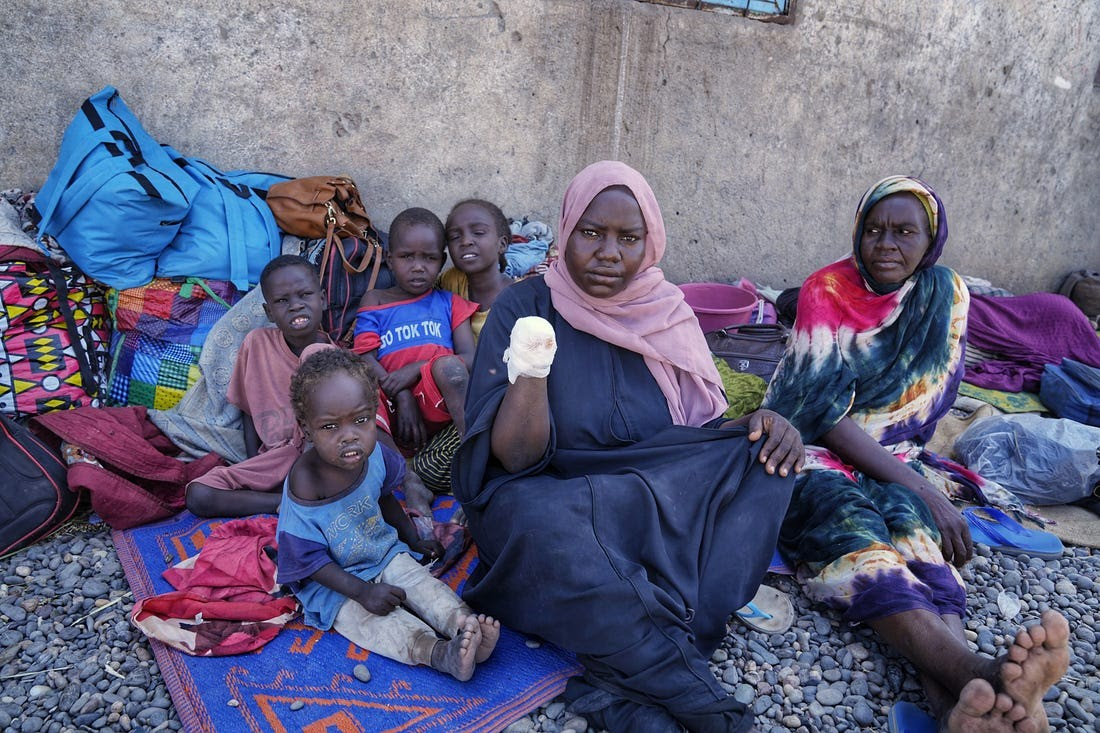
my hand. After that, I was displaced to Al Gederaf, and now I am living as a displaced person in Al Tadamun school gathering site.
several months responding to the humanitarian crisis. What is happening is,
ultimately, a collective failure.
I met countless firsthand eyewitnesses. One memory that stands out is meeting refugees
who fled mass killings of June and Nov 2023 in El Geneina, W Darfur. I met them when
RSF began the siege of El Fasher. They recounted their horrific experiences: how
thousands of community members were slaughtered and they feared that El Fasher
would soon suffer the same fate. I remember the shock and sadness on the faces of
people returning to Khartoum after Ramadan. They were coming back to entire
neighborhoods completely destroyed after months of relentless street fighting and
campaigns of indiscriminate heavy artillery shelling and airstrikes. The desolation was a
stark indication of the armed factions’ aim to destroy the enemy and maintain power
over people without any regard for the preservation of human lives and dignity. I
remember the mothers in the neonatology ward of El Geneina Teaching Hosp, counting
how many newborns had died during the past week because of the unmet gaps in
healthcare delivery across W Darfur.
The scale of devastation in Sudan is soul-crushing. The complexity of the conflict
cannot be summarized in a few sentences, but what is clear is that the social fabric of the
country is being ripped apart, and people are being forced to take sides by the sheer
pressure of survival. The forces at play are emerging from ethnic fault lines warring
parties exploit for their own gain — much like colonial powers did before them. These
societal fractures are deeply rooted in the past, and reverberations of the current events
will be felt for generations to come. I would not describe what we are witnessing in
Sudan as inhuman, because that word itself is the first step of the othering process at the
very root of the crisis. Rather, what we are seeing is the darkest side of humanity
exposed through actions carried out against civilians in Sudan for the past 30 months.
It tragically reminds us of the genocide of the early 2000s. The violence unleashed
during that period involved the exact same actors at play today, even though many
relations and alliances shifted in the meantime. For too long and still at the time of
writing, armed actors in Sudan are erasing the humanity of entire communities in their
words on paper and speeches to justify the physical and cultural extermination of the
people. However, violence and darkness are not the only factors echoing from the past in
today’s situation. The generosity, courage and boldness of the Sudanese people are also
extending old traditions of solidarity in various forms. The community kitchens fed
millions of people for months if not years and continue to do so. The doctors’ networks
and Emergency Response Rms treat hundreds of thousands of patients and saved
countless lives. They are not only doing an incredible work, but they are also the bulk of
aid Sudanese people are receiving, particularly in areas that are off-limits for
international organizations and state institutions.
We all failed Sudan. The international humanitarian community failed the Sudanese
people when, at the start of the war, most international staff of all institutions abandoned
them to their fate. It has continued to fail by not delivering aid where it is most needed—
and at the scale required—due to a lack of leadership and coherence. The same failure
extends to international mechanisms: from the UNSC to foreign powers deeply
involved, directly or indirectly. Despite Resolution 2736 of UNSC, which demanded
RSF end its siege of El Fasher, no concrete or meaningful actions were taken. These
hollow declarations are empty gestures; the Sudanese people are still waiting to see
genuine political will transform into real change in their lives.
Mutual aid flourished from tradition and conviction, but also out of necessity. As the
conflict drags on, the needs continue to grow in increasing parts of the country. Weapons
continue to flow from foreign powers—despite an embargo, constantly violated, that
should have been expanded from Darfur to cover the whole country. And international
funding continues to decrease steadily. Despite repeated warnings, those with the power
to act across the international system failed to prevent the loss of hundreds of thousands
of lives. This war is not inadvertently forgotten, it is consciously ignored. The tragedy
unfolding today was predictable, but not unavoidable. The choice remains ours.
November 12
US, ISRAEL DRIVING SUPPORT FOR TERROR ORGANIZATIONS: BASHIR. In
2015 Al Bashir accused US and Israeli intelligence of funding terror organisations ISIS
and boko haram. In an interview with Euro News Bashir condemned the terror
entities…“Because aside from the US and Israel no other entity has anything to gain
from funding such groups.” He said US policy in the Arab world and support…to Israel
were among the main factors driving many young Muslims to join the ranks of terrorist
organisations. Bashir called on the international community to end its violent response
to terror organisations, warning it could lead to further extremism. “Taking at look at the
policy of the US and its boundless support to Israeli policy against Palestine. We fully
support the Palestinian resistance against Israeli occupation.”
November 5
CONFLICT IN SUDAN IS NEO-COLONIAL TAKEOVER, with US ally UAE using a
proxy force to exploit that nation for resources and strategic position. The ongoing
conflict is a catastrophic manifestation of decades of fascist rule and intense regional
imperial aspirations. Sudan’s internal struggles have been weaponized by external
actors, transforming the nation into a theater for neo-colonial interests. In the war that
started April 15 2023, UAE and other countries are implementing a larger plan to take
control of Africa’s security and resources on behalf of US empire. The roots of the crisis
trace back to the era of al-Bashir, who feared he might become the next Saddam Hussein
or suffer the fate of Taliban, with Sudan on the US regime change list. Neoconservatives
settled on So Sudan’s creation as a vassal state, that led to catastrophic consequences
after So Sudanese leaders refused to comply with US policy. Arab Spring brought a
second scare to the Bashir regime. Bashir assisted Qatar in its regime change plot
against Gaddafi in Libya, with forces that used weapons 100% Sudanese-made. This
move signaled to regional US allies that Sudan is open for business as a collaborator in
regime changes and imperial policy, with past destabilization efforts from Bashir’s
government in Libya, Chad and Uganda. These efforts would lay the groundwork for
eventual regional alignment with RSF that UAE would take advantage of. Leading up to
Bashir’s eventual overthrow, foreign policies inadvertently or deliberately empowered
RSF, allowing them to become a nation-within-a-nation. EU’s Khartoum Process in
2014 aimed at stemming African migration, empowered RSF to quell migration,
granting the paramilitary legitimacy and resources through the central government in
Khartoum.
2015 Saudi Arabia and UAE began to militarize marginalized Sudanese citizens to fight
in the Yemen war. With SAF officers coordinating ground operations in Yemen, the
majority of fighters came from RSF. The Yemen war marked solidification of relations
between RSF and UAE, as the money enabled the RSF to intensify its recruitment
campaign, which transformed it from a fighting unit under SAF to a parallel to the
national army. This external support was compounded by Russia’s support of RSF via
Wagner group, solidifying the militia’s power base. 2017 Bashir strengthened ties with
Russia, which prompted Wagner to create security and gold mining partnerships with
RSF. This opened a new source of income for RSF as they controlled vast gold mines in
N Darfur, Sand Et Darfur, CAR and So Sudan Following Bashir’s toppling, Dr.
Hamdok, former high-ranking UN official, became PM, but his transitional government
was quickly faced with severe internal and external conflicts. SAF was headed by Al-
Burhan, senior Bashir-era army officer in charge of military operations in Darfur, as
head of the Transitional Military Council. RSF was led by Dagalo, as deputy head.
As RSF, SAF and various political forces sought foreign backers, US intensified
pressure on the transitional government. US pressured Sudan to sign the Abraham
Accords and normalize relations with Israel, positioning the nation to officially become
the backyard of the New Middle East, coined by Netanyahu. US demanded Sudan pay
hundreds of millions in compensation for terrorism attacks and continued to pressure
harsh austerity measures and lift essential subsidies. This was seen as wins for Trump
and Biden, it also created discontent in the street, and gave Bashir regime loyalists a
reason to ride the anti-US wave and plot against the civilian government. This saw
fierce competition among regional powers attempting to secure ports along the Red Sea.
Turkey, UAE and Russia all attempted to strike deals to secure these ports and gain
influence in the crucial Red Sea trade corridor. As competition intensified, foreign actors
solidified control over the 2 major military factions. Egypt, driven by motivations
including border security, the Grand Ethiopian Renaissance Dam and Nile access, and
pursuit of regional hegemony, solidified control over SAF through support and political
coercion. Egypt supposedly even pushed Al-Burhan to covertly support Tigray PLF in
its war on Addis Ababa, where at the height of the war Burhan mobilized the army to
take back the disputed area. The timing of the mobilization was odd given the region has
been disputed for decades, and happened to border TPLF-controlled areas. UAE on the
other hand has not only propped up RSF, but practiced neocolonial policy across many
sectors. UAE’s subimperialism involved expanding cooperation with RSF by supplying
arms, securing gold mines and trade in livestock and agriculture. Adding to its
increasing footprint in the continent, RSF became UAE’s main actor in Africa, while
expanding influence to Chad, So Sudan, Ethiopia and a strong relationship with Libyan
warlord Haftar. UAE hasn’t been working alone, as they were first signatories to the
Abraham Accords and created a tight bond with Israel. This normalization gave UAE
green light to play an increasingly neocolonial role in Africa with a green light from
US. The pattern of UAE involvement in Africa signifies a sort of outsourcing of US
empire ambitions to regional actors who were not in the picture 15 years ago.
The path to the 2023 war was set in Oct 2021 when Burhan and military leader
Himmedti overthrew the civilian government of Hamdok. Efforts to avoid a conflict
included a framework agreement proposed by political forces that would have
restructured the military. While the exact provocation is still debated, it is suspected
former Bashir loyalists in SAF initiated the conflict, though RSF was ready and willing
to fight due to strong foreign backing. The primary regional alliances became clear:
Egypt firmly backed SAF, UAE backed RSF. 2nd-tier support for SAF included Turkey,
Eritrea and Iran, while RSF received support from Chad and Kenya as conduits for arms.
Each side started garnering support from different actors including Somalia, So Sudan
and Libya. As violence spread and millions became displaced the effects of the war
spread to these countries. So Sudan’s economy collapsed due to halting oil pipelines that
go through Sudan. As millions were displaced, 20 million are in dire need of
humanitarian assistance, foreign actors started to intervene. BRICS countries attempted
to quell regional conflicts, partly by adding adversaries like Egypt and Ethiopia (Iran,
Saudi Arabia, UAE) to the alliance. BRICS supposedly negotiated the evacuation of
Burhan from military hqs in 2023 under siege by RSF. The assumption was Burhan
would leave Khartoum and join negotiations in Jeddah. Burhan saw this as an
opportunity to regroup SAF forces and allies, and gain regional and international
legitimacy for the fight against RSF. Other efforts include US leading the Quad (US,
Egypt, UAE, Saudi) to pressure SAF and RSF to negotiate. AU is poised to facilitate an
inclusive political dialogue once a ceasefire is achieved. The war serves as a tragic
analogy: the nation has become a high-value commodity caught in a global auction,
where SAF and RSF are merely proxies bidding with foreign-supplied arms, rather than
independent political actors fighting for national interests. Mosaab Baba, Pan-African
Forum/Black Agenda Report
November 3
EXECUTION, SEXUAL VIOLENCE, KIDNAPPING: SURVIVORS RECOUNT
HORRORS INSIDE EL-FASHER AND TREK TO ESCAPE RSF TAKEOVER.
Jawahir Adam barely made it out of El-Fasher alive. Adam, 62-year-old woman from
the Fur tribe, fled the city when the RSF violently seized it. The city had been under
RSF siege 18 months, starving residents, destroying entire neighborhoods, triggering
famine. As RSF forces overran El-Fasher, driving the SAF from its last remaining
stronghold, Adam joined 350 people the majority women, children, elderly and
wounded heading to Tawila in search of safety. By the time they reached Tawila, the
group had been reduced to 130 people. Adam and survivors recounted horrific scenes
as they trekked through the desert, where they faced kidnapping, extortion, sexual
violence and ethnically targeted killings at the hands of RSF. The ethnic conflict in
Darfur historically involved Sudanese government forces and allied Arab militias…
against rebel groups and civilians from non-Arab African ethnic communities,
specifically the Fur, Masalit and Zaghawa. “Even in interrogations at checkpoints they
asked: What tribe are you? If you’re Zaghawa or any non-Arab tribe, you’re counted
among the dead.” Immediately after RSF took control, reports of mass atrocities began
to emerge. 500 patients and their companions were killed in Saudi Maternity Hosp:
“Women and girls are being raped, people being mutilated and killed, with utter
impunity. RSF fighters moved house to house with credible reports of widespread
executions as civilians attempted to escape.” Integrated Food Security Phase
Classification said famine spread to El-Fasher and Kadugli in S Kordofan which has
been under RSF siege for months with “a total collapse of livelihoods, starvation,
extremely high levels of malnutrition, and death.” There has been “a deliberate pattern
of ethnically targeted executions of unarmed civilians, assaults, sexual violence,
widespread looting and destruction of vital infrastructure, and mass forced
displacement.”
Adam ran a small restaurant in Abu Shok Camp, where she had been displaced
in 2015 as the fighting raged. She served traditional food and tea to her
neighbors, including those who couldn’t afford to pay. It was her only income
after her husband was killed in the war in 2015. Adam was forced to move
again after RSF forces breached Abu Shok Camp. Adam left with her daughter,
3 of her grandchildren, her niece and nephew—all carrying what they could.
They initially sheltered in the relatively fortified neighborhood Al Daraja Al
Oula, where some armed leaders allied with SAF lived. The homes offered
better protection from the barrage of RSF artillery falling across the city. As
RSF moved in, the family, with hundreds of others, made the decision to leave,
first west toward small village Hillet Al-Sheikh, then onward to Qurni,
controlled by armed movements aligned with RSF and part of RSF’s parallel
governance structure: “We got water in Qurni and spent 1 night there,
surrounded by the sound of gunfire all along the road we moved at 4am toward
Tawila. By 10am, we saw corpses of men with emaciated bodies, they died of
hunger after 18 months of siege.” On the road, RSF forces conducted
widespread abuses: random gunfire, humiliating interrogations, and theft.
Phones, jewelry, money and anything of value was taken. Those deemed too old
or too weak to continue were left behind. Adam said the sexual violence was
systematic and public: “They were touching women’s genitals in front of their
children, enjoying humiliating us I have never seen such provocation in my
life.” She witnessed soldiers, some no older than 16, telling an elderly man “he
had lived long enough” and they would “help him leave life comfortably.”
70,000 people have been displaced from El-Fasher since RSF took control.
6,000 made it to Tawila, the nearest camp 40mi away. RSF allowed some
residents to leave for Tawila. But 2 days after seizing the city, the militia accused
all remaining civilians of being loyal to the SAF and prevented most from
escaping. Videos circulating online show RSF fighters hunting down civilians as
they flee, wounded or kneeling civilians being beaten and pleading with armed
militiamen for their lives before being executed, trenches filled with bodies.
Inside the city, the humanitarian situation is catastrophic. All those left in El-
Fasher were ordered to remain in their homes. Hundreds were arrested and
accused of supporting the army. Susan Omar, 29-year-old government
employee, evacuated to Al Daraja Al Oula, and remained to care for her elderly
parents. Omar was unable to check on her extended family until 3 days after
RSF seized control because most internet cafés had been shut down. When some
reopened, they were operated by RSF. She now lives in constant fear, without
access to medicine or food. Gunfire rings out throughout the day, accompanied
by cries of hungry children: “Since the war began…we have not seen a single
good day. After the city fell, the streets filled with corpses and civilians faced
field tribunals. What happened is beyond description in its brutality.” According
to Muhammad Bashara, 33-year-old Sudanese human rights activist in Paris,
RSF has been constructing earthen barriers around the city, covering 43mi with
the explicit purpose of preventing residents of certain neighborhoods from
leaving the city. The massacres being committed have not distinguished between
Black African tribes, though targeting has concentrated particularly on the
Zaghawa, along with Fur and Masalit groups, who previously survived
genocidal assaults in Geneina in W Darfur May-June 2024. Amid mounting
international outrage, RSF began forcibly filming citizens, coercing them to
state on camera the city is safe and conditions are stable…. Eisa Dafalla, Drop
Site News
October 29
WORLD’S WORST HUMANITARIAN CRISIS JUST FOUND A NEW EPICENTER.
The capture of El-Fasher signals the start of a worsening chapter in the history of Sudan.
With 260,000 civilians trapped in the besieged city, the fall of SAF last major stronghold
in Darfur immediately led to horrifying reports of mass executions, widespread
displacement and deepening of a humanitarian crisis already considered the world’s
worst. El-Fasher is more than just a capital city; it is the historic capital of the Darfur
Sultanate and a critical gateway connecting Sudan to central and west Africa. Its
strategic and symbolic importance is immense. The city has long been a haven for
Internally Displaced Persons since the first Darfur war in 2003, when Janjaweed militia
unleashed a campaign of terror against non-Arab indigenous groups. The rebellion
launched by Darfur liberation movements—primarily non-Arab indigenous groups like
Masalit, Zaghawa and Fur—as a response to decades of marginalization from Khartoum
and preferential treatment given to Arab nomadic groups, allowing them to encroach
upon indigenous agricultural lands. The city’s fall to RSF…sends a profound and
terrifying signal to the region’s non-Arab population.
The intensification of the siege began in early 2025, demonstrating a clear intention to
consolidate control over the entire Darfur region. In April, RSF attacked Zamzam
Camp, Sudan’s largest IDP settlement on the outskirts of El-Fasher, home to 500,000. …
RSF launched a massive ground assault, resulting in the killing of civilians and burning
of parts of the camp to the ground. …the population had already plummeted by 70%
—from 700,000 in March to 200,000 in Sept—with thousands of families forcibly
displaced again, many fleeing south to Tawila, which now hosts 600,000 displaced
people. The camp’s residents, already starved and shelled, were subjected to further
ransacking and violence. The 18-month siege has led to a severe humanitarian blockade.
By Oct, 20 civilians were reportedly killed in RSF attacks targeting the last remaining
hospital and a mosque in El-Fasher, where IDPs sought refuge, highlighting the
indiscriminate nature of the violence. …reports of atrocities were widespread. Sudan
Doctors Network claimed dozens of people were killed in a “horrific massacre…in a
crime of ethnic cleansing” following RSF’s capture of the military base. IOM reported
2,500-3,000 individuals displaced from the town Oct 26, with thousands more displaced
in preceding days. Videos…allegedly showing RSF fighters berating and executing men
they accused of being soldiers.
The timing of El-Fasher’s fall seems to be directly linked to ongoing indirect peace talks
facilitated by the Quad, which consists of US, UAE, Saudi Arabia and Egypt. The talks
are primarily aimed at securing a 3-month humanitarian truce and permanent ceasefire.
The main broker for US is Massad Boulos, Lebanese-American businessman and senior
advisor to Trump…who has no known prior experience in Sudanese conflict resolution,
has led the talks based on a Quad-devised roadmap that includes halting foreign
assistance to warring parties. Many analysts view RSF’s takeover of El-Fasher a
strategic move encouraged by UAE to strengthen RSF’s bargaining position. UAE has
been repeatedly accused of providing direct military support to RSF, often under the
cover of humanitarian missions…. By securing complete control of Darfur—a region
that borders So Sudan, CAR, Chad, and Libya—RSF and external benefactors gain
control over a vast and strategically crucial area. This consolidation is seen by some as
an explicit manifestation of a broader neocolonial order where Zionist-aligned regional
powers seek to control the security and economy of African states, potentially cementing
political partition of Sudan. RSF’s new regional government, backed by UAE, gains a
powerful lever in future negotiations, making a sustainable, just peace an increasingly
distant prospect for the non-Arab people of Darfur. Mosaab Baba, Pan-African
Forum/Black Agenda Report
October 30
MILITARY ACCUSING RSF OF KILLING 2,000 PEOPLE SINCE SEIZING
CONTROL OF EL FASHER INCLUDING 460 AT SAUDI MATERNITY HOSP.
“What’s happening is a…campaign of destruction and annihilation.” Mathilde Vu,
Norwegian Refugee Council. What’s unfolding in El Fasher is “the sum of all our fears,”
Nathaniel Raymond, Humanitarian Research Lab Yale. He urges US to pressure UAE
which has backed RSF in the civil war as the group carries out “acts tantamount to
genocide. What’s happening is no less than a mass, calculated, long-planned campaign
of destruction and annihilation, mass slaughter of civilians, deliberate attack on civilian
infrastructure. It just became a killing ground as hundreds of people were sheltering in it
Anyone who is trying to flee El Fasher is subjected to horrifying violence. My teams are
not in El Fasher. No one is. There hasn’t been any organization allowed to deliver
assistance for 500 days. We’re receiving people who managed to flee, survived it, 60k of
horror, looting, attack, rape, mass detention. Tawila, we’re receiving people who are
fleeing, a little bit more than 5,000. But we know ten thousands of people are trying to
flee El Fasher. Where are all those ten thousands of families? And we really fear they’re
being attacked. We know of mass detention underway. We know men are being
separated and detained. The women who’ve managed to flee are telling us they’ve been
raped. One in 10 families have children that are not their own. That means the parents
disappeared….killed on the way and these children just had to run with other families in
order to arrive in Tawila with nothing else but unknown people protecting them.”
Nathaniel Raymond: “What we’ve seen in over 72 hours since RSF has taken control of
El Fasher is, quite simply, the sum of all our fears over the past year and a half. Clear
evidence of house-to-house killing, evidenced by the appearance in the street and
earthen wall surrounding El Fasher, objects that range 1.3m-2m in satellite imagery.
The average human body, when laid…horizontally, measures 1.3-2m. We’re seeing
around those objects a peculiar red discoloration in the imagery collection. We believe
that…can only be explained by blood. They are all the same color, called true red. We see
by the earthen wall, on the 1st day of RSF control, these objects consistent with bodies,
consistent with videos RSF themselves posted of shooting men in a trench near the wall.
On the 2nd day, images showed those objects had not moved in the intervening 24
hours, but those objects increased in number, and vehicles consistent with RSF vehicles
with gun mount, were patrolling along the wall. We saw the red discoloration on the
ground. Right now we can conclude with high confidence RSF is killing at a scale and a
velocity that I haven’t seen since Rwanda.
Yale Humanitarian Research Lab, part of a program called Sudan Conflict Observatory.
we privately met with Security Council and warned them El Fasher could potentially be
under siege within months, and would result in mass killing of civilians. We sent an
emergency warning within Biden administration, which rose to the level of NSC and
highest levels of US intelligence, saying we believed El Fasher was in danger. We
became extremely frustrated with the process within the government about how the
threat to El Fasher and other populations in Darfur was being handled, and we did not
renew our contract, and eft to go independent in the winter and spring of 2024…. US
intelligence assessments shows the intelligence community knew UAE, a US major
defense partner has been arming RSF and arming has increased in recent months….US
intelligence knows an ally has been arming the group committing acts tantamount to
genocide in El Fasher. One explains that by simply saying Western relations with UAE
mattered more than the lives of the people on the ground in El Fasher for the entirety of
Sudan’s civil war. If the US wants to show real leadership right now —a situation that’s
unfolding in hours…we’re talking literally thousands of people dying a day. We could
surpass the death toll of the past 2 years in Gaza, by the end of this week, given the
amount of bodies we’re seeing on the streets….right now all pressure needs to be on
UAE. There is no other option. And as long as UAE gets to skate on arming a genocidal
actor, this isn’t going to end. We’re just really delaying death right now. It’s the largest
displacement crisis, the largest hunger crisis. And sadly, the funds are not there at all.
Not even half of what we need is actually disbursed. …even when we have the funds, it’s
extremely difficult to work in Sudan. What’s at stake with this war is not just the lives
of civilians on the ground, but it’s really the future of the responsibility to protect
movement, everything… in the past 30 years since Rwanda and Bosnia to build
mechanisms, legally, operationally, to respond to mass atrocity crimes. The failure to
prevent what is arguably the most accurately predicted and most accurately warned mass
atrocity in history really is about more than Sudan. It’s about whether the international
community cares anymore about civilian protection from mass atrocity crimes.”
Democracy Now
BATTLE OF EL FASHER ENDED ABRUPTLY AND BRUTALLY OCT 26 AFTER
18-MONTH SIEGE. RSF, victorious over the war-gutted city, slaughtered survivors
who tried to flee or hide…civilians, soldiers and ex-combatants. The killings occurred at
hospitals, streets, outskirts of the city. RSF allowed women and children to leave,
targeting men. The massacres followed the abrupt abandonment of the city by SAF….
Reports differ as to whether they struck a deal to secure safe passage, fought their way to
safety or snuck out at night. Those who were left behind were killed in El Fasher…while
trying to flee on foot. Located in arid scrublands at the edge of the Sahara Desert, El
Fasher is capital of N Darfur. Its population is mostly Muslim and speaks Arabic. It had
a pre-war population of 1.1 million, 62% already fled. l36,000 individuals fled El Fasher
26-29 Oct 2025. They traveled on foot toward Tawila, Melit, Kebkabiya. Many arrived
wounded, hungry, dehydrated bringing stories of terror, violence and missing loved
ones. Doctors Without Borders…reported “a massive influx of people escaping the city.
MSF treated 250 patients at the town’s entrance, including many malnourished children,
pregnant women in critical condition, dozens injured by gunfire or violence.” Evidence
of atrocities comes from 3 sources: (1) Emerging survivor accounts; (2) Satellite images
of massacre sites; (2) Videos filmed by perpetrators and disseminated on social media.
These gruesome videos show hundreds of bodies, likely represent only a fraction of total
incidents. Sudan War Monitor estimates the death toll is in the thousands (3,000 or
more). This includes combatant casualties killed…trying to escape, and non-combatant
casualties, including civilians and soldiers who put down their weapons and taken off
uniforms. Yale Univ Humanitarian Research Lab: “We’re watching Rwanda-level mass
extermination of people trapped inside. The level, speed and totality of violence in
Darfur is unlike anything I’ve seen.” Unlike in Rwanda RSF do not appear to have
systematically killed women and children, though they did loot, harass and rape.
Satellite photos…show clusters of bodies in the city with bloodstains literally visible
from outer space. These massacre sites, combined with witness testimonies and video
evidence of killings at other locations, point to a high death toll and…systematic killing.
A video…shows RSF gunmen executing 10 seated men at close range, after accusing
them of belonging to the army or allied militias. Another video shows…7 detainees being
forced to say they are not civilians, then shot. Families traveling together were
separated, men from women. Ikram Abdelhameed, who escaped with her 3 children, told
Reuters RSF soldiers stopped fleeing civilians at an earthen barrier at the edge of the
city: “They lined the men up, they said, ‘We want the soldiers.’ They shot them in front
of us, they shot them in the street.” Another survivor told BBC “The situation in El
Fasher is extremely dire and there are violations taking place on roads, including looting
and shooting, with no distinction between young or old.” RSF soldiers killed patients
inside El Fasher Saudi Maternity Hosp. One clip shows a dozen bodies on the floor, as
an RSF soldier shoots an elderly survivor. WHO Dir was “appalled and deeply shocked
by reports of the tragic killing of 460 patients and companions. A mass of bodies was
observed on grounds of Children’s Hosp. RSF had been using this abandoned health
facility as a detention site.” UN Human Rights Office in Geneva received reports that
heavy artillery shelling 22-26 Oct caused numerous civilian deaths, including local
humanitarian volunteers. “It is difficult to estimate the number of civilian casualties,
given communications cuts and the large number of people fleeing.” Burn marks 2k in
length were seen on satellite images. Bodies were observed on the grounds of Red
Crescent Soc….Reddish discoloration of the ground, consistent with blood, clusters of
objects with dimensions of human bodies, were observed in satellite images of Daraja
Oula and neighborhoods of El Fasher.
The capture of El Fasher gives RSF control of all 5 state capitals of Darfur. The latest
military setbacks revive questions about Burhan’s legitimacy. Hundreds of fighters were
left behind. Many were abandoned on the frontline without ammunition, medical
supplies, food. Al-Burhan’s government has consistently refused negotiations even
when RSF leadership has accepted to sit down for negotiations.
October 28
MILITARY WITHDRAWN FROM EL FASHER, LAST STRONGHOLD IN
DARFUR…ceding control of the city to the RSF after an 18-month siege. UN and AU
called for safe passage for civilians and immediate ceasefire, condemning reports of war
crimes by RSF fighters including summary executions of civilians. Fighting between the
military and RSF has killed 150,000 people. Sudanese activist Marine Alneel…says the
capture of El Fasher raises fears of “basically 2 governments” and calls on external
powers, including UAE which backs the RSF, and the US, to push for humanitarian
measures. There’s been a blockade for 500 days of humanitarian assistance. Particularly
as the fighting has intensified over the past 24 hours, these individuals are at increased
risk of being injured or killed. OHCHR reported multitude of reports of summary
executions of unarmed men and civilians. The most important aspect of RSF taking
control is the humanitarian aspect. RSF built barricades from sand that completely
surrounded the city, making sure no one goes in or out, except through one they called a
safe corridor. People were facing multiple violations through that route. We’ve seen the
level of famine rise to something we’ve not seen in other areas in Sudan. Even just a
sack of millet, the staple…rose to $1,000. And people started basically depending on
animal feeding to feed themselves and their families….with RSF taking over the city
and taking over the 6th Infantry of SAF, the biggest fear is what’s going to happen to
civilians. RSF does not differentiate between military and civilians, and they’ve been
explicitly saying there are no civilians in El Fasher, which is not the reality. And we’re
already seeing grave violations: executions, detentions, targeting of volunteers, targeting
journalists.
And when it comes to what does this mean for the war in Sudan shows us what SAF
have been promising, military victory that is going to end the war, is nowhere near
happening. And if they keep insisting they must win with a military victory, this is just
going to prolong the war more and causing more civilians harm, because both parties are
indiscriminately attacking, whether civilians or from the other warring party, and
indiscriminately attacking infrastructure. And this is one of the fears that a lot of
Sudanese people are afraid of facing…, the prospect of having basically two
governments, because RSF announced a parallel government…. The fear of having two
governments which will lead to longer destabilization —not being able to end it,
militarily or through negotiations, since SAF is not is not accepting any negotiations.
Every time you have this movement of the two warring parties, you see a spike in
humanitarian violations…in gender-based violence and sexual violence…in detention
and executions, extrajudicial executions by both parties.
UAE is playing multiple roles in this war. We know it has been backing the RSF. And
on the other hand, it still has relations with the government that is the SAF. And we’ve
seen how big a role it plays on the other side, especially recently when air flights
between Pt Sudan and UAE were stopped, and we’ve seen the amount of gold imports
that have been halted. UAE has a vested interest in Sudan. It has been supporting the
RSF. And at the same time, it is continuing to have relations with the SAF. So, I think
that the lack of stability does facilitate more importing of gold from Sudan that is not
being regulated. UAE as part of the Quad is trying to lead negotiations between the two
warring parties. And the existence of UAE in that Quad has been one of the reasons
stated by the SAF that they cannot trust the Quad to lead these negotiations. UAE can
have a lot of impact. It can control or impact flow of weapons and ammunition to RSF. It
can pressure Armed Forces through their economic relationship. But we know very well
the priority is economic gains they have from Sudan. There is a need for having the aid
reach the people. We’ve had a thousand families fleeing El Fasher reaching Tawila. And
all these people are in desperate need of humanitarian assistance. That needs to be
organized. There are grassroots groups working on the ground, and that can be
supported. US is part of the Quad, so people can work on influencing the US by
prioritizing safety and livelihoods of the people. We’ve heard the special envoy of the
US say their main concern is the relations between the Armed Forces and Islamic
movements. I think it’s important to move the main concern from power-sharing
prospects to what is happening to people now on the ground, especially when we have
such a dire situation. We’ve seen them impose sanctions on a number of SAF leaders,
while at the same time there are reports of RSF leaders roaming freely in DC. How
serious are these measures that are being taken against the perpetrators to try to pressure
them to prioritize the humanitarian situation right now into at least a humanitarian
ceasefire, like the Quad has suggested for 3 months. The priority of both warring parties
was reaching power, while the international actors’ priorities have been related to
economic interests. Democracy Now