
August 23
RSF KIDNAPPED 6 DISPLACED WOMEN AND THEIR CHILDREN FROM
ABOUT SHOUK CAMP….The paramilitary entered the camp, home to 190,000
internally displaced persons and committed abuses including killings and abductions,…
The women, aged 18 to 55, were taken with their children….RSF abducted at least 40
displaced people from the same camp Aug 16. Their whereabouts remain unknown.
RSF launched a new wave of attacks over the past week in its bid to seize control of El
Fasher….Earlier this month, N Darfur Human Rights Observatory reported RSF was
holding dozens of women in El Fasher. Sudan Tribune
August 22
DRONE ATTACK HIT…16 TRUCKS CARRYING DESPERATELY NEEDED FOOD
to N Darfur,….UN spokesperson Daniela Gross told reporters all drivers and personnel
travelling with the WFP convoy were safe. Gross said all trucks caught fire, the 2 nd
attack in 3 months to prevent a UN convoy from delivering to N Darfur. In June, a
convoy from WFP and UNICEF was attacked while awaiting clearance to el-Fasher,
killing 5 and injuring several. Edem Wosornu, OCHA, said 70 trucks of supplies were
waiting in RSF-controlled Nyala to get to el-Fashir, but security guarantees were needed
as humanitarian workers were coming under attack. Al Jazeera
GOLD IN SUDAN: A RESOURCE BETWEEN LOOTING AND SMUGGLING…OR
A TOOL FOR POST-WAR RECOVERY. For thousands of years, gold has been tied to
Sudan’s identity from the kingdoms of Kush and Napata to inscriptions left by Pharaohs
who sought control over the Land of Gold. Ironically, this historic wealth, once expected
to drive development, has…become a source of chaos, smuggling and war financing.
After So Sudan’s secession in 2011 and decline in oil revenues, gold quickly emerged as
the primary source of foreign exchange. Yet, the absence of strong oversight opened the
door to unregulated artisanal mining, smuggling networks and militia control. Artisanal
mining employs 1 million Sudanese, forming vast production networks….Darfur.
Meanwhile, small and medium-sized companies often linked to political or military
elites further entrenched the parallel nature of the sector. Official estimates recorded
annual output surpassing 100 tons in some years, yet half or more disappears through
smuggling. 50-80% of Sudan’s gold is smuggled annually to Egypt, Libya, Chad and
UAE, depriving Sudan of billions. A tragic irony lies in the fact that the very sites that
once formed the heart of ancient Nubian civilizations Soba, Kadrma and Sai Island are
threatened with destruction due to unregulated mining. In these areas, where thousand-
year-old temples and inscriptions endure, archaeological digs stand side by side with
crude mining pits, as heritage sites are exploited in search of raw gold. Sudan risks
losing an irreplaceable part of its cultural memory, just as it loses financial resources
through smuggling. The hemorrhage is doubled: looted gold and destroyed history.
Gold has become the essential fuel keeping the conflict alive, funding arms
purchases. …gold is no longer an economic commodity, but a political and military
instrument reshaping power balances. Behind the glitter lies enormous environmental
and social cost. The use of mercury and cyanide in processing polluted soil and water
triggering serious health issues. Mining displaced rural and pastoral communities and
sparked violent disputes over resources. The negative impacts of mining extend far
beyond the environment and public health to touch society and cultural heritage: –water
and air pollution, destruction of farmland, desertification and deforestation – kidney and
neurological diseases linked to mercury exposure, livestock deaths, poisoning cases and
rise in infectious diseases –family breakdown and rural youth migration, child labor in
dangerous mines, addiction and crime and tribal conflicts over control –destruction of
Nubian archaeological sites erasing an irreplaceable part of cultural memory. Gold in
Sudan is a direct test of sovereignty: managed under. a modern state, it can become a
strategic asset for reconstruction or left in the grip of militias and shadow networks, a
driver of chaos. Between the path of chaos and sovereignty lies Sudan’s economic and
political future. Al Taghyeer
UN HIGH COMM FOR HUMAN RIGHTS APPALLED BY BRUTAL ATTACKS BY
RSF IN DARFUR, WHICH KILLED 89 CIVILIANS, including 16 summarily
executed, in 10 days. The attacks occurred Aug 11-20 in el-Fasher and nearby Abu
Shouk displacement camp, Jeremy Laurence, spokesperson said. He said the death toll is
likely higher. Among the dead were 16 civilians, mostly from African Zaghawa tribe,
summarily executed. Another was killed in el-Fasher by RSF fighters when he said he
belonged to the African Berti tribe: “This pattern of attacks on civilians and wilful
killings…deepens our concerns about ethnically motivated violence.” El-Fasher…is the
military’s last stronghold in the sprawling region of Darfur. RSF bombed the city for
more than a year….RSF repeatedly attacked Abu Shouk and another displacement camp,
Zamzam, once Sudan’s largest with 500,000 people. The camps located outside el-
Fasher were largely emptied after a major RSF attack. They have been hit by famine.
RSF…grew out of notorious Janjaweed militias, mobilized 2 decades ago by al-Bashir
against populations that identify as Central or E African in Darfur in the early 2000s.
Janjaweed, accused of mass killings, rapes and other atrocities, still aid RSF in its
ongoing war. The conflict has killed 40,000 people, forced 14 million to flee and left
some families eating grass in a desperate attempt to survive as famine swept parts of the
country. It has been marked by gross atrocities including ethnically motivated killing
and rape…. The New Arab
August 21
KHARTOUM BEGINNING TO REBUILD. 4 million residents fled when fighting
began; now the UN expects half of them will return by the end of the year. However,
this recovery depends on the city’s ability to rebuild. Key infrastructure, including waterand electricity facilities, the presidential palace and ministry buildings, has been
damaged. Cultural sites such as the Natl Museum have been attacked or destroyed.
Many schools have either been attacked or repurposed as shelters. Local authorities and
volunteer groups are leading initial rebuilding efforts, gradually clearing debris and
repairing water and power networks. According to the UN restoring basic infrastructure
will cost $350m and require many years for a full recovery. UN warned the capital is
contaminated with unexploded ordnance and land mines. Dabanga
August 19
84 HUMANITARIAN WORKERS KILLED,…OTHER ESTIMATES PLACING TOLL
ABOVE 100. 12 million people displaced,…the world’s largest displacement crisis.
Famine declared…across N Darfur, and hundreds of thousands of civilians under siege in
El Fasher. The collapse of state institutions left civilians to fend for themselves amid
famine, mass killings and outbreaks of preventable diseases. Darfur has borne the
heaviest toll. IPC Famine Review Comm confirmed famine in Zamzam Camp, where
hundreds of thousands of displaced people are concentrated. The committee warned of
catastrophic hunger in neighbouring Abu Shouk and El Salam camps, where families
survived on wild foods and inadequate rations….600,000 people facing catastrophic
starvation. …El Fasher was on the verge of famine, with 1/2 million civilians trapped
under siege. Relief Intl described a profound tragedy, particularly after an armed attack
on its clinic left 9 aid workers dead, dismantling the last functioning health service. S
and W Cordovan clashes forced families into makeshift shelters with scarce access to
food or medicine. “People…are desperately searching for food after the agricultural
season…failed,…” escalating clashes forced families into makeshift shelters with scarce
access to food or medicine.
WORLD HUMANITARIAN DAY THEME Strengthening Global Solidarity and
Empowering Local Communities is not just aspirational in Sudan. It reflects the reality
on the ground, where grassroots groups stepped in to save lives as international access
shrinks and state institutions collapse. In Darfur, ERRs emerged as community
lifelines….coordinate evacuations, distribute water, food, medicine and shelter, and even
run makeshift schools in displacement camps. Their efforts were recognised with 2025
Nobel Peace Prize nomination….reinforced when Chatham House highlighted…that
local volunteers are filling the gap where international aid cannot. S and W Kordovan
resilience takes the form of solidarity kitchens, improvised classrooms and informal
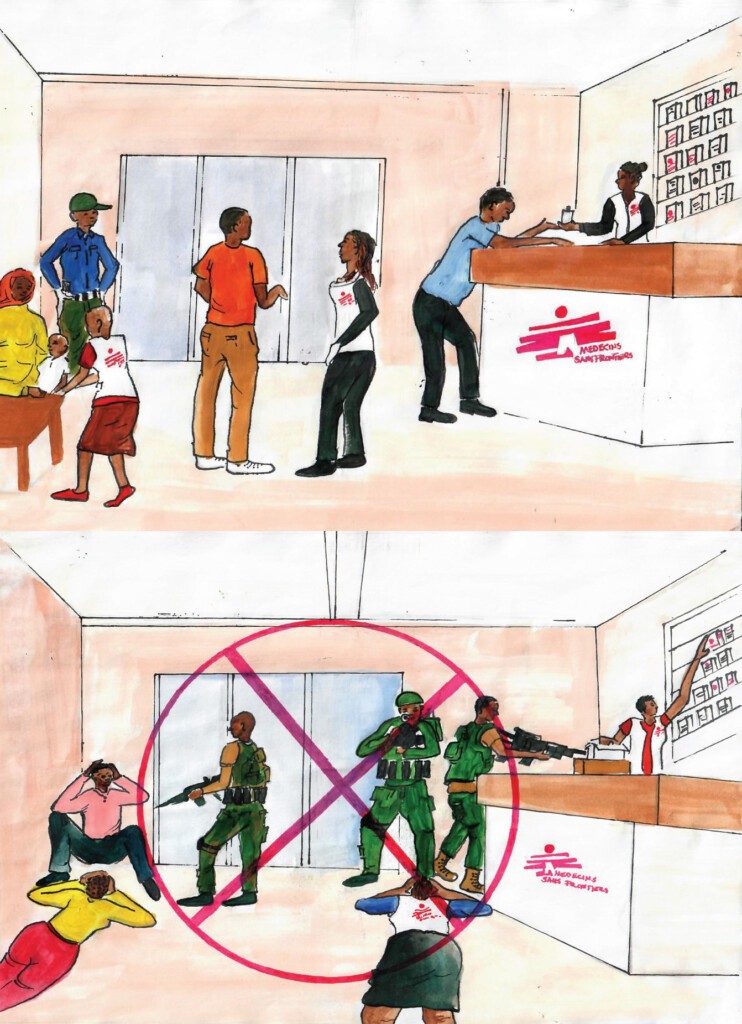
both medical personnel and patients. Healthcare workers should not be threatened,
assaulted, manipulated, detained, or hindered from doing their medical duties’
health posts run by volunteers. …even as funding shortfalls forced closures…
communities continue to mobilise what little they have. 70% of kitchens…face closure,
yet in a few camps in S Kordofan volunteers still provide daily meals for thousands of
displaced families, with women…organising these responses. …community kitchens not
only reduce hunger but create a sense of stability and safety in otherwise fractured
environments. In Khartoum, where state institutions all but vanished, local solidarity
networks operate under extreme insecurity. Volunteers created informal medical posts
inside neighbourhoods, sharing scarce supplies and pooling resources for medicine,…
volunteer medics turned a school into a makeshift hospital for emergency care.
Community teachers kept lessons alive in makeshift classrooms and alleyways fordisplaced children who cannot return to schools,…mutual aid networks setting up
learning centres and safe spaces amid disrupted schooling in Omdurman. These actions
reflect the same determination once observed in global grassroots humanitarian efforts,
now rooted firmly in survival and dignity under siege. They embody the very spirit of
this year’s humanitarian theme: in the absence of functioning government and declining
international access, Sudanese communities are sustaining life through their own
collective action.
…9 BRAVE AND DEDICATED COLLEAGUES KILLED IN ATTACK BY RSF ON
CLINIC IN ZAMZAM CAMP, one of the few medical facilities still operating. The
tragedy underscored the extreme vulnerability of frontline staff, even when working
inside humanitarian compounds. These losses, largely endured by Sudanese staff who
form the backbone of aid operations, highlight disproportionate risks faced by local
responders. The insecurity extends to supply lines. AP reported a WFP-UNICEF
convoy ambushed…5 aid workers killed, while trucks laden with vital relief supplies
were destroyed. Such attacks not only take lives but cripple the already thin
humanitarian pipeline, depriving millions of critical food and medical aid. Amid
mounting insecurity, the international community issued repeated calls for
accountability. 30 donor nations declared attacks against civilians and humanitarian
workers must stop, stressing that humanitarian access is not a privilege but a
fundamental right. Yet despite these appeals, aid workers remain caught in the crossfire,
struggling to maintain lifesaving operations under relentless threat.
HUMANITARIAN CRISIS SHOWS NO SIGNS OF EASING. The civil war stretching
into its 3rd year sits at the core of this ongoing emergency, torn governance structures,
fractured institutions and volatile frontlines continue to interrupt delivery of critical
aid. …“famine conditions spreading to a projected 17 locations” with blocked assistance
and heavy rains compounding the impact….international humanitarian support
continues to lag. WFO warned famine is looming south of Khartoum, where “need on
the ground outstrips resources”, highlighting deepening gaps in response capacity amid
escalating hunger. Disease outbreaks are eroding resilience among already vulnerable
populations. Cholera, amplified by collapsed water and sanitation systems, has become
one of the deadliest public health threats, especially where displacement and
overcrowding leave communities exposed. These intersecting crises, famine,
institutional breakdown, aid restrictions and disease, underscore a stark truth: without
ceasefire, governance reform, and scaled-up humanitarian cooperation, Sudan’s
suffering will continue to deepen under siege. Dabanga
August 17
SUMMARY EXECUTIONS OF CIVILIANS IN BESIEGED EL FASHER, with videos
circulating online that appeared to show the killings. The accusations come as RSFintensifies shelling and ground assaults…to capture El Fasher… RSF fighters shot dead
12 unarmed young men in Shaqra 8 mi west of the city, claiming they were smuggling
goods. A separate artillery attack…killed 30 people in El Fasher neighbourhoods and
sprawling Abu Shouk Camp for displaced people….RSF infiltrating the camp, executing
residents and taking others to unknown locations. One widely-circulated video appeared
to show an RSF soldier questioning a restaurant owner, Ahmed Qandoul, about his tribe
and location of an army commander before shooting him dead at close range. Darfur
Youth Auth’s Human Rights Observatory…called the incident a war crime and part of a
“systematic policy targeting civilians.” The escalating violence triggered a new wave of
displacement from northern neighbourhoods toward its centre. RSF fighters destroyed a
major water source in the Abu Shouk area, cutting off drinking water. UN investigating
reports of other field executions by the RSF after its forces briefly penetrated the camp
before being repelled by the army. Sudan Tribune
PARAMILITARY SHELLED N DARFUR’S BESIEGED CAPITAL EL-FASHER
KILLING 17 CIVILIANS….numbers only account for those who reached the hospital,
others were buried by their families, unable to access medical centres….According to
the local Resistance Comm the attack involved heavy artillery shelling across several
residential neighbourhoods….one of the deadliest recent attacks on the city, resulting in
numerous casualties and severe damage to property and infrastructure. A few k north,
paramilitaries shelled famine-stricken Abu Shouk displacement camp, killing several
civilians including a community leader, according to Emergency Response Rm
coordinating frontline aid throughout the war. In April, a major RSF offensive on
Zamzam Camp displaced tens of thousands, many of whom sought refuge in El-Fasher.
Fighting intensified in neighbouring Kordovan with Intl Org for Migration reporting
3,000 people displaced from Kadugli in 5 days due to ongoing violence. The conflict
effectively divided the country, with the army controlling north, east and centre while
RSF holds much of Darfur and parts of the south. Last year, famine was declared in 3
camps near El-Fasher….thousands of families trapped in El-Fasher are at risk of
starvation….prices for sorghum and wheat – used to make traditional flatbreads and
porridge – are 460% higher. Markets and clinics have been attacked while community
kitchens that once fed displaced families have largely shut down due to a lack of
supplies…40% of children under 5 in El-Fasher are now acutely malnourished, with
11% suffering from severe acute malnutrition, according to UN. Malnutrition has
claimed 63 lives – mostly women and children – in 1 week. At the city’s largest
community kitchen, organisers say children and women arriving show clear signs of
malnutrition, including swollen bellies and sunken eyes. The humanitarian crisis is
compounded by a cholera outbreak sweeping through overcrowded displacement camps.
MSF said Sudan is experiencing its worst cholera epidemic in years, fuelled by the
ongoing conflict. Over the past year, 100,000 cholera infections have been recorded,
2,400 deaths….cholera claimed at least 40 lives in Darfur just in 1 week. The New Arab
August 16
ARMY DESTROYED 4,500 LANDMINES, SHELLS AND OTHER MUNITIONS
NEAR KHARTOUM AS PART OF MAJOR OPERATION TO CLEAR ORDNANCE
left from fighting with paramilitary forces. The controlled detonation at Wadi Seidna
military base is the 2nd large-scale disposal….The army has been clearing unexploded
ordnance and mines, including internationally banned anti-personnel mines it says were
planted by RSF. “The centre carried out detonation and destruction of 4,500 projectiles
and anti-tank landmines,” Natl Mine Action Centre…the centre plans to dispose 50,000
items this month, while collection efforts continue. In July, authorities destroyed 14,000
projectiles. 49 people have been killed and 51 injured by unexploded ordnance since
fighting in the capital subsided.…demining teams were widely deployed in response to
constant reports from the public….warned citizens to stay away from anti-personnel
minefield discovered in central Khartoum’s Sunt Forest, which was too dangerous to
move and would have to be detonated in place. …appealed to residents not to touch
unexploded shells found in their homes. Sudan Tribune
August 14
40 PEOPLE DIED IN DARFUR IN WORST CHOLERA OUTBREAK IN YEARS,
Doctors Without Borders said. The medical charity said the vast western region…had
been hardest hit by the outbreak: “MSF teams treated 2,300 patients and recorded 40
deaths in the past week.” 2,470 cholera-related deaths reported out of 99,700 suspected
cases. Cholera is an acute intestinal infection that spreads through food and watercontaminated with bacteria, often from feces. It causes severe diarrhea, vomiting and
muscle cramps….can kill within hours when not attended to, though it can be treated
with simple oral rehydration and antibiotics for more severe cases. MSF said mass
displacements of civilians sparked by the war aggravated the outbreak by denying
people access to clean water for essential hygiene measures, such as washing dishes and
food: “The situation is most extreme in Tawila, where 380,000 people fled to escape
ongoing fighting around El-Fasher…. people survive with just 3 liters of water per day,
less than ½ the emergency minimum threshold of 7.5 liters needed per person per day
for drinking, cooking and hygiene.” The besieged pocket is the last major city in the
western region under the army’s control and UN agencies have spoken of appalling
conditions for remaining civilians: “In displacement and refugee camps, families often
have no choice but to drink from contaminated sources and many contract cholera.”
MSF head of mission Tuna Turkmen said the situation was “beyond urgent. The
outbreak is spreading well beyond displacement camps now, into multiple localities
across Darfur states…” Al Arabiya
HEALTH OFFICIALS LAUNCHED 10 DAY CHOLERA VACCINATION
CAMPAIGN IN KHARTOUM TO CURB RAPIDLY SPREADING OUTBREAK….
fueled by civil war, displacement and heavy rainfall. Montaser al-Sayed said his family
recently returned home after being displaced by fighting. They feared cholera in the
chaotic conditions but the vaccination campaign reassured them. “As a mother, I was
relieved,” said Razaz Abdullah. Cholera is spreading at an alarming rate and the
collapsed health system makes it “extremely hard to trace and contain,” Sophie Dresser,
Mercy Corps-Sudan. Since the outbreak was declared in July 2024, 83,000 cases and
2,100 deaths have been reported. Although vaccination campaigns launched last year
across some areas, the disease continued to spread in recent months amid fighting. WHO
describes cholera as a disease of poverty because it spreads where there is poor
sanitation and lack of clean water. The diarrheal disease is caused when people eat food
or water contaminated with bacterium Vibrio cholerae. It is easily treatable with
rehydration solutions and antibiotics, but in severe cases the disease can kill within
hours if left untreated. A spike in cases had been reported in Khartoum, where 172
people died and 2,500 were infected in a week. A 10-day vaccination campaign reached
over 2.2m people. Aid organizations warn the situation including heavy rains is
concerning in…N Kordofan, White Nile and River Nile. “In Darfur and Kordofan,
people are living in crowded shelters with poor sanitation and little access to clean water
or medical care, conditions where cholera thrives.” The Marietta Times
AL-BURHAN SUBMITTED DETAILED SECURITY DOSSIER ACCUSING 8
REGIONAL AND INTL CAPITALS OF SUPPORTING RSF. The dossier, presented
during a high-level security meeting in Zurich, details that capitals provided the militia
with weapons, funding and training. Talks were held with Masad Boulos, senior advisor
to US on Arab, Middle Eastern and African affairs. The dossier reportedly outlines howairports were opened to facilitate arms transfers and aid deliveries to the militia. It
details recruitment of tens of thousands of mercenaries from across Africa and beyond,
many of whom fought alongside the RSF and committed documented war crimes against
unarmed civilians. Additionally, the file highlights hundreds of cargo flights landed in
African airports carrying advanced weapons, medical supplies and food aid for the
militia. Al-Burhan emphasized the conflict represents a coordinated regional aggression
aimed at fragmenting the country. The discussion touched on joint efforts to combat
international and regional terrorism, human trafficking, irregular migration, smuggling,
drug trafficking and violent extremism. Almayadeen
NETHERLANDS RADIO 1 VISITED…RADIO DABANGA IN AMSTERDAM TO
INTERVIEW EDITOR IN CHIEF ESADIG: “There were…3,000 journalists in Sudan,
but 2,000 fled to neighbouring countries…that is why you do not hear about Sudan, and
that is why Sudan has become a forgotten country.” He highlights how millions of
displaced people in conflict and marginalised areas, as well as Sudanese refugees in
neighbouring countries, rely on Radio Dabanga’s daily broadcasts for reliable,
independent news, while internet and mobile phone is curtailed, controlled, unreliable
and intermittent especially in marginalised areas and communities.
August 13
SUDAN LOST A THIRD OF ELECTRICITY PRODUCTION DUE TO EXTENSIVE
DAMAGE TO INFRASTRUCTURE BY MILITIA. Experts estimate losses of $5b from
attacks by renegade RSF on power stations, transformers and high-voltage lines, with
overall output down by 37%. If funding is secured, restoring operations could still take 9
months. Power outages are widespread across the country amid extreme summer heat
exceeding 45°C. Electricity expert Abdel Rahman Al-Nour said assessments suggest the
national grid lost 15,000 transformers of varying capacities, each worth $46,000, all
destroyed by RSF. 150,000k of cables were looted in Khartoum for copper, and
paramilitaries emptied warehouses of critical spare parts. Despite assurances from the
Electricity Auth that repairs are underway, officials say the scale of destruction far
exceeds what current projects can address. Even in cities under army control, RSF
drones…continue to damage infrastructure and trigger blackouts. A drone attack on a
sub-station feeding power from the Merowe Dam left some states without electricity 60
days. Local volunteers and charity groups stepped in to carry out repairs where possible,
despite scarce resources. Sudan’s total energy capacity from hydropower and thermal
plants is 3,000 megawatts, enough to provide power to 7-15m homes. The New Arab
ARMY CHIEF VOWED NO COMPROMISE WITH PARAMILITARY FORCES….
Al-Burhan renewed his commitment “…to make neither compromise nor reconciliation,
whatever the cost”. The remarks come days after a meeting in Switzerland between
Burhan and US Africa Envoy Boulos.…discussed a new US peace plan. So far,
mediation efforts by Washington and Riyadh failed to secure a ceasefire. UN Sec
Council strongly condemned the move calling it “a direct threat to Sudan’s unity and
territorial integrity”. EU called all parties…to urgently allow entry of international aid,
as the country weathers its worst outbreak of cholera in years: “Civilians must be
protected, and humanitarian access must be granted” EU said in a joint statement signed
by countries including Britain, Canada and Japan. The New Arab
August 12
RSF BRUTAL ASSAULT ON FAMINE-STRICKEN DISPLACEMENT CAMP NEAR
EL FASHER KILLING 40….Abu Shouk displacement camp, home to 450,000 people,
has been repeatedly targeted….RSF fighters stormed sections of the camp, attacking
residents inside their homes, Emergency Response Rms reported. Resistance
Comms…condemned the assault: “horrific violations against innocent, defenseless
people.” Satellite imagery from Yale U Humanitarian Research Lab showed 40 RSF
vehicles in the camp…corroborating witness accounts. Yale HRL analyzed photos and
videos showing RSF forces shooting at civilians attempting to flee while hurling ethnic
slurs. RSF blocked escape routes by controlling key roads..,trapping civilians in conflict
zones. Abu Shouk Camp is 1 of 2 sites suffering from severe famine….UN spokesman
Dujarric described Sudan’s situation as “extremely dire” with 12 million displaced and
40,000 killed since the war began. Sudan Doctors Network reported RSF displaced
3,000 families from 66 villages in N Kordofan looting possessions and livestock. Many
fled to Khartoum and White Nile. AfricaNewsAugust 8
HUNGRY CHILDREN IN WAR-TORN KHARTOUM REDUCED TO SKIN AND
BONES, thousands of families at risk of starvation in Al-Fashir. “Malnutrition is rife,
and many of the children are reduced to just skin and bones,” UNICEF Sheldon Yett said
after visiting Sudan. The epicentre…is besieged N Darfur capital Al-Fashir, 620 mi west
of Khartoum, where thousands are in danger of starvation….”Everyone in Al-Fashir is
facing a daily struggle to survive,” Eric Perdison WFP regional dir….”People’s coping
mechanisms have been completely exhausted by over 2 years of war.” Famine was
declared a year ago in displacement camps surrounding Al-Fashir. An attack on a UN
humanitarian convoy heading towards Al-Fashir killed 5 aid workers. “We have not had
access to the horrible situation unfolding in Al-Fashir, despite trying for months and
months and months,” Yett told reporters “we have not been able to get supplies there”.
Civilians are surviving on animal fodder and food waste, with 40% of children under 5
acutely malnourished. Civilians in Al-Fashir who hide from shelling in makeshift
bunkers continue to come under fire a RSF presses to consolidate control over the entire
region. Its most recent major attack killed hundreds in Zamzam displacement camp,
forcing hundreds of thousands to flee to the city and nearby Tawila, where a devastating
cholera outbreak rages. “Every day the conflict continues innocent lives are lost,
communities are torn apart and trauma continues to haunt generations,” UN expert on
human rights in Sudan Radhouane Nouicer. “The ongoing war devastated civilian lives
and turned daily survival into a constant struggle.” Relative calm may have returned to
Khartoum, but children there still have only “limited but growing access to safe water,
food, healthcare and learning”, UNICEF. In hardest-hit areas of Khartoum state, Jebel
Awliya and Khartoum, “children and families are sheltered often in small, damaged or
unfinished buildings”….2 million people will return to Khartoum this year, but many
will find a devastated city. “We are on the verge of irreversible damage to an entire
generation of children.” The New Arab
CHOLERA OUTBREAK THREATENING LIVES OF REFUGEES FROM DARFUR
while basic resources run short. In Iridimi Camp in Chad, many refugees don’t have
access to sanitation and clean water, putting them at high risk for contracting Cholera.
WHO said the water-borne disease is a fast-developing and highly contagious infection
that causes diarrhea and leads to severe dehydration and possible death within hours.
100,000 cases recorded since July 2024. UNHCR Principal Situation Coord for Eastern
Chad said 230,000 refugees could be at risk if “urgent action” is not taken….264 cases
recorded in the camp, with 12 deaths: “UNHCR suspended relocation of refugees from
borders in order to prevent new cases.” AfricaNews