
The Big (Fascist) (Cruel) Budget Bill will be signed by the president today, passed this week in a process clearly laying waste to the idea the Democratic Party will do one single thing to stop the consolidation of fascism. Not that we are surprised; but friends, don’t let your outrage cool off. This is not the time for despair but for struggle.
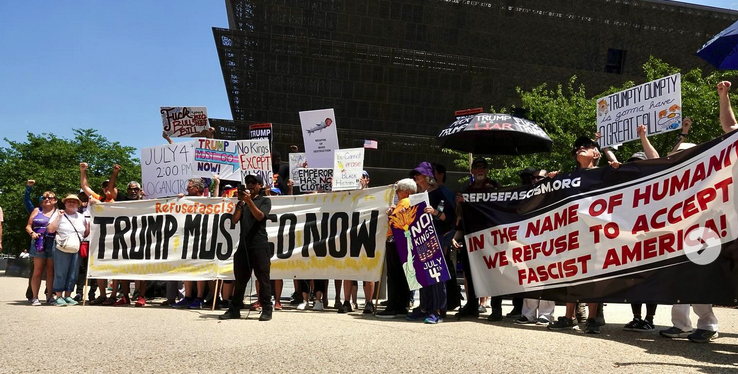
Much appreciation for RefuseFascism.org for organizing a march to the White House today under the banner Trump MUST GO NOW, saying We Declare Our Independence from Trump’s Fascist America. Yesterday, outside the Smithsonian’s Museum of African American History and Culture, one of the institutions under grave threat from the Trumpers:
Our match to double donations for We Are Not Your Soldiers now has about $300 to go. Help today as we finish documenting our work over the spring semester and prepare to visit schools this fall in the midst of Trump’s fascist moves. Only with your assistance, can we reach our 2025 goal by the start of the fall semester.

This week we received papers written by students in the class Rosa Del Duca spoke to in late April (watch her in two short video clips at the bottom of that page). Here are some brief excerpts from what they had to say. Read fuller selections on our Excerpts from Student Papers page.
- The presentation was a compelling appeal to thoughtfully analyze the stories related to military service and to reflect on the moral consequences of war. It pushed me to reflect critically on the systems that sustain military conflicts and the personal experiences of those who serve. Through the sharing of personal narratives and promoting open conversations, We Are Not Your Soldiers creates an essential platform for learning and contemplation, nurturing a more knowledgeable and thoughtful viewpoint on matters of war and peace.
- Initiatives such as We Are Not Your Soldiers are important because they
cause us to consider a segment of the narrative we aren’t normally exposed to, something that makes us question, reflect, and seriously challenge the morality of the systems we are part of.
- I would define this presentation as the critical thinking antagonist of the military. I really loved to be heard by a person who has had this kind of experience because with a presentation of this sort you can speak any idea or thought you had without being scared of judgement. This presentation felt like a class that you really wanted to participate in because everything you can say would just add to the matter… There should be more presentations of this kind that are mandatory for people starting college because they are more likely to want to join the military and definitely are the most misinformed.
- This presentation is something I think everyone should hear, especially in our current geopolitical situation. I hope and pray that today, more and more people realize the situation they’re in and aim to educate others through their stories, like Ms. Rosa did. Maybe more people could be conscientious objectors, if not outright protest against the military as a whole.
- In the end, I learned a lot about the dangers of military recruitment and the importance of questioning authority. Rosa’s story was powerful because it came from someone who lived through it and chose to speak out, even when it was difficult. Before making life-altering decisions, young people are being helped by her bravery and the efforts of We Are Not Your Soldiers to think critically about the military and their own values before making a life-changing decision like that.
- We Are Not Your Soldiers provides an opportunity for students to interact directly with those who have experienced the events being addressed by bringing veterans into classrooms. Empathy and a more sophisticated comprehension of intricate topics like war and military duty are fostered by this method. The We Are Not Your Soldiers presentation challenged stereotypes and promoted introspection by offering a priceless chance to hear personal stories of military life. It emphasized the necessity of educational initiatives that offer a range of viewpoints, particularly when it comes to subjects as important as military duty. It is essential to interact with these narratives in order to create citizens that are critical, knowledgeable, and sympathetic.
- This speech was no stodgy academic oration; it was an eye-opener. Rosa Del Duca’s experience uncovered the human side of military service — the fear, the disillusionment, the deception, and the bravery to resist. I now understand why efforts such as We Are Not Your Soldiers are needed: they educate students to think critically, to question, and to choose peace over blind obedience.