
November 14
32,000 EXPLOSIVE DEVICES AND UNEXPLODED ORDNANCE REMOVED AND
DISPOSED OF ACROSS SUDAN, National Mine Action Centre. Warring parties…
planted large quantities of landmines and explosives to halt enemy advances during
intense military confrontations…unexploded munitions scattered over long distances,
landing in heavily populated residential areas. Clearance operations covered vital sites
and neighbourhoods in several states, with Khartoum the most affected. Dozens of
landmines and UXO were cleared from water stations, schools, mosques, Khartum Intl
Airport and major roads and markets…more lethal weapons likely remain hidden in
homes, particularly those still occupied by residents. Survey teams are continuing to
sweep Khartoum and major cities..now saturated with explosive remnants, posing a
daily threat to civilians. These munitions act as hidden traps, threatening to turn
returning families’ hopes into sudden tragedy. Conflict monitors estimate 10-30% of
shells and rockets fired during the fierce fighting failed to detonate. This high failure rate
means tens of thousands of deadly devices remain buried under rubble, on rooftops and
in city streets. Indiscriminate shelling with heavy artillery and drones continues to
introduce new risks to populated areas. Mine Action Centre noted the diverse nature of
unexploded weapons, reflecting the wide array of munitions deployed. Heavy artillery
and mortar shells the most common unexploded projectiles threatening civilians in clash
zones. …includes cluster bombs, unexploded aerial ordnance from airstrikes and
landmines. Risks extend to highly lethal smaller devices, hand grenades scattered among
the debris. Khartoum state and capitals of the Darfur states are the most heavily
contaminated areas. In Khartoum’s Burri neighbourhood…a family returned months ago
to inspect their home. Residents lit a fire to clear accumulated waste and rubble
following a lull in fighting. They were unaware an unexploded landmine lay hidden
beneath the trash. Heat from the fire triggered massive explosions that shook central
Khartoum and caused severe panic. While there were no immediate casualties, the
incident served as a stark reminder of the hidden dangers. In S Darfur’s capital, Nyala,
the explosion of a shell and a UXO depot recently caused civilian casualties in a
neighbourhood that had seen intense rocket fire and direct clashes. Children and
civilians were near the unexploded ordnance, unaware of the lethal threat. Families
remain helpless against the spread of these munitions, which prevent children from
playing and adults from working safely. Official warnings and international appeals
regarding the crisis are mounting. Sudan Tribune
November 11
71 AID WORKERS KILLED IN SUDAN IN 2025… attacks on humanitarian personnel
continued to rise globally 3rd consecutive year. 350 aid workers were killed across 23
countries in 2025, with national staff 98% of those killed. Sudan recorded 71 deaths…
among humanitarian workers, including direct attacks on aid convoys and humanitarian
facilities. OCHA says insecurity, administrative restrictions and politicisation of
humanitarian assistance increasingly obstructed operations, making it more difficult and
expensive to reach vulnerable communities. Despite the funding crisis, Sudan received
$214.47mn in allocations through OCHA-managed humanitarian funding mechanisms
during 2025.
November 10
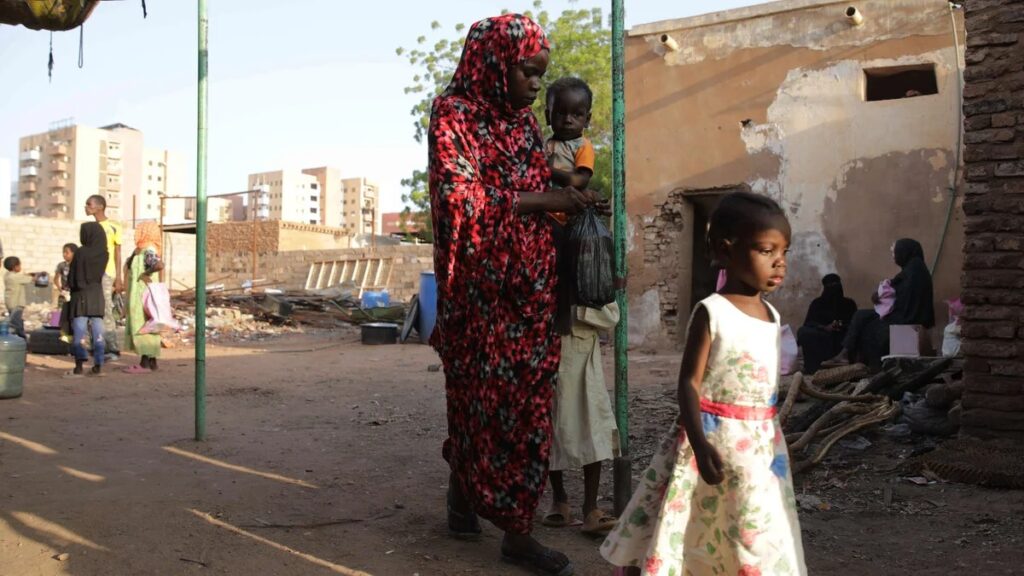
DRONES BEHIND 2/3 OF CHILD CASUALTIES: UN. 410 children were killed or
injured… Jan-Sept, UNICEF. 2/3 of those casualties, 270, were caused by armed
drones…. The war…has killed 200,000 people…triggered the world’s largest hunger and
displacement crises. “They are bringing the war to places that were once safe,” adding
people in Sudan “talk about 3 things: safety, education and water. Armed drones are
taking all 3.” As front lines solidified, both sides increasingly relied on drones capable of
striking targets hundreds of km away without risking their fighters. “Drones and drought
are closing in on Sudan’s children from both sides.” In Oct, 15 drone strikes hit power
stations across the country. When a power station is struck, “water pumps stop and water
treatment stops. Families are forced onto expensive and unsafe alternatives,” putting
people at risk of water-borne diseases like cholera. 825,000 children under 5 are
expected to suffer from the deadliest form of malnutrition. UNICEF and partners
provided health care and vaccinations to millions of children…repaired and solarised
water systems “But with so many crises at once, everything is stretched to breaking
point,” adding the agency’s operations in Sudan were just 1/3 funded. Arab News
November 9
SUDAN’S ARMY DETAINED FORMER SENIOR OFFICIAL FROM AL-BASHIR’S
ERA WANTED BY ICC. Ahmed Haroun, who chairs former ruling National Congress
Party, has been hiding for years and is wanted over war crimes and genocide in the
Darfur region in the early 2000s. NCP confirmed Haroun’s arrest, but was unclear why
the army moved against an ally….say they helped the army’s advances against RSF
during 3 years of war that caused waves of ethnic killings, famine and massdisplacement.
The conflict has drawn in foreign powers and created what the UN calls
the world’s biggest humanitarian crisis. Al Arabiya
November 7
WAR AND CLIMATE CHANGE SEE PARENTS STRUGGLE TO FEED THEIR
CHILDREN. After a 2 ½ hour journey from al-Lalouba, Layla Ali arrived in Pt Sudan to
get help for her 5-year-old son, Adam. His severe malnutrition left his ribs visibly
protruding beneath his skin. He had begun to lose his appetite 2 weeks earlier and
became too sick to move. The distance to the hospital and Ali’s fears about the cost of
treatment stopped her from rushing Adam for medical treatment. But when his condition
deteriorated, Ali had no choice but to rush him to hospital. “We spent 5 days in
hospital….He suffers from recurring bouts of malnutrition, but this time we brought him
to hospital because I was afraid he might die. When Adam became ill, he would stop
eating. I used to give him the usual meals we prepared at home, mostly porridge and
milk. But the doctors have now helped me understand which foods are appropriate for
his age and the nutrients he needs.” Adam’s condition reflects a wider crisis facing
children across Sudan….Integrated Food Security Phase Classification estimates
825,000 children under 5 will suffer from severe acute malnutrition in 2026, 7% increase
from 2025. In the first 6 months of this year, UNICEF and partners treated 174,700
children with severe acute malnutrition.
Pt Sudan Teaching Hosp recorded 433 cases Jan-Aug….the number of children admitted
with malnutrition continues to rise, forcing staff to accommodate as many as possible.
But this led to overcrowding, with 3 children to a single bed, increasing risk of disease
spreading among patients. “Medical staff assess each child’s condition before providing
essential supplies, including therapeutic milk and nutritional supplies free of charge,
with support from WHO and UNICEF. However, intravenous fluids and medication
remain a significant financial burden for many families, struggling with the economic
crisis caused by the war.” Gadalsid added inadequate nutrition among pregnant women,
driven by displacement and economic hardship, was putting their babies at risk of poor
growth and malnutrition. An increase in the numbers of flies, which can contaminate
food and water, and mosquitoes, which transmit malaria, was worrying. Malnourished
children in particular are at risk of these diseases and viruses. “With the onset of winter,
malnutrition cases increase…the number of flies rises, contributing to spread of diseases
that cause malnutrition.” The situation is particularly bad in west Darfur… Fighting,
hunger and disease, created an increasingly desperate situation for millions, particularly
women and children. In N Darfur there were 40,000 cases of malnutrition Jan-May
2025, when RSF imposed a siege on el-Fasher. Blue Nile State malnutrition is taking a
growing toll on displaced children….the committee overseeing al-Karama 3 camp in al-
Damazin told Al Jazeera cases of malnutrition had risen from 1,800 in Sept to 2,116 in
Nov. 1,760 are under 5. Al-Karama 3 is home to 7,600 children under 10, among 4,000
displaced families. They fled areas in western Blue Nile State…where military
operations between SAF and RSF intensified. “These families arrived in extremely
difficult humanitarian conditions, amid limited funding and humanitarian assistance
from organisations, and lack of health monitoring despite the growing needs of
displaced people.” IPC warns of growing risk of famine across parts of Darfur and
Kordofan. Conflict, mass displacement, severe drought and inadequate humanitarian
funding are driving a deterioration in food security. The El Nino climate phenomenon
led to reduced rainfall during the rainy season, leading to drought affecting roughly half
the country. …2/3 of farmland in N Darfur and half in S Darfur and Kordofan had poor
vegetation growth, threatening harvests and leaving families facing higher prices and
worsening hunger. Dr Ahmed Youssef, paediatric dept, said increasing malnutrition was
driven not only by the effects of war and displacement but also by limited nutrition
awareness or accessibility among families, particularly in rural communities. Many
families in smaller villages rely heavily on flour and milk as staple foods, with meat
largely absent….“We are working to provide families of children with malnutrition with
basic nutrition education as a first step towards tackling the problem. However, we face
difficulties reaching villages to deliver healthcare and raise awareness.” Food
contamination, particularly amid unreliable electricity supplies and lack of refrigerators,
makes it difficult for families to store food safely and is a major issue. “Families often
bring their children to hospital only when malnutrition reached an advanced stage, either
because of financial hardship and fears about treatment costs or limited education.”
November 6
MILLIONS WHO FLED DEVASTATING CONFLICT FACE BEING LEFT
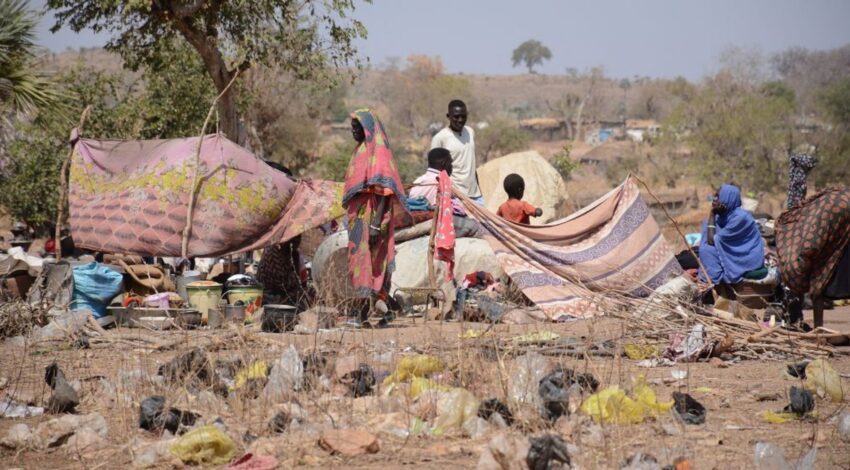
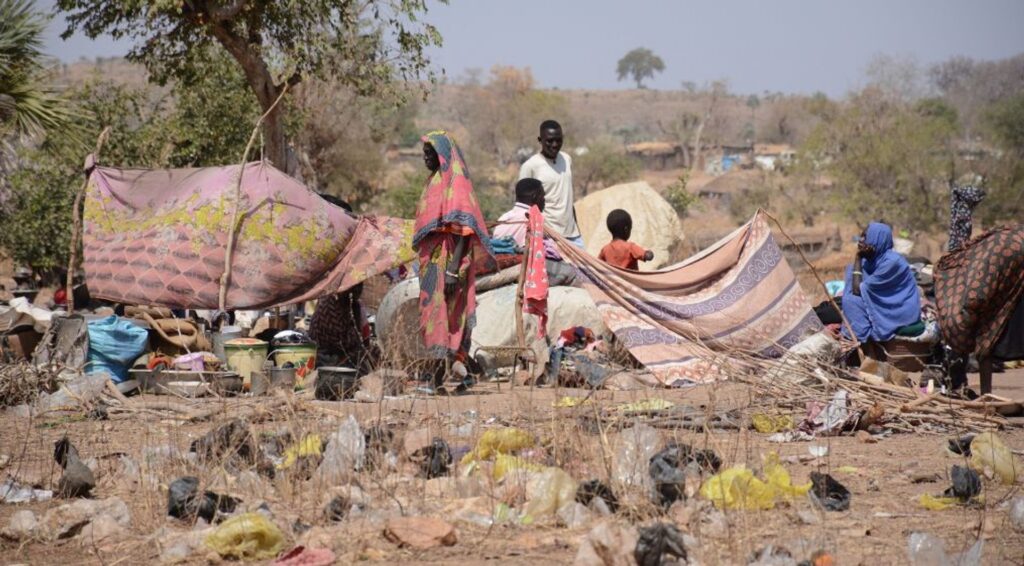
WITHOUT SHELTER. 15.4 million people need emergency shelter and essential
household items. UN agencies had only been able to target 10% of those in need
because of funding shortages: “we could reach only 900,000 people,” Mohamed Refaat,
IOM. The war…has killed 200,000 people, and triggered the world’s largest hunger and
displacement crises. 8.6 million people remain displaced within the country, millions
fled across borders and millions more returned home, often finding houses,
infrastructure and essential services damaged or destroyed. Since the start of the year,
the UN agency distributed 40,000 tents: “But our warehouses are completely empty
now. We could soon reach a point where families desperately need shelter but there is
simply nothing left.” UNHCR and IOM said for those returning home getting help to
find shelter “is often the first step towards rebuilding their lives”. But only 1/3 of the
$179mn needed this year to provide shelter has been funded. 3 in 4 internally displaced
people are women and children….El Niño-related weather conditions made people more
vulnerable because of significantly below-average rainfall across Sudan. This has
affected harvests in Darfur, Kordofan and areas already devastated by ongoing fighting.
Although food prices would normally ease after harvest season, prices remain “painfully
high.For a family that lost everything, every Sudanese pound spent on food is money
that cannot be spent on a blanket or materials needed for safe shelter.” The agencies said
less than ½ of $2.9 billion needed for the overall humanitarian aid plan for Sudan had
been funded. AfricaNews
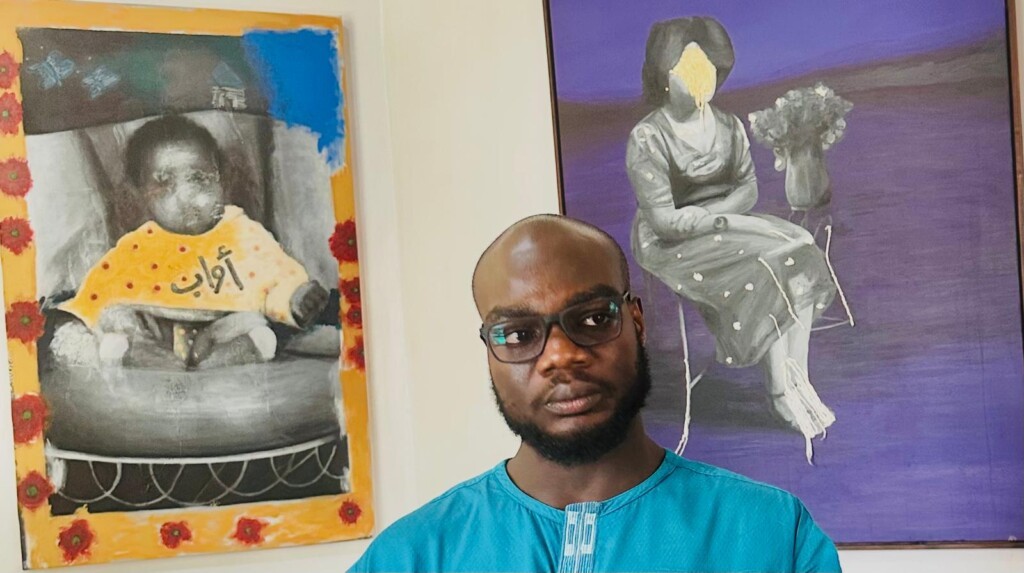
SUDANESE ARTIST WALEED MOHAMMED SEEKING TO DOCUMENT AND
RECLAIM COLLECTIVE MEMORY THROUGH ARTWORKS INSPIRED BY
HISTORICAL PHOTOS AND FAMILY ALBUMS. Drawing on his personal experience
of war, displacement and dispersal of his family, he uses painting, diverse materials and
multimedia from his studio in Nairobi, to explore the transformations in Sudanese lives
since the outbreak of war, as well as memories of the years before it. He moved to
Nairobi, where he embarked on a new chapter in his creative journey. Old photos and
family albums have been among his most important sources of artistic inspiration. …he
has been fascinated by images documenting Sudan’s history and details of its social life.
This is reflected in his work, through which he seeks to reinterpret the country’s visual
memory in contemporary artistic forms. He seeks to transform images from family
albums into paintings, so they become more than historical documents, acquiring new
meanings relating to identity, history and collective memory. He revisits these images
through painting, treating the process as an act of retrieval in which individual memory
intersects with the collective trauma left by war, displacement and family separation.His
approach resonates with the concept of post memory, developed by Marianne Hirsch in
her research on children of Holocaust survivors. The term describes the relationship of a
later generation to trauma it did not experience directly, but is transmitted through
photos, stories and silence. The concept explores how subsequent generations relate to
traumatic experiences endured by those who came before them. They do not remember
these experiences but encounter them through stories, images and inherited behaviours.
A striking duality of colour characterises Waleed’s work. Monochromatic grey bodies
and faces evoke the fading and deterioration of photos over time, set against richly
saturated fields of colour, deep indigo blue, crimson red and earthy yellow. Faces
become erased or obscured areas. Sometimes covered with embroidered threads; at other
times, their features dissolve into the haze of brushstrokes or disappear behind dark
glasses. Erasure becomes a visual language, conveying the fragility of memory and the
loss of loved ones. Different techniques coexist on the surface, painting, embroidery,
Arabic calligraphy, deliberately exposed brushstrokes.
Waleed, who experienced war and displacement, is not a distant inheritor of memory but
a witness to it. Waleed says his artistic experience cannot be separated from that of
society, and people’s suffering and transformations they are experiencing have become
central subjects. The war and the dispersal of his family have a profound influence on
the subjects. He has become increasingly interested in individual and family photos,
seeing them as a means of maintaining connection with relatives scattered across
different locations…Awab illustrates this experience. It is named after his nephew in
Libya. Waleed…chose his nephew’s name to express how much he misses him and his
desire to preserve his presence, despite the distances imposed by the war. Through this
deeply personal experience, the artist seeks to express a much wider reality shared by
Sudanese people separated by the conflict, forced to leave their homes and seek new
lives in different places. In one corner of the exhibition hangs a particularly significant
painting of Waleed’s mother. He describes it as one of the works that inspires him and
gives him a sense of closeness to her. It holds a special place in his heart. Leaving home is no longer simply an
escape from war, but has
become an attempt to build
a different life in the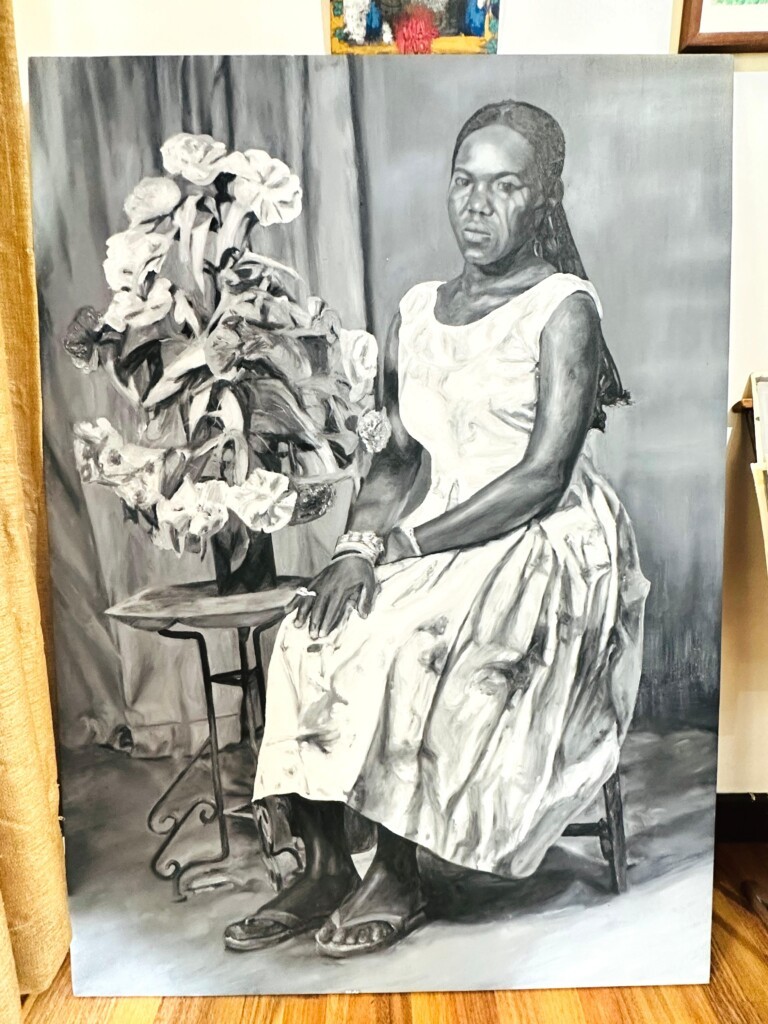 places where displaced people have arrived. The artistic
approach reflectsthe disruption the war brought to people’s lives and social relationships, forcing them to leave familiar places and seek new spaces. Leaving is no longer merely an escape from conflict, but an attempt to build a different life in places where people
found themselves. Wale In several of these works, the photos appear incomplete, with sections missing or areas left blank. This is deliberate, encouraging viewers to reflect on what has disappeared and what the image can no longer fully reveal. Since the outbreak of war, the artist has returned more frequently to his family archive, alongside the historical photographs
that inspired his earlier work.Personal photos have become a means of reconnecting with family members while expressing the collective memory of Sudanese people through everyday details and individual experiences. Some of his paintings depicting children also carry memories of the early stages of his artistic journey. Among the works…is a painting entitled Survivors. He recalls his former studio in Khartoum as an important milestone in his artistic career. Returning to the city after the outbreak of war, he found the studio still
standing and many of his paintings had not been stolen. Waleed says his personal experience of displacement had a direct impact on his work. An artist carries part of their community’s experience and cannot genuinely express people’s suffering without
engaging with it. …the subjects are closely connected to his personal experiences and the challenges facing Sudanese people amid the war. His artistic perspective changed after leaving Sudan and moving to Nairobi. For Waleed, the artistic message remains open to development as circumstances change and life raises new questions about memory and the future. Together with other Sudanese artists, Waleed established an art
collective in Nairobi called Shilla, following discussions about the importance of
collaboration among artists scattered across different countries by the war. The group
aims to move beyond isolation of individual artistic experiences and create shared space
for working, creating, and expressing issues affecting Sudan through art. The collective
seeks to raise public awareness of what is happening in Sudan and introduce audiences
to the experiences of Sudanese artists. However, he acknowledges mixed feelings about
personal achievements being celebrated against the backdrop of the difficult
circumstances facing Sudan and its people… In his message to the Sudanese people,
Waleed emphasises the importance of dialogue and working together to resolve
disagreements. Sudan, he says, is a country that belongs to everyone, and addressing its
problems requires people to sit together and engage in dialogue before it is too late.
Dabanga
November 5
ETHIOPIA, SUDAN CLOSE CONSULATES AFTER ALLEGATIONS OF
MEDDLING IN CIVIL WAR…marking further deterioration in relations over
allegations each side is supporting the other’s enemies. Sudan accuses Ethiopia of
supporting the RSF while Ethiopia accuses Sudan of backing rebels in its northern
Tigray region. The allegations and counter-allegations, which both sides deny, have
raised fears that the 2 wars could bleed into each other, spawning a broader conflict in
the Horn of Africa. Sudan’s government lodged a complaint against Ethiopia with the
UN Security Council and AU Peace & Security Council, accusing Ethiopia of allowing
RSF to use its territory to launch suicide drones against civilian infrastructure in Sudan.
Ethiopia closed the Sudanese consulate in the border town of Assosa and ordered the 6
diplomats there to leave within 48 hours…Sudan’s govt then closed the Ethiopian
consulate in Gedaref and expelled the diplomats there. Addis Ababa denies it supports
the RSF in Sudan’s civil war. Ethiopia accused Sudan, Egypt and Eritrea of supporting
Tigrayan rebels who launched an offensive against govt forces in Sept. Al Arabiya
November 3
MOHAMMED MAHDI MAKKI FARAH RETURNED HOME AFTER SAF
DECLARED KHARTOUM FREE OF RSF FIGHTERS. But it was not the end of his
family’s struggles. The 51-year-old left his home in Jabal Awliya…for el-Fasher in 2023.
He returned home to find it destroyed and ransacked, with even household utensils
stolen: “Everything had been completely destroyed. Now we sleep on the floor, and
some of us are living in rented houses. We have not made any decision to repair our
home because the costs are extremely high, and we have not been able to start.” His
years as a trader appeared to have been wasted, his possessions gone and business
capital reduced to almost a third of its pre-war level because of the pound’s depreciation.
The journey of displacement and return exhausted his remaining resources, while
children’s medical expenses and the family’s daily needs added to their financial burden.
…he was unable to generate funds needed to repair his home, so rent became an
additional burden, while access to water, electricity and healthcare services is difficult.
They lost important documents during the war and had to start from scratch to replace
them. “Everyone knows about water and electricity problems; Khartoum is almost
entirely in darkness now. As for healthcare, only govt health centres are operating, thank
God. ” The family’s experiences are those faced by millions of Sudanese returning to
their homes after years of displacement. 5.27mn displaced Sudanese returned to their
homes in 9 states. Children accounted for half. Aug 2026, 2.5mn people returned to their
homes in Khartoum state. But…returning did not necessarily mean people had the
conditions needed to rebuild their lives. Many found their homes damaged or
uninhabitable, while work opportunities remained limited. Access to water and basic
services was inadequate due to damage to infrastructure. Many are renting as they
cannot afford to repair their homes. Abubakr Ishaq Hamed Ibrahim, 40, returned to
Khartoum in after being displaced…found his home destroyed, with furniture, bedding
and basic household belongings they accumulated over the years gone. They had to
move to Omdurman, renting a home…but this became difficult without regular income.
“Our homes were looted and destroyed. We found nothing inside. Everything was
wrecked, and we had no furniture, no bedding, nothing at all. We were unable to pay the
rent for several months, and rents are quite expensive. We have been through extremely
difficult conditions, and even now we have no stable source of income.” Before the war,
Hamed Ibrahim relied on self-employed work, but now depends on any casual work he
can find. His family exhausted all their savings and borrowed money from family and
friends to cover basics such as food, housing and school fees. “Thank God, we are now
doing casual jobs. The income is not enough to meet the cost of living and the daily
burdens. We have exhausted all the money and savings we had, and we have borrowed
money from individuals,” Things are slightly improving. His children have returned to
school with support from relatives. The family receives in-kind assistance from
organisations such as WFP, including sorghum, flour, wheat, oil and sugar. But overall,
the situation in Khartoum remains dire for most. There have been fuel shortages and
repeated power cuts in recent weeks, disrupting public transport. Fares increased on
some routes and commuters are often forced to wait hours for a bus. There are long
queues outside bakeries in some areas due to shortages of flour. Khartoum state
authorities announced measures to address the transport crisis. Govt depts were
instructed to give residents lifts when travelling to and from work. Makki Farah says
although he managed to return to his home city Khartoum, it is not enough to return his
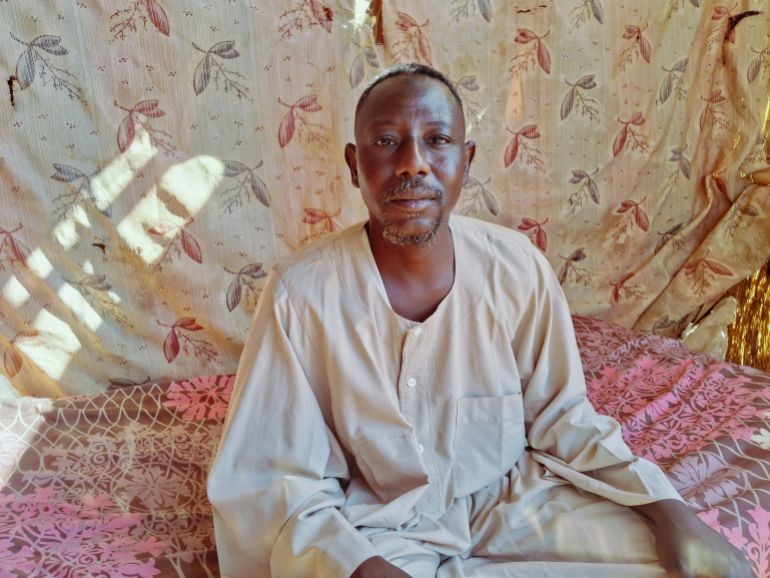
life to how it was before the war. He does not see a future in the capital for his family
unless they receive more support: “We have lost everything we had before the war. Now
we need assistance because everything we need – housing, healthcare and education –
has been destroyed. Al Jazeera
October 30
THE DAY RSF ENTERED EL-FASHER A VIDEO…SHOWED ONE OF THE
COMMANDERS ADDRESSING FIGHTERS. She appeared encouraging fighters to
rape women: “The Northern State? You’ll just go for its women, so you cleanse their
lineage and bring sons just like you.” The speaker was Khademallah Khashmin
Herika/Shiraz Khalid, a major commanding RSF’s female contingent, according to
Centre for Info Resilience. The British org describes her words as explicit incitement to
rape. Separate footage placed Herika in el-Fasher and Garni, where survivors described
girls being detained and raped. Herika is among 25 commanders identified in CIR
investigation into sexual violence. It examines 5 locations and periods of abuse,
commanders’ appearances and roles…gathered by UN rights groups and Sudanese orgs.
The findings cover RSF and SAF…as well as allied forces. They identify commanders
who exercised authority where atrocities were reported….Investigators checked
identities, locations and filming dates, with commander sightings independently verified
by 2 analysts. They compared that with survivor accounts, reported incidents,
threatening rhetoric, indicators of heightened risk including forced separation of men
and women. UN fact-finding mission documented mass and gang rape during RSF
takeover of el-Fasher, including at Saudi Hosp and el-Fasher Univ. Women and girls
were attacked along escape routes out of the city. Al Jazeera
October 28
BRITAIN SANCTIONS COMMANDERS OVER WEAPONIZED RAPE. Sanctions
issued over mass killings and widespread sexual violence against civilians during the fall
of el-Fasher. RSF and SAF were sanctioned for sexual violence, torture and attacks on
civilians. The measures include travel bans and asset freezes, …ensuring “the horrors
that took place at El Fasher will be known to the world.” The announcement came
after…reporting by Centre for Info Resilience, which revealed “systematic starvation and
conflict-related sexual violence against civilians.” Foreign Secy said those who
perpetrated crimes “must be held accountable and support from all external backers to
the warring parties must end”. The comes 1 year after the fall of El-Fasher…as civilians
faced a prolonged siege, reported mass killings, widespread sexual violence and attacks
on hospitals. “A year from the atrocities in El Fasher, investigations have shown rape
and starvation are still being weaponised….UK allocated $6.6mn to support survivors of
sexual violence and another $13.3mn in humanitarian aid. Al Jazeera