
October 28
WAR AND INFLATION LEAVE FAMILIES TO SURVIVE IN KHARTOUM. Soaring
food prices and shrinking incomes force families in capital to borrow money and skip
meals. Rasha Abdelaziz Musa works every day 7 hrs selling tea. By the time she finishes
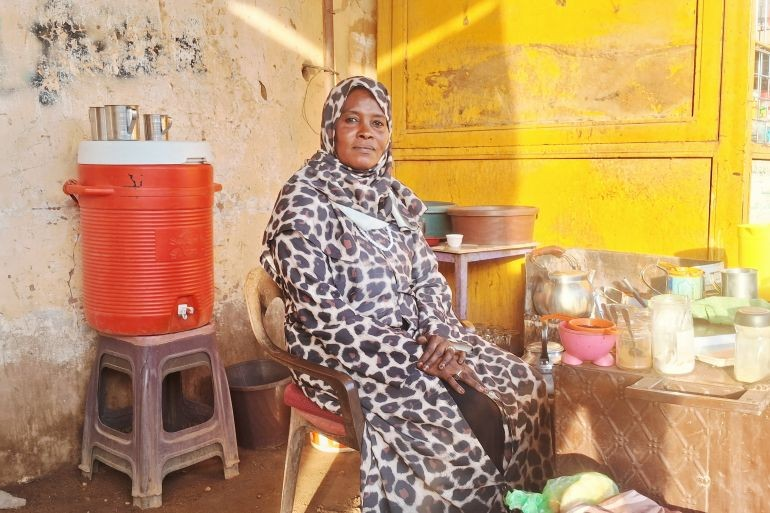
Khartoum to support her 4 children
at 10pm, she’s unsure if she has enough to feed her 4 children. Musa, 39, is doing her
best, but her earnings are no longer enough to cover soaring food prices. Her husband,
member of the military, spent 8 mos on the front lines….Musa has not heard from
him…he has sent no money. …feeding her family costs 40,000 pounds/day before rent,
household essentials and other expenses. …Staples are ful medames/stewed fava beans,
or lentils. When lentils are too expensive, Musa serves taamiya falafel sandwiches.
Musa often ends the day in debt to traders she gets her food from. Ahmed Youssef, 61,
supports a family of 12 through work in a butcher’s shop and occasional livestock sales.
He can earn 90,000-140,000 pds ($9-14) when a deal succeeds, but income is
irregular….his household spends 100,000 pds daily and his income is no longer enough
to support the family: “1 income is no longer enough to cover the family’s needs,
sometimes my older children have to work to help meet expenses.” Ali Fadil supports a
family of 10. …he goes to mkt each morning to look for work. Some days, the 57-year-
old earns enough to buy food, other days, he finds no work at all. And yet his daily
expenses still reach 70,000 pds with rising prices adding to financial pressure.
“Sometimes I skip meals…for school fees or medical costs. I borrow money to meet
other obligations.”….prices for essential foods had risen sharply within days, making it
increasingly difficult for families to plan spending. 2.2 lb of sugar cost 10,000 pds, up
from 9,000 pds 2 days earlier. 1 qt of cooking oil rose to 25,000 pds from 20,000…a loaf
of bread 500 pds compared with 300 a week earlier. Lentils 10,000 pds/kilo up from
8,000, rice 13,000/kilo up from 10,000. Powdered milk 70,000 pds/kilo up from 60,000.
The Sudanese pound continued to weaken. $1 was trading at 10,050 pds…compared
with 9,500 the previous day. …Prices across the country were 28% higher in Sept than a
year earlier.… Prices rose by 7.5% in Sept, more than double the previous month.
Across Sudan, food and beverages cost 37% more than a year earlier….The situation was
particularly severe in Khartoum State, where prices were 60% higher than a year earlier.
That sharp increase comes as the capital struggles to recover from widespread
destruction caused by the war. Although displaced residents have begun returning and
businesses are gradually reopening…damaged infrastructure and rising transport costs
constrain the availability of goods. The return of residents has increased demand for
essential supplies, further driving up prices. In Sept, fuel shortages hit the capital as
consumption rose faster than supplies could be replenished. Urban areas have been hit
harder than rural communities. Food prices in towns and cities were 55% higher than a
year earlier…. The war is the main driver of these increases, disrupting livelihoods and
supply chains. According to World Bank, Sudan’s economy shrank by 29% in 2023 and
a further 14% in 2024 as the war devastated businesses, disrupted agricultural
production and eliminated jobs.
Journalist and economic affairs specialist Khalid Teks said Sudan’s economic
deterioration began long before the war. Falling oil production after So Sudan’s
secession worsened conditions as did depreciation of the pound, cash shortages, intl
isolation, political conflict and corruption preceding the removal of al-Bashir in 2019
….political instability during the transition undermined economic performance, and
deep reforms were not implemented before war broke out in 2023. The conflict
devastated infrastructure and productive sectors, depleted savings and disrupted
economic activity. The climate has been a factor. Strong agricultural production in 2024
was followed by limited rainfall this year and possible food shortages after harvest
begins in Nov….families increasingly deplete savings and sell possessions to cover
everyday expenses. He pointed to disruptions to remittance channels, which many
households rely on for financial support: “The govt needs to provide direct support
through dedicated funds and Zakat Chamber, facilitate humanitarian orgs and offer
affordable loans for small businesses and vocational activities. This could help reopen
markets and workshops and expand microfinance.
October 27
RSF LAUNCHED COORDINATED DRONE ATTACK AGAINST 5 POWER
STATIONS. …in Al-Jazira and Gedaref, and White Nile. Babiker Youssef, resident of
Gedaref: …”My son is diabetic, his insulin has to be stored in the fridge,”…scared he
would not be able to replace the medication if it spoils. In the first 3 weeks of Oct drone
strikes killed 300 people….”The electricity just started to improve 3 months ago, the
power station the militia destroyed was just repaired and we had hope our irrigation
pumps would finally start running.” 54-year-old farmer Abdelhafez Daafallah: “We
hoped we would be able to finally get back to farming” Farmers in Al-Jazira struggled
to rehabilitate and re-plant since the army recaptured the state. …grocer Ibrahim
Mohammed, 37, was “already facing power cuts for hours before the strike. Now I have
chicken in the fridge, we either lose our entire stock, or be forced to sell it off at any
price, which is still a loss.” AfricaNews
BRITAIN SANCTIONED 15 MILITARY COMMANDERS, MILITIA LEADERS
AND SECURITY OFFICIALS…from both sides of conflict, accusing them of waging
sexual violence, torture and attacks on civilians linked to al-Fashir. The measures come
a year after the fall of al-Fashir, N Darfur…where civilians were subjected to prolonged
siege, mass killings and widespread sexual violence. …the action followed publication of
research by Centre for Info Resilience, which documented…systematic starvation and
conflict-related sexual violence against civilians by both sides. It pledged additional
$20mn in humanitarian and survivor support for Sudan. Al Arabiya
October 26
BREAD PRICE SOARS…FLOUR SHORTAGE…RESIDENTS OF OMDURMAN
CAN NO LONGER AFFORD BREAD OR MEAT….”The size and quantity of bread
decreased, and we can no longer afford to buy the same amount as before,” Sudanese
woman. Authorities in Blue Nile allowed bakeries to sell 2 loaves for SDG 1,000,
while…manufacturers are failing to comply with price controls. Several bakery owners
posted videos showing flour mills…disregard price-control directives….flour companies
introduced another price increase…25kg sack of flour to SDG 190,500, up from 165,000
….with consumers now getting half for the same money. More encouraging reports say
prices of maize and other crops have fallen across El Gezira, as restrictions on crop
movements and increased supplies from the new harvest drive down prices. AfricaNews
October 24
JOURNALISTS, POLITICIANS FACE DEATH PENALTY UNDER LEGAL
AMENDMENT. Activists raised alarm over…a vaguely worded amendment that will
likely be exploited to quash dissent. Amendment to the criminal code could mean
journalists and politicians could face the death penalty for online posts, rights groups
and activists warned. The amendment now includes media publications and electronic
media as potential crimes against the state. The development comes amid…significantly
hindered freedom of expression and journalism….at the same time the govt implemented
a mechanism designed to tackle cybercrime. However, activists state this has been used
to monitor publications, media outlets and potential dissidents. Sudanese journalist
Majid Mohammed told The New Arab the increasing punishment for those who publish
content online is inconsistent with the govt’s stated goal of opening and improving
dialogue with citizens: “The amendments failed to distinguish between the freedom of
Sudanese people and enemies in Sudan who may use social media or online platforms to
harm the state.” He urged “review of the amendments, because implementation will
create and directly lead to the end of any dialogue initiatives and will create a negative
climate for any consensus and agreements”. …One of his biggest concerns was it would
prevent the press from fulfilling its role towards the nation and civilians, and from
assisting state institutions carrying out their responsibilities through monitoring,
oversight and combating misinformation. Earlier this week al-Burhan…issued a
temporary decree…which included changes to several laws. Article 51, which pertains to
inciting war against the state and includes terms such as training of individuals,
collecting weapons, attempting to support or incite such actions, was amended to include
electronic and media publications. The article states anyone charged…“shall be
considered to have committed the crime of inciting war against the state and shall be
punished by death or a lesser term of life imprisonment, with the possibility of
confiscating all their assets”. The amendments sparked backlash among journalists,
activists and politicians…there has been a marked decrease in discussions, posts and
articles on social media. Sudanese Journalists Syndicate…stood firm in rejection of the
amendment and the PM’s decision to establish Natl Mechanism for Combatting
Cybercrime. The syndicate said there would be serious repercussions and press
freedoms, and the right to access certain information, particularly in light of the war,
would be severely hindered. It cautioned against granting further powers for the state to
monitor and track media outlets and social media platforms or against publishers based
on vague descriptions and wording of the penal code. The New Arab
October 22
SUDAN AT CROSSROADS OF SAUDI-EMIRATI COMPETITION. While rooted in
internal struggle for power, the conflict has become entangled in broader regional
rivalries. Among the most consequential is growing competition between Saudi Arabia
and UAE. The 2 Gulf powers increasingly diverged in regional ambitions, competing for
political influence and strategic leverage….Riyadh and Abu Dhabi turned to proxy
competition, leveraging relationships with rival political and military actors to advance
their strategic interests and extend regional influence. As both publicly call for an end to
the conflict, their engagements with SAF and RSF raise a deeper question about regional
competition sustaining the war and the extent their influence is undermining…peace.
Given its strategic position along the Red Sea, agricultural potential and substantial gold
and mineral resources, Sudan represents a valuable partner for Saudi Arabia and UAE.
For Riyadh, Sudan’s proximity makes Red Sea security a strategic priority, given the
importance to maritime trade and broader economic ambitions. Abu Dhabi views Sudan
as part of its wider effort to expand commercial and maritime presence across the Red
Sea, where investments in ports and logistics helped strengthen its position along key
trade routes. Sudan’s agricultural potential offers both countries opportunities to
strengthen food security through investment, particularly given their limited arable land
and scarce water resources. Its mineral wealth presents further economic opportunities.
Gold exploration in Sudan can support Saudi Arabia’s ambitions to develop its minings
ector. Sudanese gold contributes to UAE’s established gold-trading and refining
industry.
Saudi Arabia and UAE previously relied on Sudanese mercenaries to advance security
objectives. During the war in Yemen, Saudi Arabia exploited impoverished Sudanese
families by offering financial incentives to recruit fighters, including children as young
as 14. Sudanese fighters and lawmakers interviewed by NYT said 14,000 Sudanese,
almost all from Darfur and most from RSF, were fighting in Yemen and children made
up 20-40% of some units. UAE recruited Sudanese fighters in Yemen. UAE facilitated
deployment of Sudanese fighters alongside Libyan Natl Army, relying on UAE-based
private military companies to hire and deploy. The military and political actors who
emerge dominant from the war will influence each state’s ability to protect its interests
and expand influence. Their relationships with Sudan’s rival military factions diverged,
placing Sudan at the intersection of competing regional ambitions. Saudi Arabia and
UAE endorsed diplomatic efforts to end the conflict, presenting themselves as
supporters of peace. Yet these sit uneasily alongside allegations of their support for
Sudan’s rival military factions. UAE emerged as RSF’s primary external supporter.…
90% of Sudan’s gold has been exported or smuggled to Dubai. Abu Dhabi pursued a
significant foothold in Sudan’s Red Sea economy through a $6bn agreement to develop
economic and agricultural zone alongside port project. Although cancelled UAE has
been trying to revive it. Saudi Arabia maintained closer ties with SAF….Intelligence
Online reported Riyadh transferred artillery systems to SAF and Sudanese personnel
received training. Riyadh appeared cautious about direct arms procurement, as a $1.5bn
arms deal between Pakistan and Sudan was put on hold after Saudi Arabia requested its
termination and withdrew financing. Saudi Arabia moved to strengthen its economic
position. Sudan’s army-backed govt signed a gold exploration agreement.., while a
Saudi state-run refinery was preparing to purchase Sudanese gold. The developments
offer Riyadh an opportunity to counterbalance UAE and redirect exports away from
Dubai. Sudan announced Saudi companies would receive priority in reconstruction
projects involving railways and ports to logistics zones and Abu Amama port
project….could allow Riyadh to gain a stronger commercial and strategic foothold along
the Red Sea.
Sudan is facing a catastrophic humanitarian crisis, with millions displaced, hunger
spreading, essential services collapsing, civilians subjected to relentless violence.
External military assistance contributes to prolonging the conflict by strengthening
military capabilities of SAF and RSF, encouraging both parties to pursue a military
victory rather than negotiate, increasing civilians’ exposure to violence and atrocities
….Colombian contractors trained RSF recruits including young children, teaching them
combat skills and how to handle weapons. This is a grave violation of intl law, exposing
a new generation to violence and risking long-term damage to Sudan’s social fabric and
future stability. The gap between Saudi Arabia and UAE public commitments to peace
and their engagements with Sudan’s rival military factions raises questions about…
diplomatic efforts…not accompanied by concrete action. Both countries alongside other
external actors must align their conduct with their stated commitments by ending
military assistance that fuels the conflict, supporting effective enforcement of UN arms
embargo, using influence to secure sustained ceasefire and inclusive, Sudanese-led
political process. Sudan’s future must be determined by its people, not ambitions of
regional powers. The Next Century Foundation
HOW THE SHIFT TO DRONE WARFARE IS FUELLING CIVILIAN CRISIS.
Warring factions escalate deadly unmanned aerial strikes, hundreds of civilians are
caught in the crossfire. Imtidad Nasser east Khartoum residents are grappling with a
terrifying new reality of skies filled with drones. “We heard the buzz of drones in the
sky, but did not pay attention to it at first,” Ahmed Abdel Hamid, after fire and 2 huge
explosions shook the area, killing 3 children. A devastating wave of drone attacks across
Sudan killed 160 people in recent days, marking a lethal evolution in the conflict….A
rise in unmanned aerial vehicles by SAF and RSF pushed the war deep into residential
neighbourhoods, driven by shifting battlefield motives and mutual desire to exhaust the
opponent and reclaim strategic areas. Striking cities like Nyala, the army aims to “strike
their morale, make them feel insecure even in their rear control areas, disrupt any efforts
to establish parallel administrative entities”. RSF is deliberately targeting civilian
infrastructure “as happened at Khartoum airport, fuel stations in Damazin, electrical
transformer station in Tendelti N Kordofan, which led to the blackout of cities…”.
Civilians are paying the highest price for all this. The deadliest recent attack occurred
near a mkt in al-Dabba W Kordofan, where a drone struck a transport hub, killing 80
people. An army drone attack hit RSF stronghold Nyala, killing 17, while a strike by the
paramilitary on a gathering of displaced people in Blue Nile killed 41. “We are alarmed
by continued deadly drone strikes across the country killing civilians…” UN secy-gen.
Centre for Info Resilience revealed 21 different drone models have been used since the
war erupted. A diverse intl supply chain is behind procurement, found to originate from
6 countries: Belarus, Iran, China, Russia, Sudan, Turkiye. RSF deployed 10 different
types of drones, SAF used 5. The overall result is a terrifying and rapidly mechanising
conflict where the skies offer no sanctuary to civilians below. SAF and RSF continued
to vie for control of different parts of the country, mostly through ground invasions and
fighting often at the cost of civilians. The massacre in el-Fasher last year described by
Amnesty Intl as ethnic cleansing propelled the crisis to intl headlines. RSF fighters
murdered tens of thousands of inhabitants after holding it under siege 18 mos.
Intensified reliance on drones by both sides reflects a deliberate shift towards long-
range, preemptive operations. Darfur is vast, separated from the army’s concentration
areas in Kordofan by desert distances and long, exposed roads…. Al Jazeera
MUBARAK MUSA ADAM LEFT AL-NA’AM MKT IN ABYEI, center of the disputed
oil-rich region between Sudan and So Sudan, when he made the fateful decision to turn
back. “He prepared his Land Cruiser, loaded it with fuel and goods, and left the market.
But he remembered he had to pay the rest of what he owed to a Somali trader…in the
fuel business. He went back…to the trader’s shop, and as soon as they got there, the
market was hit by a drone.” Adam was killed with another cousin, the Somali trader and
2 of the trader’s brothers. The strikes…killed 152…Kordofan Observatory…blamed the
attack on the Armed Forces….the strikes burned 500 shops. ACLED put the toll even
higher at 150-220 people….“Initial findings indicate a military aircraft deployed 22
munitions directly into a heavily populated commercial area demonstrating flagrant
disregard for human life and intl legal norms.” Abyei Special Admin Area blamed SAF.
Adam was one of many traders from Nyala, S Darfur, who worked the route south to the
border. “They carried onions and local products to al-Na’am, and brought back food and
fuel….To me, that moment sums up Mubarak’s honesty and decency. He made sure to
give people what they were owed before he left this life. Most survivors were people
outside the mkt when the attack happened…I had malaria and went for tests at the
hospital. When we came back, we found bodies of the victims burned and charred:
Somalis, Sudanese from north and south, from Dinka and Misseriya communities.”
Darfur and Kordofan are under control of RSF. 150,000 people have been killed, with
estimates running far higher. 14mn have been forced from their homes, 4.5mn across
Sudan’s borders, and Intl Rescue Comm says more people face famine in Sudan than the
rest of the world combined. SAF, based in Pt Sudan, is pushing back into Kordofan,…
RSF has been accused in some of the worst atrocities of the conflict, with a UN fact-
finding mission concluding RSF takeover of El Fasher bore the hallmarks of genocide.
SAF has also committed atrocities and UN found it responsible for direct and large-scale
attacks against civilians and other war crimes. For the past 2 weeks, SAF has been
conducting a large-scale aerial operation launching near-daily attacks on RSF-controlled
cities in Darfur, Kordofan that killed scores of civilians. “The region continues to
experience intercommunal clashes, mainly involving local Ngok Dinka and Misseriya
communities, with the most recent incidents in Amieth Mkt resulting in 40 killed….The
majority Ngok Dinka population historically favored joining So Sudan, while seasonal
Misseriya pastoralists backed by RSF, have not. The rivalry centers largely on land,
grazing and resources, and broader political issues. So Sudan plans to include Abyei in
elections despite Sudan’s opposition and unresolved status.”
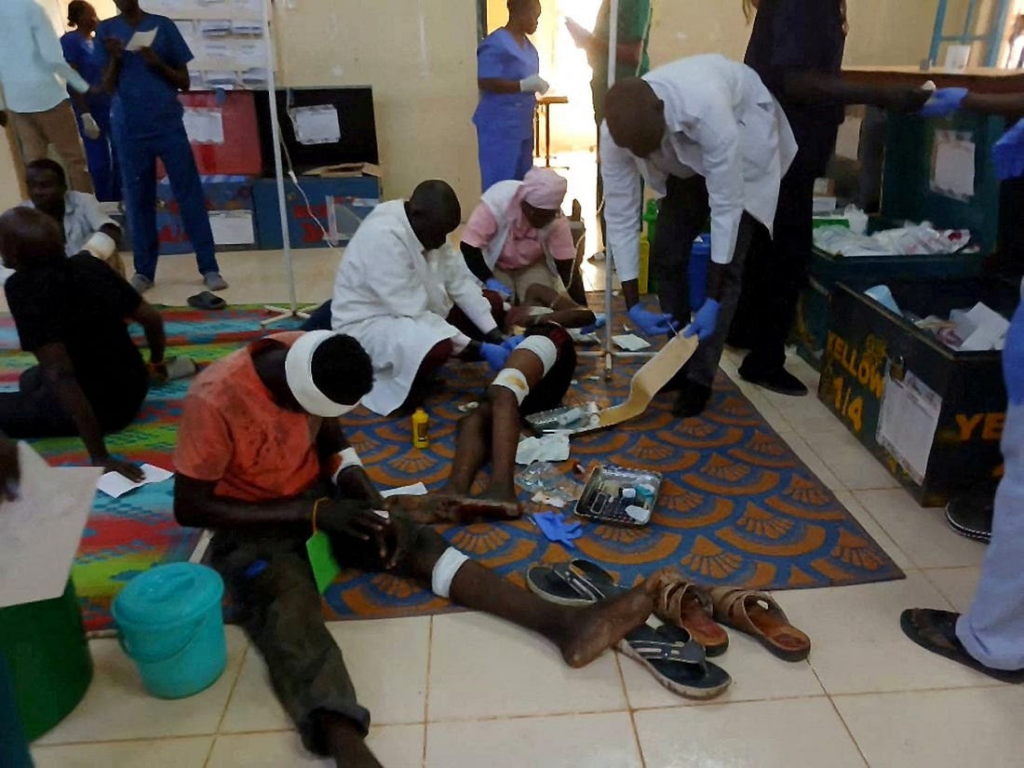
The day before the strike on Al-Na’am mkt, a drone strike blamed on SAF hit Al-Debab
W Kordofan. The strike hit a truck stop beside the mkt, where people gathered at the end
of the day to board trucks and private vehicles back to their villages. “The drone first
struck a gathering of people preparing to board a truck after attending a funeral. It
waited for others to arrive to help the wounded and struck a 2nd time. The double-tap
killed 80 people and wounded many more, including children, women and men.” The
death toll increased to 120 as dozens of critically wounded victims succumbed to their
injuries. SAF drone strikes occur almost daily in the region. Another drone strike in W
Kordofan attributed to SAF killed 4 people of the same family….“The drone hit the
vehicle while it was moving. In the first 2 years of the war we could still farm, but in the
last 2 years the front lines reached us,…drones fly over civilians’ heads day and night…
and ended with all of them dead.” Drop Site
HUNGER CRISIS DEEPENS…AID CUTS COLLIDE WITH CROP FAILURE IN
DARFUR….displaced families and vulnerable communities struggling to find food as
prices soar and malnutrition worsens. Cuts to WFP assistance threaten families, prices
soar where near-total crop failure in E Darfur left households short of food and income.
Residents of Sheairia report soaring prices, worsening malnutrition, shortages of
medicines and therapeutic food for children. WFP says the agency has the capacity to
reach millions of people caught between war, displacement and worsening drought but is
running out of money. Gen Coordination for Displaced People & Refugees warns
reduced food assistance could force families to skip meals and sell remaining
possessions to survive…funding shortages and cuts to WFP assistance could deprive
displaced families of essential meals and force them to adopt increasingly desperate
coping strategies including withdrawing children from school, reducing number and size
of meals. Children, women, older people, people with disabilities face particular risks of
malnutrition and disease….call donors and intl institutions to close the funding gap and
ensure food assistance reaches those most in need. Farmers harvested almost nothing of
their main crops, groundnuts, millet, sorghum, okra. The losses deprived households of a
crucial source of food and income, leaving some unable to find enough to eat….A sack
of millet costs SDG 350,000, sorghum costs a similar amount. A pound of onions costs
SDG 4,500, bottle of cooking oil SDG 13,000-14,000, lb of sugar SDG 4,000….
deductions on transfers through Bankak app at 40%-50% reduce money for essential
purchases. The food crisis is affecting children and pregnant women…. unable to obtain
adequate diets and suffering from malnutrition, while supplies of therapeutic food were
limited. Livestock are at risk because of shortages of veterinary medicines….illnesses
among cattle, horses, donkeys….A rabies treatment injection costs SDG 300,000 putting
it beyond reach of many families. He urged authorities to ensure safe, unhindered access
for aid deliveries and an end to the war and humanitarian truce to allow relief to reach
civilians. Dabanga
RIGHTS GROUP WARNS OF TORTURE FEARS AFTER ARRESTS IN BLUE
NILE….detainees arrested in Roseires are being denied access to lawyers and relatives
amid widening security crackdown. 8 civilians have been arrested…without access to
lawyers or family members, according to Human Rights & Develop Org, which fears
they may be subjected to torture. In an urgent appeal HUDO says arrests took place 12-
17 Oct on suspicion of collaboration with SPLA-N El Hilu. All 8 detainees belong to
Haman tribe, the tribe of RSF commander Abu-Shotal….civilians have been targeted
because of tribal affiliations, family relationships or connections to armed-group leaders.
HUDO urges authorities to ensure detainees’ safety, prevent torture and other ill-
treatment, and grant immediate access to lawyers, medical care and family visits. It calls
for release of those arbitrarily detained or their appearance before an independent and
competent court, impartial investigations into alleged abuses. It calls on the intl
community, UN mechanisms and human rights orgs to press authorities to establish
detainees’ whereabouts and welfare and prevent further violations. Dabanga
INTERNATIONAL ENVOYS DEMAND IMMEDIATE DE-ESCALATION AND
HALT TO FOREIGN INTERFERENCE IN SUDAN. Reps from more than 20 countries
and intl bodies meeting in Geneva called for immediate de-escalation, warning of
deepening humanitarian catastrophe and rising famine risks. The gathering aimed to
align intl diplomatic engagement with urgent needs of Sudanese people,…draw on each
partner’s comparative advantages, ensure peace efforts reinforce one another. Building
on discussions of UN Gen Assembly, members of the Quad and Quintet met to
coordinate actions in support of peacemaking efforts…. Participating nations included
CAR, Chad, China, Djibouti, Egypt, Eritrea, Ethiopia, France, Germany, Kenya, Libya,
Norway, Qatar, Russia, Saudi Arabia, So Sudan, Switzerland, Türkiye, Uganda, UAE,
UK, US. Regional and multilateral orgs included AU, EU, IGAD, League of Arab
States, UN. Participants urged foreign states and non-state actors to stop fueling the war,
explicitly calling for an end to supply of mercenaries, financial backing and military
hardware. The envoys expressed particular alarm over the escalation of drone
warfare,..that weaponized unmanned aerial vehicles are proving especially lethal to
civilians. Emphasizing there is no military solution, participants called warring parties to
engage genuinely and de-escalate fighting, protect civilians, commit to a humanitarian
truce. Continued clashes and obstacles to aid delivery, climate-related shocks including
dry conditions and delayed rainfall, are worsening the danger of famine. The envoys
rejected creating parallel govts or competing governance bodies, as well as any move
that could partition the country….that sustainable peace depends on inclusive,
transparent and Sudanese-owned process that includes diverse civilian actors, notably
women and youth. Delegates warned of severe risks of regional spillover, that wider
regional destabilization would be catastrophic and difficult to reverse. Sudan Tribune
October 21
UNICEF CONDEMNS KILLING OF 12 CHILDREN in separate attacks in W
Kordofan and Khartoum states, warning that neither displacement camps nor residential
neighbourhoods are safe. …9 children aged 5-10 were killed 17 Oct in an attack on a
camp for displaced families east of Sanakit W Kordofan. 2 days later an armed drone
struck a residential area in Khartoum, killing 3 children with their father. The statement
confirms the deadly impact of drone attacks on children in Sudan, including a strike on a
shelter for internally displaced people in El Obeid, N Kordofan, that killed a boy and
wounded 12. Radio Dabanga reported the attack on El Mina El Bari shelter injured 5
boys and 7 girls. “Families could not protect their children by fleeing their homes or
returning to their neighborhoods. In W Kordofan, children were killed in a camp their
families had fled to for safety. In Khartoum, 3 young children were killed with their
father in their own neighbourhood, in a city where many families returned to rebuild
their lives. Families are doing everything they can to keep their children safe, whether
by fleeing or by going home. Neither is protecting them. Every party to this conflict
must protect children, wherever they are.” UNICEF called all parties to meet their
obligations under intl humanitarian law and protect civilians and infrastructure.
“Children must be protected at all times, wherever they are.” Dabanga
THE WORLD ORDER IS IN GREAT DISORDER. The geopolitics are in turmoil.
Regional wars are raging all over. On the African continent, the war in Sudan is tearing
that country apart. Millions…displaced while thousands are killed and injured. Some
Gulf countries are heavily involved. It is no secret UAE is funding and arming rebel
RSF while Saudi Arabia and Egypt are supporting the army….UAE is a proxy of Israel
and US. There is tension between Ethiopia and Sudan as Ethiopia hosts UAE training
camp for RSF. Should open war break out between Sudan and Ethiopia, the region
would be drawn into a conflagration…Worse is waiting as Ethiopia and Eritrea amass
troops along their border. AU proved next to useless in intervening decisively in the
existing and impending conflagration on the continent. DRC has yet to come out of
decades of wars. Eastern Congo is enveloped in the deadly outbreak of Ebola. Regional
Pan-African orgs like Southern African Develop Community and E African Comm
proved ineffective against…recalcitrant Rwanda. In W Africa, armed groups, spillover
from Libya after…decimation of the country engineered by US and France, is wreaking
havoc in the Sahel. Chased out from Burkina Faso, Niger and Mali, France is creating a
foothold in Anglophone E Africa through Kenya. Pres Ruto is a compliant client while
other African “leaders” have no guts to stand up against France’s intrusion.On the world
stage involving big powers, US-Israel war against Iran is likely to get out of hand
consuming not only Gulf countries but…further afield, including east Africa.
Europe…not only failed to resolve the Ukraine war…thoughtlessly fuelling it on the
pretext Russia poses an existential threat to EU. Israel is carrying out genocide in Gaza
in real time with impunity, invading and occupying Lebanon and displacing a million
people. In Syria it intruded beyond Golan heights,..controlling 665 sq k of Syrian land.In
this geopolitical turmoil, old post-WWII alliances are unravelling. AU has no policy or
direction providing leadership to member countries, let alone independent geopolitical
perspective from an African standpoint. I suggest in the midst of the chaotic situation
we can discern 3 tendencies…First, palpable tendency towards a multipolar world. The
days of bipolar or unipolar world are over. The post-WWII hegemonic power, US, is
declining. China is rising…fast surpassing US in economic terms. Diplomatically, US is
losing credibility. Politically, the Empire is turning on itself, with civil liberties and
individual rights progressively curtailed. Even the Sup Court, ultimate custodian of
rights and freedoms, is rapidly sinking into the right-wing quagmire. The second
tendency…the rise of regional hegemons. US is reclaiming hegemony over Latin and
Central America and Canada. The breaches other big powers like China attempted to
make have been put to rest with the kidnapping of Maduro….The first act of the
imperialist bandit was to take control of Venezuela’s resources, in particular oil. Oil
supplies to Cuba were cut off and tankers carrying Venezuelan oil to China, biggest
importer of Venezuelan oil, have been sanctioned. Cuba faces an existential crisis. US
wants an unchallenged hegemony and with the right-wing turn in many countries it is
likely to get it. This is not 1962 when the Soviet U built nuclear missile bases in Cuba.
In Venezuela and Cuba, Russia and China have done little more than issue squeaking
condemnations, showing no real willingness to defend those countries.
In the Indo-Pacific, hegemony is contested between China and India, with Pakistan
waiting in the wings. What is more likely to be the bone of contention is maritime
dominance of the S Pacific. In Western Asia, the so-called Middle East, contention for
hegemony is undoubtedly between Israel and Iran, with Turkey waiting in the wings.
None of the Gulf countries…is a candidate for the simple reason they are all beholden to
the US and through the US to Israel. Iran cannot be taken for granted….unchallenged
military superiority of Israel has been irreversibly dented. History teaches us
reconfiguration of hegemonies takes place through wars. The war on Iran is a classical
case. Ruling classes can indulge in wars of choice. For the working masses, peace is not
a matter of choice. It is a necessity.
What about Europe? ….Germany and Russia are fighting it out in Ukraine while France
waits in the wings. Very often, Russia’s alliance with China is mistaken to mean Russia
looking east. Russia sees itself as a European power. Gorbachev’s concept of “Common
European Home” envisaged united Europe from the Atlantic to the Urals to which
Russia’s future was inextricably tied by virtue of culture and security.The third tendency
is breaking down the Westphalian model of sovereign states… product of European
history. Its primary objective was to put to rest perpetual wars on the continent. Hence
the rise of nation-states by majority ethnic groups with definite borders in which the writ
of the state ran. That was the model that underlayed UN architecture….which informed
natl liberation struggles and emergence of independent states in Africa. Over the last
couple of decades, nation-state sovereignty eroded just as some nation-states are
disintegrating. The tendency towards dismantling of state sovereignty…is rapidly
unravelling. The burning question for Global Africa is where does Africa stand in this
geopolitical turmoil. Can Africa resist becoming a dispensable pawn on the geopolitical
chessboard? Or…fall prey to this or that regional hegemon. Pan-Africanism is a political
project. I underscore this because very often in the statist discourse of Pan-Africanism, it
is reduced to economic integration. Pan-Africanism as a movement, ideology and
outlook for Global Africa is anti-imperialist. Pan-Africanism and imperialism are
incompatible. Pan-Africanism is anti-capitalist. Imperialism is the excrescence of the
capitalist system. The driving force of Pan-Africanism…is social struggles for socio-
economic emancipation of African working people and embedded in the right of peoples
to self-determination. I want to emphasise people’s right to self determination because
since the era of natl liberation, self-determination has been reduced to claiming state
sovereignty. The Pan-African Project should be rooted in people’s sovereignty….We
should move away from the paradigm which identifies Pan-Africanism with institutions
like AU or regional economic integration projects. We should refuse institutionalisation
and bureaucratisation…. This does not mean a people-centred Pan-Africanism should
not engage with institutions. It should, but critically and without getting swallowed by it.
This fundamental and non-negotiable character of Pan-Africanism should…underlie the
repositioning of Pan-Africanism in current geopolitical turmoil and whatever emerges.
Chances of a regional African hegemon emerging are very slim. None of 4 possible
candidates, Nigeria, Egypt, S Africa, Ethiopia, for regional hegemony has the clout or
credentials for occupying such a space. They are either too compromised or mired in
their own racial, ethnic or regional conflicts and war. Even if any were to emerge as a
regional hegemon, it would only end up a surrogate of other regional hegemons. Africa
must position itself as an independent sovereign pole in the multipolar world. Africa
should not be aligned with any regional hegemons. Africa must zealously guard its right
to political and economic self-determination. Finally, this can only be done if the
working people of Africa can wage a sustained, protracted struggle on all fronts to
reclaim the Sovereign Pan-African Project. Black Agenda Report
October 20
DRONE ATTACK KILLS 80 IN W KORDOFAN….The attack struck a location used
by civilians traveling to their villages after the end of the mkt day, resulting in a large
number of casualties. A witness helped bury 50 people…. A medical source said 30
injured later succumbed to their wounds. Al-Dibab, located in W Kordofan, is under
control of RSF. As hostilities resume, al-Burhan affirmed the Army will continue its
military campaign against RSF until it reclaims “every inch” of territory, as
displacement continues in Blue Nile and civilians are killed…. The govt maintains any
ceasefire or negotiating process must include RSF withdrawal from cities and public
facilities, surrender of weapons and assembly of forces in designated camps, holding
those accused of committing violations accountable. Al-Burhan’s position comes as intl
efforts…for ceasefire continue. Al Mayadeen
October 19
RSF WIDELY UNDERSTOOD TO BE BACKED BY UAE, a fact the Emirates denies
but is well documented. US, European and UN officials have been reluctant to name
UAE publicly as the power enabling the violence, even as they’ve labeled the broader
conflict a genocide and warned of imminent mass atrocities. Part of the hesitation may
stem from UAE’s deepening financial ties to the Trump family, including a major
investment…in the family’s crypto business. Advocates argue that sustained public
pressure on UAE-particularly Rep Jacobs and Sen Van Hollen’s bill that would restrict
weapons sales to UAE over its role arming the RSF, could end the war quickly since
RSF’s offensive capacity depends heavily on the arms pipeline Emirates provides. Tell
your Members of Congress to cut off key weapons sales to UAE and tell key companies to stop
doing business with UAE. S.935 and H.R.2059 would halt US weapons sales to UAE until
the President certifies UAE is no longer providing material support to RSF. This is a
simple, concrete step: No more weapons transfers until support for atrocities stops. No
Business With Genocide
October 16
UN UNDER SECY GEN FOR POLITICAL & PEACEBUILDING AFFAIRS DiCarlo
warned the conflict continues to deteriorate, with no breakthrough in sight, as civilians
face relentless fighting, deepening humanitarian crisis and severe economic hardship.
DiCarlo said little changed since her previous briefings, stressing Sudanese people
continue to endure the devastating consequences of the war, including collapse of basic
services: “Regrettably, today I can report that little has changed. The people of Sudan
continue to face the brutal reality of conflict…” DiCarlo expressed concern over
deteriorating security along borders, that conflict is affecting neighboring countries,
several already grappling with significant instability: “We urge all actors to avoid any
acts that could result in conflict spilling over across borders. Preventing a wider regional
crisis must remain our collective priority….the parties appear to believe they can achieve
further gains on the battlefield,…continued external support could be encouraging them
to pursue their objectives through force.” DiCarlo highlighted diplomatic efforts of
Secy-Gen Envoy Haavisto in regular contact with the parties to advance confidence-
building measures. DiCarlo called on the Security Council to make full use of tools at its
disposal to help end the conflict….“The Sudanese people have endured unimaginable
suffering. They deserve peace and a credible path toward a better future. And once
again, I call on the council to use every tool at its disposal to help bring this devastating
conflict to an end.” Middle East Monitor
EL FASHER BECOMES GHOST TOWN, AS RSF CRIMES CONTINUE ON ONE
YEAR ANNIVERSARY OF TAKEOVER. Amnesty Intl is warning the situation
remains dire with unlawful killings, arbitrary detentions and torture rife, while the
population dropped significantly….fewer than 70,000 people remain in the city that
once had 1mn, with humanitarian access limited, and risk of arrest for returnees high,
despite claims by the paramilitary that people are free to return. “El Fasher is still very
much a ghost town,” Laura Mills. Mills said part of the reason for desertion of the city
was the high risks of being there: “We found many people were detained, including
those who tried to return to the city. Often men were held in prisons and detention
centres where they faced torture and truly horrific conditions. Women and children were
typically held in schools converted into de facto detention centres,” noting high levels of
malnutrition in centres. “Moving around the city, people didn’t feel safe; they felt
surveilled.” Amnesty spoke to those who were detained and put in prison, with many
stating RSF soldiers tortured and committed unlawful killings. Mamoun, 33-year-old
Zaghawa man held in Shala prison, said the group arbitrarily shot prisoners. Those
detained are often released because families pay ransoms to RSF, which reach $10,000.
She noted these abuses…are widespread across RSF-controlled Darfur….Humanitarian
workers still operate in the city, though closely monitored, which restricts their
movements and prevents aid workers from speaking with residents. Despite this,
humanitarian assessments place the city, alongside much of N Darfur, in danger of
reaching IPC Level 5 famine, the highest threshold, in coming months. Mills told The
New Arab the intl community had all the tools it needed to safeguard El-Fasher’s
residents and alleviate suffering, but was unwilling to use them. This includes pushing
for a ceasefire and talks between RSF and the military, rejected by al-Burhan as well as
an arms embargo on the country. “It just really feels like we have all the tools at our
disposal, but the world is just sort of looking on as this horrific disaster continues to
unfold, and what happened in El Fasher can easily happen somewhere else.”
October 12
CONFLICT, DROUGHT INCREASING RISK OF FAMINE. El Nino-induced drought
is affecting roughly half the country. “…compounding impacts of conflict and
displacement, reducing food availability, driving up prices and affecting livelihoods,”
Integrated Food Security Phase Classification. “Healthcare is extremely limited, often
inaccessible, while clean water is increasingly scarce, leaving poorly nourished
population highly vulnerable to disease and death. Food insecurity, acute malnutrition
and excess mortality will likely intensify.” Poor vegetation growth affects 2/3 of
cropland in N Darfur and 1/2 in S Darfur, W and S Kordofan, where severe water
shortages and limited agricultural recovery threaten livelihoods. Nyala, where the
proportion of children…admitted for severe acute malnutrition doubled from 5%-11%
Jan-Aug. Displacement camps in S Darfur recorded global acute malnutrition above
famine thresholds. In N Darfur delayed rains impacted crop cultivation and critically
low food stocks worsened food insecurity. W Kordofan is suffering one of its worst
droughts since 2004 amid poor rainfall. 19.5mn people, 40% of the population, facing
high levels of acute food insecurity….135,000 were in the most severe, characterised by
extreme food shortages, starvation, very high levels of malnutrition and deaths from
disease or acute malnutrition. The arid Darfur region…faced some of the worst violence,
with displacement camps invaded and ethnic cleansing killing thousands. Al Jazeera