
July 17
WFP WARNED HUMANITARIAN NEEDS IN EL OBEID RAPIDLY OUTPACING
AVAILABLE ASSISTANCE AS CITY STRUGGLES to absorb…displaced people
fleeing conflict. Country Dir Alwardat told reporters in Geneva that El Obeid, originally
home to 500,000-600,000 people, is now hosting nearly twice that number as internally
displaced people continue to arrive from N Kordofan, S Kordofan, W Kordofan and
Darfur. 120,000 displaced people are living in formal camps, while many others are
staying with host families or in makeshift shelters. Alwardat described food, water and
fuel shortages as major concerns, saying WFP is providing food assistance to 100,000
people in camps, but many others remain without adequate support. He said fuel
shortages forced WFP to use its own truck fleet to transport food directly to distribution
points after partners were unable to reach beneficiaries….he witnessed families sharing
reduced food rations with neighbours who received nothing and met an elderly woman
who said WFP assistance was her only source of food but was still insufficient. Middle
East Monitor
SUDAN TO SUE UAE IN US AND INTERNATIONAL COURTS….Justice Min Dirif
said the govt finalized plans to launch fresh lawsuits against UAE in US and other intl
courts. The announcement came a day after dep UN rep Mahmoud urged ICC to expand
its investigation into RSF crimes in Darfur to include Emirati actors. Dirif said…legal
strategies involve prosecuting UAE in countries whose legal systems allow prosecution
of war crimes and crimes against humanity, even if committed abroad. The min outlined
3 distinct legal paths: intl prosecution, ICC and ICJ. A specialized committee of internal
and external legal experts mapped out processes to target UAE and RSF under intl law.
The planned lawsuits cover war crimes, crimes against humanity, genocide, illegal
weapons supply, mercenary recruitment and training. Dirif, who chairs the high
committee tracking intl lawsuits against RSF and its backers, visited an exhibition of
captured weapons alongside an evidence collection subcommittee. …seized weapons are
modern models manufactured June 2023-2026 with documentation showing their initial
destination was UAE. The transfer of these weapons to a rebel militia violates intl
treaties prohibiting arms transfers to 3rd parties. Sudan repeatedly presented evidence
implicating UAE in supplying weapons and recruiting mercenaries for RSF….Sudan
will persist with its legal battles, asserting the govt holds sufficient evidence beyond a
reasonable doubt to prosecute both RSF and UAE. Sudan Tribune
July 16
MINISTER SAYS WAR PROFOUNDLY RESHAPED NATION’S DEMOGRAPHICS.
Sudan faces a population shift as conflict empties areas, burdens cities and disrupts
economic and social stability. Min of Human Resources & Social Development Saleh
told Al Jazeera Arabic his min was working with several partners to strengthen
population policies and link them to social protection programmes. The war is estimated
to have killed 200,000 people and displaced 11mn, creating what UN calls the world’s
largest humanitarian crisis. The war has affected Sudan’s demographics. Before the war,
the…population was expected to exceed 64mn by 2035. 2020 the population stood at
44.4mn, with forecasts of a growth rate of 2.39% one of the highest rates globally. The
war not only displaced millions of people internally in…Darfur, it forced tens of
thousands to seek asylum in neighbouring countries Egypt, So Sudan and Chad. Saleh
said the most significant demographic changes caused by the war included a general
increase in poverty levels, a large segment of citizens losing their income, deterioration
of basic services in a number of areas, and decline in the labour market and human
capital: “The more we succeed in restoring population stability and empowering citizens
economically and socially, the closer we come to building a more stable, just and
prosperous homeland.”
Experts say Sudan is distinct in demographic structure – it has a large youth population,
with 70% under age 30, according to data from the last census in 2008. …its large youth
population gives Sudan a demographic dividend that could drive economic
development. But Saleh’s min said young people faced…limited access to education,
scarce job opportunities and widespread poverty, even before the conflict turned them
into one of the worst-affected groups. Khalid Saad, dir of Sudanese Center for
Development Comm, told Al Jazeera Sudan’s population crisis did not begin with the
war. Despite the country’s vast territory and abundant natural resources, it suffered for
decades from a clear imbalance in population distribution: “The war came to deepen this
imbalance, redraw the demographic map through displacement and asylum, empty some
areas of populations, burden other cities with numbers beyond their capacity to absorb,
while large numbers of people returned to areas retaken by govt forces.” …the likely
return of people does not mean the end of the demographic crisis, because returnees
often go back to areas that lost a large part of their economic infrastructure. “The
challenge remains in rebuilding an environment that ensures stability and prevents
renewed displacement.” The war raises questions that still require precise answers:
actual scale of human losses; how the war affected mortality rates; how it changed
patterns of marriage and childbearing; impact of displacement and migration on birth
rates and age structure; how emigration of skilled professionals will affect size of the
workforce. Data released by Natl Population Council points to a demographic
imbalance. Sudan’s urban population rose to 17.9mn in 2020, with Khartoum accounting
for 42% of the urban population, indicating a pattern of internal migration driven by
uneven development. IOM said 4.1mn people returned to their areas of origin across
Sudan. The vast majority, more than 80%, returned from within Sudan to 9 states led by
Khartoum, Gezira and Sennar. …the number of internally displaced people has fallen by
23% compared with the highest level in Jan 2025, when the displaced within Sudan
stood at 12mn. Sudan entered its 4th year of conflict amid a complex political and
military landscape, with little hope of a resolution. Infrastructure collapsed and essential
services remain disrupted. Meanwhile, local and intl warnings are mounting over a
worsening humanitarian crisis, driven by shortages of food and medicines and difficulty
delivering aid to affected or besieged areas. Al Jazeera
July 15
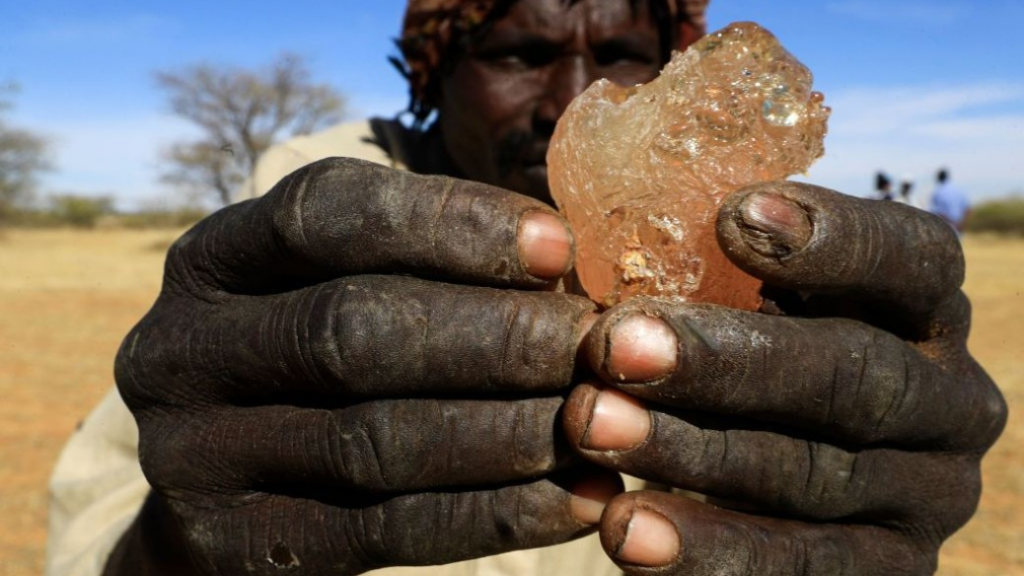
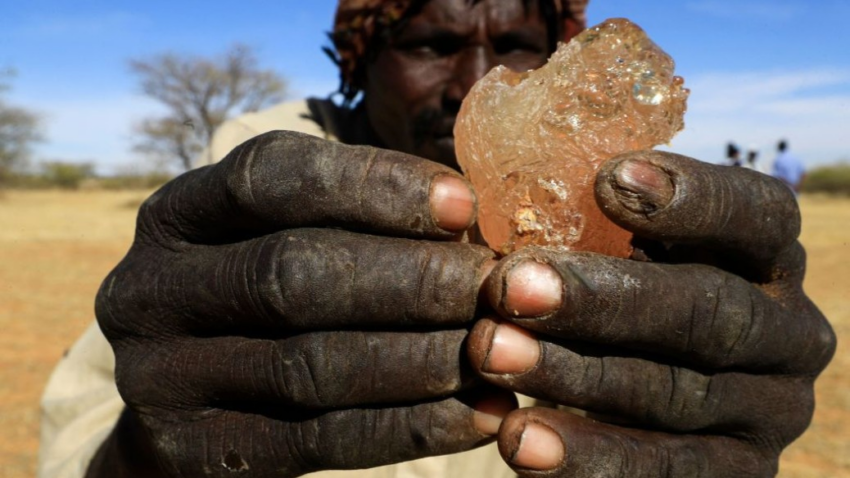
UN WARNS GUM ARABIC TRADE IS SUSTAINING CIVIL WAR. Sudan produces
80% of the world’s gum arabic, harvested from acacia trees and widely used to mix,
stabilise and thicken ingredients in mass-market products including soft drinks,
pharmaceuticals and cosmetics. UN said significant amounts…had been taken from
areas controlled by RSF and smuggled into neighbouring transit countries, exported as
locally produced items, making them hard to track. Some gum arabic has been taken
from areas controlled by SAF and transported to Pt Sudan for export. The report warned
companies in the sector could be exposed to conflict-related human rights risks. Part of
Sudan’s gum arabic production comes from areas affected by the fighting,…people
working in the trade faced threats to their safety and suffered large-scale looting,
including by parties to the conflict. UN human rights chief urged companies to ensure
they are not contributing to adverse human rights impacts or sustaining the conflict:
“Companies cannot continue business as usual when sourcing from conflict-affected
value chains,” urging strong due diligence on where ingredients are being sourced. The
report highlighted an example in 2025 when the Gum Arabic Exchange…and the wider
market in El-Nuhud were looted by RSF, affecting local livelihoods. The New Arab
UN HIGH COMM FOR HUMAN RIGHTS WARNED LAST WEEK CATASTROPHE
UNFOLDING AROUND EL-OBEID…and his office documented patterns of summary
executions, abductions, torture and sexual violence in the surrounding region. For much
of Sudan’s civil war, intl attention centred on Khartoum and Darfur. In recent weeks
attention increasingly shifted to el-Obeid as fighting intensified across the Kordofan
region in central Sudan. UK and other states warned of a risk of large-scale atrocities as
RSF have massed forces around el-Obeid, now home to ½ mn people, including 83,000
internally displaced people. Its new report found additional evidence that widespreadand
systematic pattern of conduct of RSF, including large-scale killings, mass rapes and
deliberate starvation, was part of an intended policy. “The patterns we documented in el-
Fasher…serve as a stark warning,” Mohamed Chande Othman, mission chairman. “The
intl community must heed these lessons and act prevent further catastrophe.” Al Jazeera
July 14
EU BANNING PURCHASE, IMPORT AND TRANSFER OF SUDANESE GOLD TO
CURB SOURCES OF FINANCING FOR THE DEVASTATING CONFLICT. The
measure announced by European Council also bans the sale, supply, transfer and export
of mercury and cyanide to Sudan, chemicals used to mine the precious metal. The
decision includes targeted exemptions, such as goods intended for humanitarian
purposes, public health emergencies and disaster response. Gold has become a major
source of revenue in sustaining the war between the SAF and paramilitary RSF.
AfricaNews
COURT’S DEATH SENTENCES FOR RSF LEADERS: JUSTICE SERVICED OR
POLITICAL LEVERAGE?…debate over whether Sudan’s wartime judiciary is
delivering justice or serving political ends. Anti-Terrorism & Crimes Against the State
Court issued sentences of death by hanging against RSF Hemedti Dagalo, deputy
Abdelrahim and 14 others, in the attack on El Geneina and murder of Gov Abakar in
2023. The court convicted defendants of genocide, crimes against humanity, war crimes
against persons and property, use of prohibited weapons. The ruling ordered Interpol to
arrest defendants. The court issued an immediate order to confiscate all funds and assets
of RSF and affiliated companies in favor of the govt. The verdict was based on
testimonies of 15 survivors and the Sultan of the Masalit, as well as multiple pieces of
evidence.
Lawyer and legal expert Osman Saleh said the verdicts were political in nature being
used as leverage in negotiations. At the same time, he stressed RSF commanders bear
responsibility for many of the violations committed by the force under the principle of
command responsibility. But both RSF and army leaders should face trial before courts
that meet standards of fairness, independence and due process. Saleh said he was struck
by the court’s use of overtly political language….the ruling echoed earlier politically
charged judgments, including a death sentence imposed on current dep chairman of
Sovereignty Council, which ultimately lost its legal and political weight. Saleh predicted
judgments issued by courts aligned with Tasis Govt against SAF leaders…would be
similarly political. He reiterated commanders from RSF and SAF should be prosecuted,
but only before courts genuinely independent, impartial and free from interference by
the executive. While acknowledging the responsibility of Dagalo and RSF leaders for
abuses committed through the chain of command, Saleh insisted accountability must be
delivered through a credible judicial process. He argued Sudan’s judiciary had become
an instrument of the executive, undermining separation of powers and stripping courts of
their independence and neutrality. Dabanga
July 11
WHEN ISLAM IBRAHIM FLED SUDAN AFTER HER FATHER WAS KILLED
DURING THE SIEGE OF EL FASHER, she thought she escaped the worst of the war.
The 20-year-old pharmacy student fled with her mother and 6 sisters to neighbouring
CAR, leaving behind her pharmacy studies. Now in Korsi refugee camp, she spends her
days helping newly arrived Sudanese women and girls. Drawing on the medical
knowledge she gained before war interrupted her studies, she volunteers to support
refugees arriving exhausted after dangerous journeys from Darfur. Islam cannot escape
the pressures that followed her from home. Her uncles travelled to the refugee camp
urging the family to return to Sudan, so her mother can settle her father’s estate. Islam
fears returning would not only place them back in an active conflict zone but expose her
and her sisters to pressure to marry relatives against their wishes: “I only want to go
back to Sudan…to continue my education. I don’t want to go back to Darfur to divide
my father’s inheritance.” Islam’s story is echoed across Korsi refugee camp, where an
entire generation of students is trying to salvage futures interrupted by war. 30 univ
students described lives put on hold by a conflict that uprooted families, shattered
ambitions and left many wondering whether they will ever return home. Most are in
their 20s and come from Amdafock…Darfur that became a refuge and departure point as
families fled escalating violence. Many believed displacement would be temporary.
They imagined returning home to complete their degrees once fighting stopped. Instead,
that hope has grown increasingly distant. Millions of school pupils and univ students in
Darfur and areas controlled by RSF have gone more than 3 years without regular
schooling or access to nationally recognised exams. In contrast, despite repeated
disruptions caused by the conflict, many students in areas held by the army gradually
returned to classrooms and sat exams, widening disparities in educational opportunities
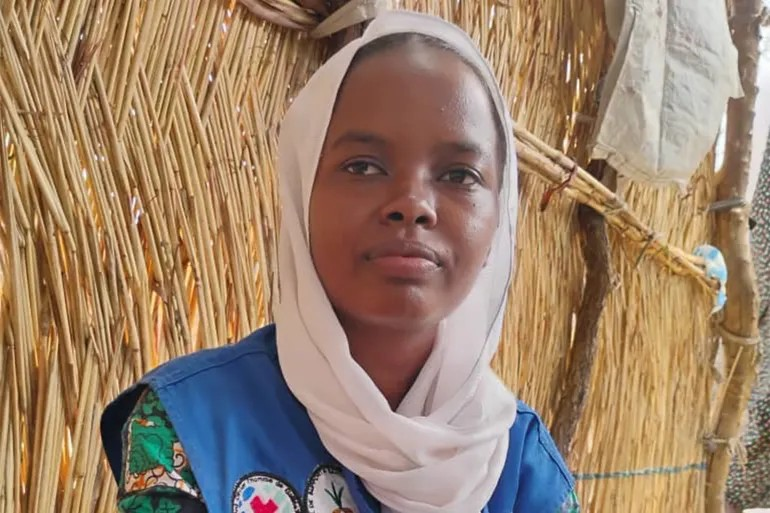
between young people on opposite sides of the war. With support from UNHCR, dozens
of Sudanese refugees secured places at Univ of Bangui, offering a fragile path back into
education after years of disruption. But returning to university has proved far from
simple. Having completed their schooling in Arabic, they must now study in French,
learning an entirely new language while trying to keep pace with university demands.
Many say the additional years required, financial hardship and psychological toll of
displacement, make it feel they are losing time they can never recover. “We have already
lost so many years.” Among them is Gamar el-Shaikh, sociology student at Univ of
Bangui: “We left Birao refugee camp, promising our loved ones we would return with
university certificates, But with the educational environment we are in, and all the
difficulties we face, it feels almost impossible to keep that promise.”
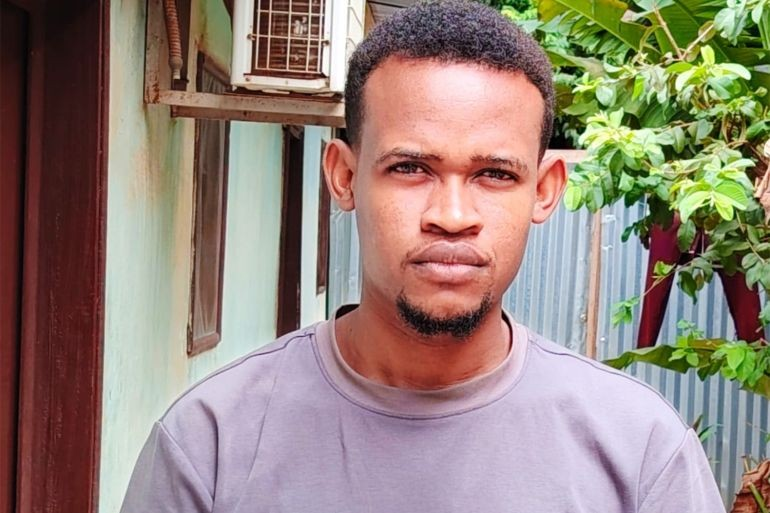
Another student, Baderelddian Issa, said his family fled after his father, an imam in
Amdafock, was persecuted by RSF for criticising them….his father’s position made the
family a target, forcing them to flee for CAR, where he is now trying to continue
studies, while watching the possibility of return slip further away. For some students,
displacement demanded even more painful choices. Intisar el-Sadig lost her husband
during the war before fleeing to CAR with her young child. After UNHCR secured her a
place at Univ of Bangui, she made the difficult decision to leave her 3-year-old son in
Korsi refugee camp with her mother so she could continue her studies: “I am studying
because I don’t want this war to take everything from us. If I stop now, we will have
lost not only our home and my husband, but also our future.” Ahmed knows how
quickly those hopes can collapse. Before the war, he was studying law and dreamed of
becoming a judge. His father, a Sudanese army officer, was killed during fighting in el-Fasher.
The family fled to Nyala, believing they had reached safety, but Ahmed says
fighters from RSF attacked them. During the assault, his mother was beaten so severely
her arm was broken. The family eventually reached the CAR. Now in exile, Ahmed’s
studies have been put on hold, and his ambitions have narrowed to survival.
Across Korsi, that sense of loss is shared in different ways. Students who once imagined
futures as pharmacists, judges, engineers, teachers and academics spend their days
navigating life in exile, learning a new language and trying to rebuild their education in
an unfamiliar system while worrying about relatives still trapped in Sudan. For these
young Sudanese, education has become both refuge and resistance, a fragile attempt to
rebuild meaning in lives shattered by war: “We are the lost generation of Sudan. We lost
everything in this war.” Al Jazeera
July 9
UN PROBE FINDS MASS KILLINGS, GANG RAPES BY RSF AMOUNT TO
GENOCIDE IN EL-FASHER, carrying out mass killings, gang rapes and deliberate
starvation as part of an intentional policy….UN Fact-Finding Mission for Sudan released
its findings Wed, concluding RSF’s systematic campaign of violence against civilians
during and after its siege of the capital of N Darfur amounted to genocide, building on a
Feb report that already identified hallmarks of the crime. The mission’s chairman
warned that findings have urgent lessons for el-Obeid, now ringed by RSF forces, where
Fasher described being raped in rooms where bodies of recently killed civilians, UN
High Comm for Human Rights warned last week a catastrophe was unfolding around el-
Obeid…and his office had documented patterns of summary executions, abductions,
torture and sexual violence in the surrounding region. For much of Sudan’s civil war,
intl attention centred on Khartoum and Darfur. In recent weeks attention has
increasingly shifted to el-Obeid as fighting intensified across Kordofan. UK and other
states warned of a risk of large-scale atrocities as RSF massed forces around el-Obeid,
home to 1/2 mn people, including 83,000 internally displaced people. Its new report
found additional evidence that widespread and systematic pattern of conduct of RSF,
including large-scale killings, mass rapes and deliberate starvation, was part of an
intended policy. “The patterns we documented in el-Fasher…serve as a stark warning,”
Mohamed Chande Othman, mission chairman. “The intl community must heed these
lessons and act prevent further catastrophe.” Al Jazeera
July 8
NEW INVESTIGATION UNCOVERED UAE SECRET NETWORK OF MILITARY
TRAINING CAMPS FOR RSF…DEADLY WAR IN SUDAN….Award-winning
journalist and documentary filmmaker Julia Steers: “We’re talking about a really
extensive network of logistics and training and financial backing from UAE.” UN High
Comm for Human Rights warns another humanitarian catastrophe is unfolding in
NKordofan capital El Obeid, where RSF and the army are fighting for control. “There’s no
question RSF would not be able to have gotten as far as they have…without the really
robust support of UAE.” UN experts urged intl community to prevent widespread
atrocities similar to…El Fasher after it was seized by RSF….fact-finding missions
documented summary executions, abductions, torture and sexual violence in Kordofan.
11,000 people…displaced from El Obeid in 2 weeks, Save the Children. UK top human
rights investigator said British govt was uniquely positioned to stop a genocidal
massacre carried out by RSF in El Fasher but failed to do so over economic interests and
diplomatic ties with UAE accused of backing RSF.
Nathaniel Raymond, Humanitarian Research Lab Yale School of Pub Health, submitted
testimony to Parliament detailing…efforts to warn of the threats: “I will speak
personally, and I will speak bluntly. My outrage at institutional failure in the face of
preventable genocidal killing, I see as a duty to stay angry as the obituary and the
memorial for these people. They deserve someone to be angry for them.”
Julia Steers: Analysts say smuggling at this border surged by up to 3 times prewar
levels….we saw on satellite images…activity over at the camp. Equipment and troops
from this training camp have been linked to critical RSF battles back in Sudan. With
help of LNA, RSF set up training camps and staging sites to prep weapons….We found
4 previously unidentified training camps across Libya. Libyan authorities want these
operations to stay in the shadows, but RSF soldiers are posting from Libya on social
media… RSF and army are fighting for control of El Obeid…both sides have been
launching drone attacks against civilians the last few weeks And there is concern now
RSF could be about to launch a ground offensive…very similar to what we saw during
the siege of El Fasher. So, what we’re hearing is the intl community warning of an
impending humanitarian disaster. These drone attacks struck critical infrastructure,
which could be potentially limiting people’s access to water, electricity….there is
already a humanitarian crisis ongoing inside El Obeid….the real fear is this will be
another repeat of El Fasher, where civilians were subjected to really extensive and
grotesque war crimes at the hands of RSF, who eventually went on to take that city. This
war, often categorized in intl media as a civil war, is really a proxy war on both sides.
On the side of RSF their main backer is UAE….They would say they are fighting
Islamists who back the army. …other reasons include just loyalty to RSF’s leader and
economic reasons and interest in gold and infrastructure in Sudan. But what they’ve
done during the course of this…war,…is establish this really robust network across
Africa, including Chad and Libya to funnel weapons, fuel, money into RSF and their
fight for control of Sudan…they’ve established a training network, where they train RSF
soldiers in Libya….as well as Colombian mercenaries to help train RSF troops…fight
alongside RSF in Sudan. We’re talking about a really extensive network of logistics and
training and financial backing from UAE.
RSF Defector: …the plane coming showed it’s Emirati, but the ammunition boxes and
weapons, as well as cars, none of which had anything to indicate it’s Emirati. Except for
one type of armored car they sent, and it was Emirati. You can see “Made in Emirates.
”Julia: UAE’s interest…a country with almost limitless resources…have backed one side
and they’re going to continue dumping resources into that side until the end….we’ve
seen RSF has taken all of Darfur. They’re putting up a very fierce fight in El Obeid. And
there is absolutely no sign of UAE support slowing down….they have an economic
interest in Sudan, in Sudan’s gold trade, Sudan agricultural trade. They do not want to
see an Islamist-backed government in Horn of Africa. Sudanese army is backed by
Islamists, so they would prefer RSF be the party that eventually takes over Sudan.
Democracy Now
July 7
UNICEF: 300 CHILDREN KILLED IN SUDAN IN LAST 6 MONTHS. Children are
caught “in a relentless cycle of violence, displacement and deprivation.” The fighting is
now concentrated in Kordofan, Darfur and Blue Nile states, with drone warfare
responsible for 60% of casualties. UN called on parties “to protect civilians and civilian
infrastructure, facilitate humanitarian access, and take all possible measures to protect
children from harm.” UN, US, UK and others have expressed alarm about potential
atrocities as RSF and the military fight for control of strategic city el-Obeid. The
Council approved a measure condemning the escalating violence by the RSF and its
allies in and around el-Obeid. The measure also encourages greater support for
countries hosting refugees from Sudan and condemns “all forms of external
interference” in the war. Drone strikes and shelling have targeted civilian infrastructure
including schools, markets, fuel and water stations putting over 500,000 people at risk.
Civilians have faced almost siegelike conditions for over a year. AfricaNews
July 4
NEW REPORT: RSF TRAINING CAMPS, SUPLY ROUTES IN LIBYA FUELLING
SUDAN’S WAR. ‘What we’ve uncovered is really just the tip of the iceberg’ UAE is
widely accused of playing a key role in sustaining Sudan’s civil war. Lighthouse
Reports dir van Dijken explains how a months-long investigation uncovered a network
of RSF training camps in east Libya, the role of UAE sustaining the war in Sudan, and
why intl pressure is urgently needed….reporters travelled to Libya to investigate routes,
facilities and infrastructure…used to back the RSF in its nearly 4 year conflict leaving
the world’s most dire humanitarian crisis in its wake: thousands of Sudanese civilians
dead from violence, disease, starvation, millions of displaced or refugees in
neighbouring countries, vast swaths of complete destruction. UAE support routed
through Libya is crucial to the RSF military campaign, which would quickly collapse
without. The investigators discovered 4 military training camps and staging sites….used
to train RSF-members on heavy weaponry and new weapons which soldiers transport
back to Sudan. RSF defectors and soldiers with Libyan Natl Army told the team these
sites provide RSF logistical support including fuel and pickup trucks, often modified for
battle before being driven back to Sudan. It has been known for quite some time RSF
were receiving support from UAE….Together with Evident Media and Sudan War
Monitor, we wanted to understand how RSF was receiving support beyond Chad.
Researchers, sources within RSF and defectors all pointed to east Libya as one of the
main if not the main transit routes for weapons and military training. We travelled…to
investigate what was happening around Kufra, near the border triangle with Egypt and
Sudan. Later in Benghazi we spoke to RSF defectors…trained at a camp outside the city.
We saw vehicles consistent with those used by LNA and RSF, as well as groups of
people appearing to receive military training. We confirmed mobile phones originating
from S America active inside the camp, supporting defectors’ accounts that Colombian
mercenaries were providing training. What was unique was our access to RSF defectors,
active military sources within RSF and contacts on the LNA side. They consistently
confirmed camps exist and remain active today. What surprised me most was just how
widespread facilities are and how closely LNA and RSF are working together. This is a
major hub where RSF trains fighters, assembles equipment and prepares forces to
continue the war in Sudan. UAE supported Haftar during the war in Libya and is using
those same relationships to continue supporting LNA and RSF. This network has
become a crucial part of RSF’s ability to sustain the conflict in Sudan. One of the
defectors says…if UAE stopped providing support, RSF would collapse very quickly….I
also want European govts to recognise the contradiction in their current approach. They
are working with east Libya and Haftar to reduce migration to Europe while overlooking
the role those same authorities are playing in prolonging a war creating even more
refugees. EU, US and UK all have leverage. They should use it to pressure not only
UAE but other countries supporting Sudan’s warring parties. If they want greater peace
and stability in the region, that is one of the most important steps they can take towards
bringing this devastating war to an end. Dabanga
July 3
INTERNATIONAL COMMITTEE OF RED CROSS DELIVERED AID TO 42,000 IN
EL OBEID…amid sharp escalation in hostilities. Aid agencies warn local families are
running out of coping mechanisms due to lack of jobs and severely underfunded
humanitarian response. Working alongside Sudanese Red Crescent Soc, ICRC
distributed 1 month’s worth of food rations to displaced families and vulnerable urban
communities. The organization is distributing nutritional supplements to 7,000 children,
pregnant women and nursing mothers to combat rising malnutrition over the coming
weeks. ICRC said residents are facing a compounding crisis after months of
displacement, psychological uncertainty and rolling blackouts of essential services
exacerbated by the latest wave of fighting. For weeks RSF shelled power stations and
fuel depots in El Obeid while massing troops around the perimeter, triggering intl
warnings of imminent full-scale assault. A major offensive threatens lives of 563,000
residents and 105,000 displaced people,…700,000 civilians living within 30k radius of
city centre. ICRC rushed surgical kits, emergency medical equipment and cholera
response materials to treat the wounded and contain potential outbreaks of waterborne
disease. Engineers are rehabilitating existing water wells and drilling new ones to
provide clean drinking water and improve sanitation facilities….ICRC Sudan called on
the warring factions to spare civilians, hospitals, water stations and power grids….Sudan
Tribune