

April 15
SUDAN HAS BECOME UNRECOGNISABLE with 40,000 people killed, 14 million
people – ¼ of the population – forced to flee their homes and civilian infrastructure
across the country extensively damaged. “We are not just facing a crisis – we are
witnessing the systematic erosion of a country’s future,” Luca Renda, UN Development
Programme. UNDP and Inst for Security Studies lays out the scale of Sudan’s economic
collapse since the war began in 2023.
Even under the most optimistic scenario of peace being achieved in 2026, Sudan would
still lose $18.8bn GDP by 2043, illustrating just how deeply the war has reshaped the
country’s economic trajectory. The report warned that damage goes beyond lost
economic activity and is affecting the very foundations of the economy, including
agriculture, industry, services and state institutions. The destruction of infrastructure and
collapse of the systems that support daily life and economic activity imposed a massive
economic cost on the country. Sudan lost $6.4bn in its GDP in 2023 alone, a loss that
reflected “a simultaneous collapse across all major parts of Sudan’s economy” driven in
large part by destruction of infrastructure. Fighting has damaged farmland, irrigation
systems and transport networks, contributing to a 15% drop in cultivated land. In urban
centres, the destruction of factories and power supply caused industrial activity to
collapse by 90% shutting down businesses and resulting in the loss of jobs. 40% of
power generation capacity has been lost, and key water infrastructure has been destroyed
or seized, cutting communities off from clean water and sanitation. “The destruction of
infrastructure not only triggers displacement but also makes it extremely difficult for
people to secure adequate housing or access basic services once displaced.”
Outbreaks of disease, including cholera, have spread as water systems broke down,
placing further strain on an already weakened health sector and increasing long-term
costs of recovery. WHO verified 200 attacks on healthcare facilities with fewer than
14% fully operational in conflict areas. Thousands of schools have closed or been
damaged, disrupting the educations of millions. Agriculture, which employed 65% of the
workforce, was once the backbone of Sudan’s economy, but it has been severely hit by
the war. Cultivated land has shrunk, adversely impacting rural livelihoods. Many rural
communities that depended on farming for income and food lost their economic base,
weakening a sector that previously sustained millions of families. According to UNDP,
average incomes have fallen back to levels last seen in 1992, underscoring the depth of
the economic shock and impact on households across the country. 90% of manufacturing
activity has been destroyed in key economic hubs, eliminating thousands of jobs.
Simultaneously, the informal economy, a key source of survival for many people, has
contracted as resource shortages and displacement have shut down small businesses and
markets. Displacement has deepened the crisis as 14m people have been forced from
their homes and pushed out of both formal and informal work, making it increasingly
difficult to sustain livelihoods. Oil output has fallen amid widespread instability and
infrastructure damage. The Khartoum refinery which previously processed up to100,000 bbl per day and supplied 1/2 of Sudan’s fuel needs, has been out of operation
since 2023. …parts of the facility have been destroyed and other sections require full
replacement after repeated strikes in 2024-25. Although recaptured by the army, the
facility remains nonoperational. Key infrastructure has been hit elsewhere. Pipeline
routes carrying crude to Pt Sudan shut down from war-related damage while facilities
were disrupted by RSF drone attacks. The collapse of the Sudanese pound and supply
chains has caused a sharp rise in living costs. The pound has fallen from 570 per $US
before the war to 3,500-3,600 today, according to Sudan Central Bureau of Statistics.
The drop has made imports expensive. As a result, food prices have surged. In
Khartoum, 4 pieces of bread cost 1,000 pounds, an amount that previously bought 6
pieces. In Gezira, a 110 lb sack of sugar has risen from 155,000 to 175,000 pounds while
a bag of cement jumped from 35,000 to 55,000 pounds. In Pt Sudan, 2-gal container of
cooking oil increased from 30,000 to 35,000 pounds, adding further pressure to family
budgets. Transport and fuel costs have risen sharply. Bus fares in Wad Madani are up
50%. Rickshaw fares doubled in some areas, and fuel prices reached 7,000 pounds per qt
in several regions. Wages, however, failed to catch up with inflation, leaving many
households without access to necessities. Nearly half the population is experiencing
acute food shortages, while 90% of displaced households report they cannot afford
enough food.
The collapse of Sudan’s economy cannot be understood through numbers alone. “A
child born in Sudan after April 2023 enters a world where the hospital that should care
for them is likely closed, the school that should educate them is not functioning and the
family that should support them has likely been displaced,”resulting in “lost childhoods,
lost education, lost health”. 34m people are in need of assistance, and 19m are facing
acute food shortages. 5.6m children have been born since the war began, many into
conditions in which health facilities are not operating. Education has been severely
disrupted for 19m children, as only 20% of schools currently are operational in some
areas. The war has caused death, trauma and profound loss, casting a long shadow over
Sudan’s future and dimming the prospects of a generation whose lives are being shaped
by violence. If the conflict continues to 2030, Sudan’s economy in 2043 would be about
$34.5b smaller than it would have been without the war, and GDP per capita would drop
by $1,700. Extreme poverty would rise above 60%, pushing an additional 34m people
into deprivation….each month of continued conflict locks in deeper and more
irreversible damage. “Every additional month costs lives and deepens structural damage.
The most urgent priority is to stop the conflict. The choices made now will determine
whether Sudan’s trajectory can still be reversed.” Al Jazeera
SUDAN’S WAR CREATED CONDITIONS FOR UAE TO ADVANCE AMBITIONS
ALONG THE RED SEA. It exposed a long-standing strategy aimed at securing control
over infrastructure, land, ports and natural resources across the Horn of Africa the Gulf
state had been quietly pursuing for years. While other powers seek stability, Abu Dhabi
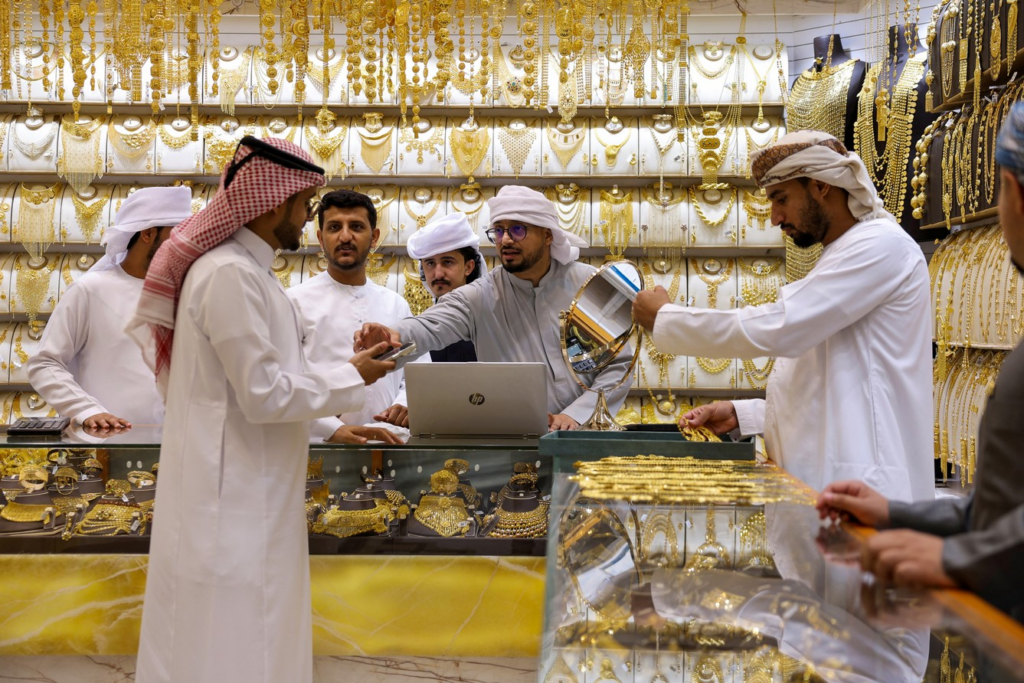
learned to make instability profitable. Each conflict zone…presents opportunity. …crisis
has become currency. This is a textbook case of modern geoeconomics: using
investment, militias and maritime infrastructure to extract strategic value, even if the
host country collapses socially and economically. UAE’s push into large-scale
agricultural projects is not just about commercial expansion – it directly addresses the
country’s pressing food security vulnerabilities. By securing farmland and agribusiness
abroad UAE aims to guarantee steady supplies of essential crops and reduce reliance on
global markets. Sudan represents a pivot point whose coastline secures access to a vital
global trade route, whose earth bears vast reserves of gold and whose disunity can be
easily exploited. Since the start of Sudan’s war, UAE allied with RSF, accused of
committing war crimes, ethnic cleansing and genocide. …To understand Emirati
behaviour, one must see their Sudan policy as part of a large arc stretching from
Libya to Somalia. UAE consistently backs non-state actors in regional conflicts, who
can guarantee specific outcomes – security for a mine, control of a broader area, access
to a port – without the friction of democracy. Abu Dhabi does not care about Sudan’s
political stability or state institutions. They prefer working with non-state actors,
paramilitaries, militias like RSF…they are much better served by weak institutions and
less politically stable states. The New Internationalist
(See https://decolonizesudan.org/ for advocacy training, political education guide,
and #Boycott UAE where activists accuse UAE of funding, arming, providing cover for
RSF. Target Sudanese gold smuggled out by RSF and processed through UAE to finance
the war. Campaign to pressure companies supplying weapons, technology, logistics to
RSF. Boycott Emirati companies and brands, including Emirates Airline, Fly Dubai,
tourism in Dubai, closely linked to the state’s financial interests. Boycott academic and
cultural UAE, citing its role in destroying Sudanese infrastructure and universities while
maintaining a reputation as a global cultural hub.)
April 9
ARMED FORCES…DETAINED AND TORTURED CIVILIANS IN AREAS UNDER
THEIR CONTROL, leading a campaign of retaliation against perceived opponents,
Human Rights Watch said….the military including Gen Intelligence Svc and al-Baraa
Ibn Malik militia, targeted individuals based on ethnic identity, humanitarian work or
political affiliation. The report…documented abuses in Khartoum, Gezira, Gedaref, Red
Sea and Northern states. HRW found detainees were often held incommunicado in
military bases or houses converted into detention sites. “The Sudanese Armed
Forces…led a campaign of fear and retaliation against people they label collaborators,”
Mohamed Osman, HRW. “Accounts by former detainees, their relatives and lawyers
paint a grim picture of arbitrary abuses emboldened by a climate of impunity.”
Evidence suggests the military specifically targeted individuals from Darfur…as
collaborators because the rival RSF originates from that region. HRW documented
accounts of Darfuri civilians being beaten and told they “brought the war” to the capital.
Humanitarian workers and local volunteers running soup kitchens have been
interrogated and detained. In one instance, an aid responder in E Khartoum was held 17
days in 2025 and questioned about his group’s funding after the army regained control of
the area. Despite a 2026 order by…al-Burhan to release hundreds of women from
Omdurman prison, monitors told HRW many remain in detention without due process.
25 women have been sentenced to death on charges of collaboration. 2 deaths resulting
from torture in custody and many individuals remain forcibly disappeared. Intl actors,
including a recently formed atrocity prevention coalition of European nations, have been
urged to press for independent access to detention facilities. HRW called for authorities
to grant unfettered access to UN and AU fact-finding missions. Sudan Tribune
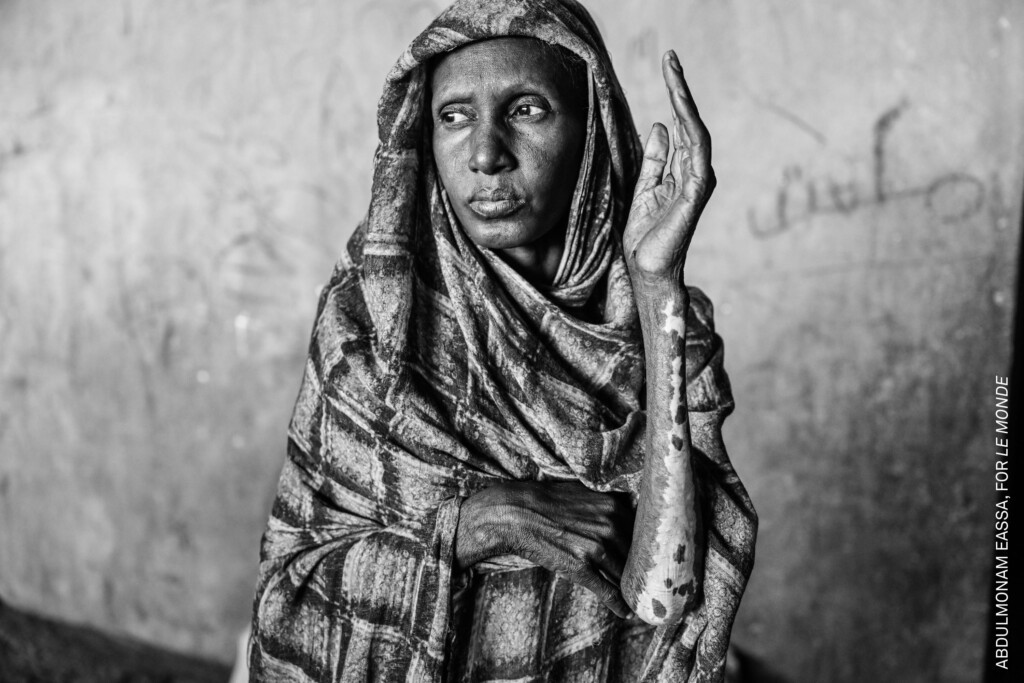
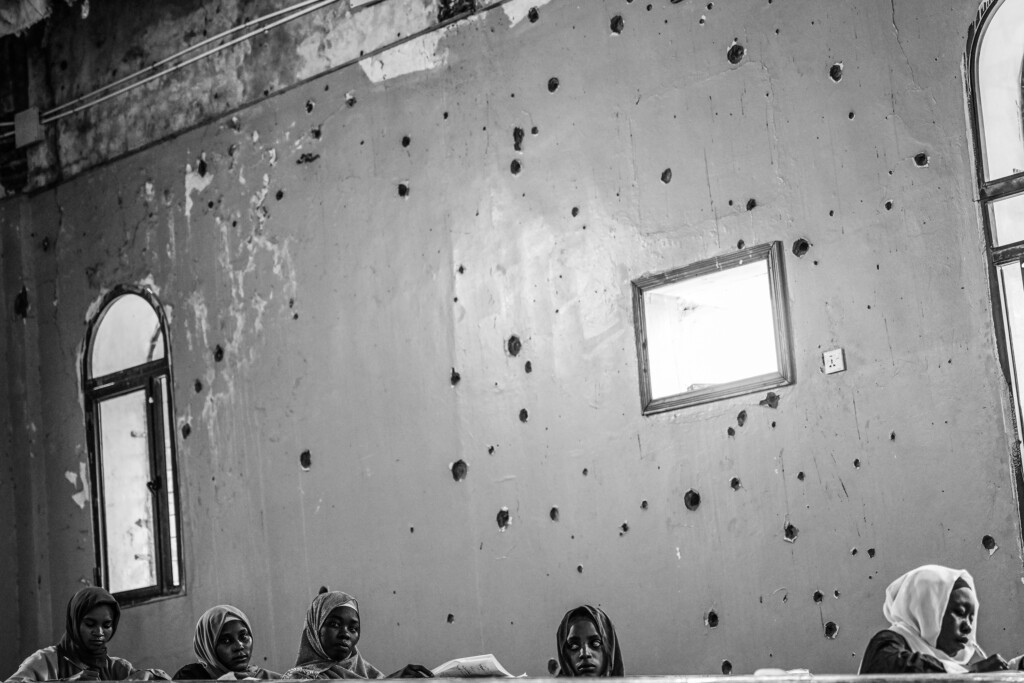
SYRIAN-FRENCH PHOTOJOURNALIST ABDULMONAM EASSA ONE OF
WINNERS. WORLD PRESS PHOTO CONTEST…best photojournalism and
documentary photography produced over the last year, connecting the world to the
stories that matter….Eassa’s winning entry is a set of 4 images in Sudan. Alhaja
Abdallah…shows scars from a fire at El Mohad camp. Omdurman students take exams at
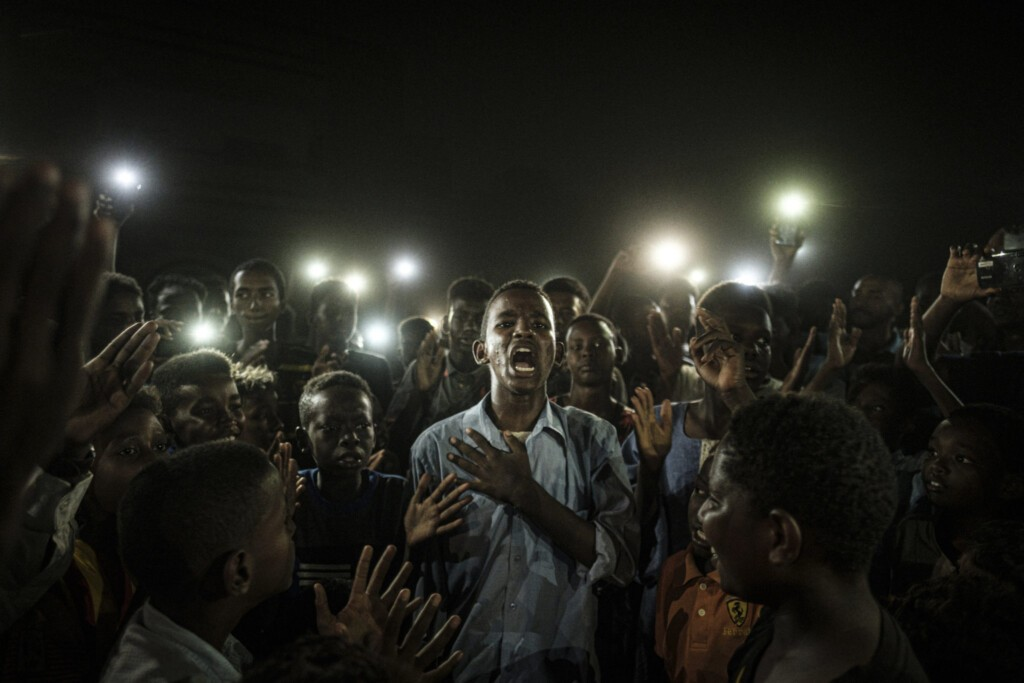
war-damaged Omdurman Islamic Univ. 2025 picture by Sudanese photographer Mosab
Abushama, using just a mobile phone, was selected one of regional winners for Africa.
2022 Sudanese photographer Faiz Abubakr Mohamed was named winner in singles
category for Africa, with a picture of woman protestor hurling a teargas cannister back at
riot police during pro-democracy protests in 2021.
40 KILLED IN DRONE STRIKE ON SOCIAL GATHERING IN KUTUM,
N DARFUR. The town faced repeated drone strikes, suspected carried out by the army,
targeting RSF positions, the local rural hospital and main market. …destroyed dozens of
houses, leaving many families displaced. Alaeddine Naqd, Tasis coalition, aligned with
RSF, claimed a Sudanese army drone strike killed 56 people, including 17 children….
The bombing coincided with rising internal tensions within RSF. RSF leadership in N
Darfur moved to disarm a prominent local field commander over suspicions regarding
his loyalty to Mahameed tribal leader Musa Hilal. RSF launched a ground offensive to
seize the Mahameed stronghold. Hilal subsequently withdrew to Northern State….RSF
has been accused of committing abuses against…the Mahameed tribe in N and W Darfur,
including killings, arrests and strict surveillance of tribal members within RSF ranks.
Sudan Tribune
April 8
PROTESTERS…BLOCKING MAIN HIGHWAY LINKING SUDAN TO EGYPT,
AGAINST PERSISTENT POWER OUTAGES. The demonstrators set tyres on fire and
blocked the vital road connecting Dongola to Wadi Halfa, primary artery for trade and
travel between Sudan and Egypt. Wadi Halfa Emergency Rm: “Protesters refuse to be
part of the power cuts because the transmission line from Egypt is sufficient to cover thecity’s needs entirely without the need for scheduling.” Egypt provides electricity to
several towns in northern Sudan under a long-standing agreement. Protesters criticized
local officials for citing global instability and tensions in the Strait of Hormuz as reasons
for the 12-hour daily blackouts. The protesters warned they would escalate their
movement in public squares and maintain the highway blockade until authorities provide
an administrative solution and end rationing immediately. Sudan Tribune
April 6
HOSPITAL HIT IN WHITE NILE STATE APPEARS RSF RETALIATORY STRIKE. A
drone strike hit Al-Jabelen Hosp…killing 10 people and injuring more than 20,…
The strike appears to be a retaliatory operation following a SAF attack on a hospital in
RSF-held E Darfur 2 weeks earlier. The strike targeted a functioning medical facility in a
town under SAF control along Nile corridor south of Khartoum, outside active frontline
combat but a key hub. The location and timing of the strike indicate deliberate targeting
of civilian infrastructure rather than incidental damage. Among those killed were Dr.
Hamed Suleiman, the hospital’s dir, killed while performing surgery, and Dr. Ilham
Hamed, the admin dir. Medical sources in White Nile State said the hospital served as a
primary referral center for surrounding communities, meaning its loss will significantlyreduce access to urgent and routine healthcare in the area. The attack follows March 20
SAF drone strikes on Al-Daein Teaching Hosp in E Darfur RSF-controlled area….That
strike caused mass casualties, including children and rendered key sections of the
hospital non-functional. The sequence of the 2 incidents… indicates a pattern of cross-
line targeting of medical infrastructure by both parties. These locations are not active
frontlines but urban centers providing core civilian services, underscoring the
operational nature of the strikes. The incidents form part of a broader pattern of attacks
on healthcare infrastructure. Sudan War Monitor
April 4
LARGE EXPLOSION IN KHARTOUM, …LANDMINE LEFT BEHIND….Khartoum
has seen relative calm since the army…regained control of the capital last year. A
witness in city centre described a “single, loud explosion”….Other residents confirmed
hearing the blast. Police said the explosion occurred in Burri caused by a landmine, a
remnant of the war, which detonated after “some residents set fire to waste” in the area.
Burri lies near several strategic and military sites, including Gen Command Hqs and
Khartoum Intl Airport. The UN previously warned Khartoum is “heavily contaminated
by unexploded ordnance”. Many of the unexploded devices were left behind by RSF
fighters. The the city has regained a sense of normality, with 1.7 million displaced
people returning. Outside Khartoum, drone attacks by both army and RSF continued to
disrupt daily life, with some strikes killing dozens at once. UN said drone strikes killed
500 civilians Jan-mid-March, pointing to “the devastating impact of high-tech and
relatively cheap weapons in populated areas”. The New Arab
April 3
ANNOUNCEMENT BY DIR GEN OF EDUCATION AL JAZIRA STATE STATING
PARAMILITARY GROUPS TO WORK IN SCHOOLS INSTEAD OF TEACHERS…
Abu al-Karram threatened to replace teachers with Al-Bara’on battalions and Sudan
Shield, both allied with the army, if they continue to demand salaries…in arrears since
2022. Complaints from teachers regarding low wages and accumulated arrears increased
across several states since the war began. This has negatively impacted living conditions
and the stability of the educational process throughout the country. Sudanese Teachers’
Committee criticized the statements, describing them as completely unacceptable. Al-
Jazirah has 18,307 primary school teachers, 16,722 intermediate school teachers, 300
pre-school teachers. The Comm stated such threats were previously made by suggesting
RSF as replacements. …these remarks reflect an exclusionary approach. It warned of the
consequences for the educational process and civil institutions….The Comm called for
protection of teachers’ rights and a safe working environment….and stressed the
importance of keeping educational institutions away from military-style threats.
HARDLINER NAMED CHIEF OF STAFF. Al-Burhan carried out a sweeping overhaul
of SAF high command, appointing Gen. Al-Atta Chief of Gen Staff in a move that
consolidates hardline control over the country’s military and signals a shift toward a
prolonged war strategy. Al-Atta’s elevation now places a battlefield commander, ratherthan a bureaucratic officer, at the center of military planning. It reinforces dominance of
officers tied to the Islamist-era command structures that continue to shape SAF’s
leadership culture. He is widely regarded as one of the most hardline figures within
military leadership, with a record of opposing negotiations and advocating for total
victory over RSF, which Al-Burhan echoed. Al-Atta rejected ceasefire initiatives and
insisted the war must continue until RSF is defeated or surrenders. He has publicly
declared the military intends to maintain power for decades after the war framing
civilian rule as subordinate to military authority. …he suggested armed forces could
remain in control for multiple election cycles, effectively sidelining any immediate
prospects for a civilian-led transition. That rhetoric places him at odds with domestic
civilian coalitions and intl mediators. It reduces the likelihood of near-term negotiations
and strengthens factions within the army that view compromise as a strategic risk. For
RSF, the restructuring indicates SAF is preparing for a sustained campaign rather than
negotiated settlement. Al-Atta previously issued threats against neighboring countries
and accused regional actors of supporting RSF, contributing to tensions with Chad. That
stance complicates diplomatic engagement at a time when external actors are attempting
to revive ceasefire talks. Efforts to bring SAF back to the negotiating table may face
increased resistance, particularly if military leaders believe battlefield momentum is
shifting in their favor. The restructuring could therefore stall or derail ongoing
diplomatic initiatives. Sudan War Monitor
April 2
UN REOPENED HQS IN CAPITAL FIRST TIME IN 3 YEARS. The move marks a
preliminary step toward resuming operations from Khartoum after they were relocated
to Pt Sudan following the outbreak of war….Foreign Min praised UN’s decision to
resume activities from Khartoum, describing it as a historic day for the country. The
Foreign Min called on AU to review Sudan’s suspension from membership and urged
regional bloc IGAD to take more concrete steps to support stability in the country.
Sudan Tribune
March 31
SEXUAL VIOLENCE IS A WEAPON AMONG MANY. The army and Rapid Support
Forces have been locked in a brutal conflict…that has killed tens of thousands, displaced
11 million and marked by widespread sexual violence. Jan 2024-Nov 2025, 3,396
survivors of sexual violence – 97% women and girls – sought treatment at facilities
supported by MSF in N and S Darfur. The figure is only a fraction of the true scale” of
atrocities, MSF warned in its report, which documented numerous testimonies using
medical data revealing “deliberate nature of sexual violence in Darfur.” Survivors
frequently and clearly identified those responsible as RSF fighters: “Sexual violence is
being used as a weapon of war and a systematic means of controlling civilians, in
violation of international humanitarian law”. Testimonies from 150 victims during RSF’s
attack on Zamzam Camp…indicate they targeted ethnic groups, particularly non-Arab
Zaghawa. 28-year-old woman: “They were 4 and each raped me, while some held myarms and others my legs”. Other survivors were in El-Fasher, the army’s last stronghold
in the sprawling western region that fell in 2025 and where a UN fact-finding mission
reported “acts of genocide.” Many women described being assaulted away from
frontlines while going about daily activities: on roads, in farms, markets and
displacement camps. “There is no way to stop the rapes. The only way is to try to stay
home, and to not go out as much,” 40-year-old woman in Jebel Marra. MSF identified
732 survivors of sexual violence in displacement camps Dec 2025-Jan this year, some
assaulted while fleeing or within the camps. “This war is being fought on the backs and
bodies of women and girls,” Ruth Kauffman, MSF, describing the assaults as a “defining
feature” of the conflict…. AfricaNews
UN ALARM AT CONSTRAINTS ON HUMANITARIAN ACCESS…AMID
ONGOING ATTACKS. Office of UN Secy-Gen expressed alarm at attacks on
civilians….Drone attacks constantly target civilians, and essential roads are unsafe,
making humanitarian aid logistics nigh-on impossible. In W Kordofan,…7 people were
killed and dozens injured when an air strike hit a funeral gathering in Nuba Mtns,
insecurity continues to displace families: “Our colleagues at Intl Org for Migration tell
us 120 people were forced to flee their homes on the same day. In S Kordofan, drone
strikes and attacks in Dilling caused 3 deaths Sat. Local sources on the ground…report
the humanitarian situation there is rapidly deteriorating. The continued fighting and
repeated drone strikes are disrupting critical supply routes across the Kordofan region.
Key roads linking the city El Obeid in N Kordovan to Dilling and Kadugli in S
Kordofan are increasingly unsafe, …hampering movement of humanitarian and
commercial supplies. Red tape is further compounding these challenges, with essential
medical activities in El Obeid suspended for nearly 1 month. In Blue Nile State,
escalating hostilities near the border with Ethiopia have severely constrained
humanitarian operations. Movement beyond state capital Ed Damazin is largely
suspended, cutting off access to people in need there. In Darfur, increasing insecurity
and restriction on humanitarian movements are choking humanitarian access. Aid
workers face armed robberies, attacks along key routes, while some organizations have
been forced to suspend operations altogether, leaving vulnerable populations with even
fewer services. Despite all of these challenges, we and our partners continue to do our
best to respond to needs across Sudan. Civilians must be protected at all times, which
should be a surprise to no one is a requirement under intl humanitarian law. Attacks on
civilians and essential infrastructure must stop. We reiterate all parties must ensure
rapid, safe, unhindered and unimpeded humanitarian access, including all key routes and
anywhere aid is needed.” Dabanga
March 29
ONE THIRD OF GLOBAL FOOD WASTED AS MILLIONS FACE HUNGER. In a
world where 3 million children die each year from hunger-related causes, 1.3 billion tons
of food – 1/3 of all food produced globally – is wasted, according to UN food agency.
According to…Global Report on Food Crises, 295 million people across 53 countriesfaced varying levels of acute hunger in 2024, an increase of 13.7 million compared to
2023.
1.4 million people worldwide are facing the most severe level of acute food insecurity,
classified as famine. Gaza tops the list with 640,600 people affected, followed by
Sudan with 637,200, So Sudan with 83,500, Yemen with 41,200, Haiti with 8,400,
Mali with 2,600.
30 million people worldwide are facing a Level 4 acute food crisis. Sudan leads with
8.1 million people affected, followed by Yemen with 5.5 million, DRC 3.9 million,
Afghanistan 3.1 million, Myanmar with 2.8 million, So Sudan with 2.4 million, Haiti
with 2.1 million, Pakistan 1.7 million, Nigeria 1.2 million, 1.1 million in Gaza.
Children are among the most vulnerable groups in this crisis. According to UN
figures, 3 million children lose their lives each year due to hunger-related causes. 43
million children worldwide are facing severe hunger, roughly 45% of deaths among
children under 5 are linked to hunger and malnutrition. In China, annual food
wastage exceeded 108 million tons in 2024. India wastes 78 million tons annually, . In
Pakistan, annual food loss reaches 31 million tons. In Nigeria, 24.8 million tons were
wasted in 2024. The main drivers of food loss in the country are inadequate storage
facilities, inefficient transportation, and limited market access, causing a large portion
of harvest to spoil before reaching consumers.
US wastes 24 million tons of food annually. Unlike other countries, in the US high food
consumption is the main factor. In Brazil, annual food waste exceeds 20 million tons.
Most waste occurs during harvesting, storage and transportation, with infrastructure gaps
and poor product handling causing large quantities to spoil before reaching store
shelves. In Egypt, annual food waste exceeds 18 million tons, among the highest per
capita food waste worldwide. Indonesia wastes 15 million tons of food annually.
Inefficient supply chains, poor storage and household habits, including overbuying, are
driving losses. In Bangladesh, annual food waste exceeds 14 million tons. Traditional
farming methods, limited cold storage, spoilage during transport to crowded urban
markets are the main drivers of the country’s food loss. Mexico wastes 13.4 million tons.
Experts cite inefficient distribution, supply chain losses, and consumer disposal of edible
food as the main drivers. Middle East Monitor
COST OF SORGHUM AND WHEAT, PRIMARY FOOD FOR MUCH OF EL
GEZIRA, CLIMBED TO SDG 140-150 PER SACK….The increases come amid
mounting pressure on farmers grappling with the aftermath of conflict and deteriorating
infrastructure. El Gezira, one of Sudan’s most important agricultural regions, relies
heavily on sorghum and wheat alongside cash crops cotton, groundnuts, legumes.
However, this year’s harvest has been severely affected by…reduced planting areas and
water shortages. El Nour El Bashir, local activist: “Large parts of the project
experienced acute water shortages during the agricultural season. This remains a major
challenge for farmers, and the agricultural sector requires substantial intervention from
authorities.” This has been compounded by extensive damage to irrigation systemsfollowing the war, 1,470 breaches in irrigation canals alongside widespread destruction
of crops and farming equipment. Farmers attempting to resume agricultural activities are
facing dwindling financial support. Banks have largely withdrawn from funding farmers,
citing ongoing security and economic instability, leaving producers without resources to
recover. …analysts warn continued disruption in El Gezira could have far-reaching
consequences for Sudan’s broader food supply. Dabanga
March 28

Ahmed’s practice explores intersections of faith, selfhood and the
politics of belonging within postcolonial and diasporic contexts: “I have always
understood that knowledge is transmitted through discipline, repetition, bodily memory
and collective ritual. Devotion is practised with the body as much as with language,
something deeply rooted in Sufi influence. In Sufi traditions, the self is often
understood as evolving — refined, questioned and transformed in relation to others and
the divine. For me, queerness can operate in a similar way as a practice of attentiveness,
of listening to vulnerability, contradiction and desire, and learning to live with them
rather than attempting to erase them. The revolution of 2018–19 opened a horizon of
collective possibility that has been violently curtailed. The post-revolutionary period in
Sudan is one of grief, exhaustion and suspension. I don’t believe art can replace political
action or offer institutional solutions. But I do believe it can hold space for mourning,
for memory and for imagining otherwise when language and politics fail. Hope isn’t
optimism — it’s an ethical position. …drawing on the strength and collectivity of
Sudanese traditions rather than explicit depictions of suffering. Central to my work is a
refusal to contribute to a visual economy that frames Sudan through pity or catastrophe.
To insist on agency, even in darkness, is its own act of defiance. My work is often read
through binaries I resist — religion versus queerness, Africa versus Europe, traditionversus modernity. What I miss most about home is not a place, but a rhythm: the
intimacy of everyday life, shared humour, the density of social interaction, the way
memory circulates collectively. In a world increasingly shaped by fear and polarisation,
I aim to work from connection rather than opposition. I hope it’s a way to unlearn
shame, build tenderness and imagine freedom without erasing where we come from.
The New Arab
March 27
6 SUDANESE DIED IN EGYPTIAN CUSTODY IN 6 WEEKS, says refugee group.
Abbas, who leaves behind a child under age 2, allegedly died as a result of torture
sustained while in detention…. However, his family remains unsure of the exact location
of his passing. Nour Khalil, human rights activist and dir of the Refugee Platform in
Egypt, stated…Egyptian authorities detained Rashid despite his possessing valid
identification documents. …Rashid was held 2 weeks without an arrest warrant, formal
charges or access to legal counsel: “Rashid was not suffering from any illness before his
arrest. He was not informed of the reason for his detention and was unable to contact his
family or lawyer.” The circumstances surrounding his final moments remain unclear.
Some sources said Rashid died inside a deportation vehicle transporting him to Cairo
Intl Airport, in preparation for his deportation to Sudan as part of flights operated by
Sudanese businessmen under Voluntary Return Group, dedicated to deporting Sudanese
detainees in Egypt. Hope Committee for Voluntary Return of Sudanese…claimed Rashid
died of sudden natural causes at the airport. …Rashid was undergoing final procedures
for “voluntary return” flight to Pt Sudan when he collapsed. Sudanese Democratic
Lawyers Front vehemently rejected this narrative, describing the death as anassassination by Egyptian authorities. …the group alleged Rashid was subjected to
continuous torture since his arrest. The Front accused Voluntary Return Comm of
collusion and false testimony, claiming the committee is attempting to cover up state
violence. Rashid’s family refused to receive his body, demanding an independent
medical report to clarify the true cause of death. “There are no natural deaths in prisons
and detention centres, and there is no voluntary return when the alternative is
imprisonment in deadly conditions,” Khalil stated. …dozens of Sudanese remain in
Egyptian prisons without legal justification, denied the right to see their families or
exercise their basic human rights. The Front reminded the Egyptian government of its
obligations under intl law.…An Egyptian refugee support group told Radio Dabanga it
records an average of 5-10 arrests of Sudanese refugees and migrants every day, with
reports of perilous conditions for detainees.
March 24
DEATH TOLL FROM HOSPITAL STRIKE IN E DARFUR RISEN TO 70, WHO:
….”This hospital had already been damaged in a previous attack….Since this latest
attack, the hospital is no longer functional.” The facility served as a referral hospital for
2 million people across El-Daein and 9 localities in E Darfur. Patients need to travel 100
mi to reach the next referral hospital. “An attack on a hospital is not only an attack on a
building. It is an attack on people seeking care, on health workers risking their lives to
save others, and on the very possibility of survival in times of crisis. Access to care is
shrinking. And efforts to repair or restore damaged facilities and equipment are being
undermined.” WHO’s Sudan health response for 2026 was only 5.7% funded.
Emergency Lawyers reported the hospital was hit by an army drone strike. RSF-
controlled El-Daein has been regularly attacked by the army trying to push
paramilitaries back towards its Darfur strongholds and away from Sudan’s central
corridor. The New Arab
EVENING OF MARCH 20 EXPECTED TO BE A FESTIVE ONE IN ED-DAEIN,
CITY OF 350,000 PEOPLE IN DARFUR. It was the start of Eid al-Fitr, a 3-day
celebration at the end of Ramadan characterized by gift-giving, communal meals,
prayers and social visits. Ed-Daein is far from any active frontlines. It is the capital of
E Darfur, the least conflict-affected of 5 Darfur states. Occasional bombings have hit the
city, but Ed Daein hasn’t suffered any ground fighting since 2023. Dr. Anas Saleh Al-
Tom was working the holiday shift: “The hospital was crowded with patients, visitors,
children and women.” Dozens of family members had come to visit patients, so they
would not pass the holiday alone. Visiting the sick during Eid is strongly encouraged
culturally and religiously. It was about 2 hours after the Iftar meal. Revelers still filled
the streets and sat at coffee shops near the hospital, sipping tea and coffee. Dr. Al-Tom
remembers exactly where he was standing when the celebrations turned suddenly into
mourning. The explosion plunged the hospital into darkness and knocked over the young
physician. …he found himself surrounded by debris, bodies, smoke and injured patients.
Though wounded in his back, shoulders and chest, he joined other rescue workers
evacuating the wounded and survivors: “While we were still working, we were targetedagain. The entire building was destroyed: the pharmacy, the lab, emergency room — all
of it.” Some of the patients he had been caring for before the blast were killed. …at least
2 missiles hit the hospital. This type of attack is known as a “double tap.” It seeks to
increase casualties by not only targeting a site but also hitting the first responders. 13
children were among 70 people killed, along with 2 nurses, a doctor and 5 other health
workers. 100 others were injured, according to the WHO.
March 22
SURVIVORS RECOUNT RSF DETENTION HORRORS. AFP reported harrowing
accounts of abuse and mass detention in N Darfur, where survivors describe a network
of improvised prisons run by RSF following its assault on El-Fasher. Testimonies
gathered in the displacement hub Tawila point to widespread confinement of civilians in
shipping containers, hospitals and other facilities repurposed as detention sites.
Investigations by UN and Centre for Info Resilience indicate thousands have been
detained since RSF consolidated control of the city, in a campaign the UN says carries
hallmarks of genocide. Among survivors is 42-year-old Ibrahim Noureldin, held with
100 men inside a sealed metal container: “When people died of thirst and hunger, we
were beaten and forced to bury them outside. We were put to work, lifting their luggage,
materials, weapons. If we moved too slowly, they beat us with whips.” He described
surviving for weeks on minimal food and tiny sips of water after being captured while
fleeing the fighting. Evidence compiled by UN investigators and CIR, including satellite
imagery and verified footage, suggests detainees were drawn from across civilian life,
teachers, doctors, aid workers, often accused of links to the army or targeted based on
identity. Some were reportedly held for ransom. Both sides in Sudan’s war have faced
accusations of violations against civilians. Former detainees described conditions inside
one of the largest facilities at a children’s hospital in El-Fasher. Abdullah Idris, 45, said
2,000 men were held there without basic necessities: “They brought us to the children’s
hospital, said we were fighters and kept me there for a month,” adding that detainees
survived on saline solution while deaths mounted daily. According to the UN, disease
outbreaks compounded the crisis, with dozens dying each day and hundreds killed
within a single week. Survivors reported systematic torture. Ahmed Aman, 45, said some
detainees “had their fingernails ripped out with pliers”. Women were among those
detained. Nedal Yasser, 27, was held across multiple locations and subjected to repeated
abuse after being accused of having ties to a soldier. Ahmed al-Sheikh: “I was beaten,
tied up, interrogated. When they found out my husband was a soldier, the torture got
even worse. We were exploited and sexually harassed, only sometimes, she was
assaulted and abandoned in a remote area, eventually making her way on foot to Tawila.
Across the area, survivors continue to bear physical and psychological scars.allowed to
go to the bathroom.” She said detainees were ordered to pay thousands of dollars for
release, despite having already lost their belongings. After weeks in captivity mechanic
detained for 4 months, said executions were carried out arbitrarily: “They’d kill people
right in front of us. They would select people randomly, killing us like animals.” UN
estimates thousands more detainees have been transferred to other RSF-controlledlocations, including facilities in Nyala, where access remains restricted and
communications are cut off. Almayadeen
March 21
WHERE IS EID? As Sudan celebrated the first day of Eid displaced people at N
Darfur’s Tawila Camp gathered for prayers. Most of the people there fled El Fasher
when it was seized by the paramilitary RSF. “How can we celebrate Eid when our
country is devastated?” Tayseer Adam, displaced woman living in Tawila. “How can we
experience the Eid atmosphere when our hearts are heavy with sorrow? We are deeply
saddened because we have lost so many people, may God grant us patience.” RSF
capture of El Fasher was marked by horrific violence, as the militants drove out the SAF.
Tens of thousands of residents were executed in…a genocidal slaughter. Those who
managed to escape fled to Tawila. “Where is the Eid? We lost all our family in the
shelling of El Fasher, we can’t comprehend everything that has happened,” Eman
Mansour, another displaced woman living in Tawila. “This Eid is sad, as if it isn’t Eid at
all, there are no families left.” Tawila is home to a million displaced people. But with
growing needs and diminishing funding, aid groups are struggling to respond. The
sprawling network of camps is facing a shortage of medical supplies, adequate food and
safe drinking water. Marwa Issa Mohamed, living in Tawila camp after fleeing her
home: “We call on humanitarian organisations to support the people here – to provide
shelter and essential supplies, to care for our children and meet their needs. We also ask
them to recognise that women face particular challenges, and that we urgently need
services tailored to us.” Rédaction AfricaNews/AFP