March 12
ARMY DRONE ATTACKED…BORDER CROSSING BETWEEN SUDAN AND
CHAD, BURNING 2 DOZEN PEOPLE. The attack targeted fuel supplies in or near the
market. Videos show thick black smoke and secondary explosions characteristic of
burning diesel. Doctors Without Borders which supports a hospital in Adré said 4
people died and 23 injured civilians arrived at the hospital, including 4 women and 7
children. The aid group called on warring parties to take more seriously their obligation
to protect civilian lives. Local media said the SAF drone fired 4 missiles at the market.
Throughout Darfur and Cordovan hundreds died in drone attacks in recent weeks, amid
ground fighting. SAF repeatedly hit fuel markets and fuel trucks at the borders of Chad,
Libya and So Sudan. Markets inside Darfur and Kordofan have been hit, including
Nyala and smaller towns. An army drone killed 11 and injured 20 at Nyala mkt.
Another gruesome attack hit a vehicle carrying mourners…in W Cordovan…wreckage of
the vehicle, scattered victims and body parts across the road, wounded survivors. Nazir
Ibrahim Jangawi, leader of Hawazma Rawwaqa tribe, told Sudan War Monitor victims
all belonged to a single extended family (Awlad Ajoul clan). He attributed their targeting
to ethnic affiliation, condemning the army’s targeting of his tribe based on charges of
supporting the RSF. A list of victims included 40 names, most of them women. Another
attack by an army drone targeted Mandari mkt in Dilling. The armed opposition group
that controls the area, SPLM-N circulated photos of eight dead women and six children,
asserting that the total death toll was 17. RSF attacks have been deadly too. In Tina, 29
people were injured in 2 suspected RSF drone attacks. X-ray taken at a nearby hospital
in eastern Chad…shows a piece of shrapnel embedded in the head of a 9-year-old boy.
RSF subsequently launched a ground attack…briefly capturing the city, which had been
controlled by the Joint Force (JEM, SLM-Minawi). RSF attacks in White Nile State
over the past few days reportedly hit a school, health center and ammunition depot.
Unaffiliated human rights organizations and conflict monitors say both sides

are inflicting civilian casualties in the escalating drone war. Emergency Lawyers: “Army
and RSF drones continue to commit systematic massacres against civilians in Sudan,
deliberately targeting schools, health centers, markets and civilian transportation. These
brutal acts cannot be justified by any military pretext and constitute a flagrant violation
of international humanitarian law and clear war crimes.” The drone war has
overwhelmed medical workers, particularly in rural areas, where wounded may not be
able to get treatment. The relentless pace of attacks made it difficult for human rights
monitors and journalists to verify circulating claims. Each of the warring parties and
their networks of social media influencers and media outlets frequently fabricates
claims of atrocities by the other side. It has become common…to circulate AI videos,
repurposed atrocity footage, and forms of disinformation. When legitimate military
targets are hit, the warring parties often claim those were civilian targets. These tactics
aim to dehumanize the other side in the conflict, build popular support for their own war
effort, and distract from reporting about war crimes committed by their own side.
DRONE STRIKES W DARFUR FUEL MARKET, SHELLING S KORDOFAN
INTENSIFIES. A strike on the fuel mkt in Adikong triggered large plumes of smoke
and flames. Drone strikes and artillery bombardment reported in western and southern
Sudan as fighting…continued to threaten civilian areas and key supply routes….A 2nd
drone attack was reported on the weekly market in Sileia. Unconfirmed reports
suggested there were casualties while a major fire broke out across parts of the market.
The strike on the market was the 3rd since the beginning of the year. It came one day
after the Adré crossing was reopened. Chad closed the crossing out of concern that
conflict in Sudan could spill over into Chadian territory. In neighbouring W Kordofan,
Alaa Naqd, Sudan Founding Alliance/Tasees, said a drone strike by SAF on Abu Zabad
killed 20 people. In S Kordofan, artillery bombardment resumed in Dilling, with shelling
for several hours. The bombardment was carried out by RSF forces alongside fighters
from SPLM-al-Hilu. Integrated Food Security Phase Classification indicated the
immediate risk of famine in Kadugli, S Kordofan, had eased, though severe hunger
remains widespread in the area.
March 6
CLASHES ACROSS S KORDOFAN KILLED 51 PEOPLE AS ARMY RECAPTURED
BARA ON ROAD TO KHARTOUM. Kordofan is the fiercest battlefield in the war.
Dilling was rocked throughout the day by artillery fire and drone strikes. 28 people
were killed and 60 injured, including children and women. “The shelling has been very
intense, bombs have been falling since the morning and many homes have been
destroyed,” Dilling was under paramilitary siege for much of the war, before the army
broke through. But RSF continued attacking, mainly with drone strikes, including 1 that
killed 5 and injured 7. Another strike, blamed on the army, killed 18 in Al-Mojlad. The
army pushed back against an RSF offensive which links strongholds in W Darfur to
army-controlled east. Bara was a key staging post for RSF to launch attacks on El-
Obeid, which it sought to re-encircle for months.
Tens of thousands have been displaced in recent months, as control of the city repeatedly
traded hands. A drone strike was later reported on a public prosecution building in El-
Obeid, blaming RSF militia. Both sides relied on drone warfare, killing dozens of
civilians at a time and drawing frequent condemnation….UN senior official in Sudan,
resident coord Denise Brown, led the first mission to Dilling: “Major fighting broke out
paralysing the city. The population can’t move. This is what war is, civilians being
caught in the midst of this fighting,” Across Kordofan, hundreds of thousands are on the
brink of starvation. The New Arab
March 4
UK TO END VISAS FOR…SUDAN STUDENTS. The ban on students from 4
countries comes amid rise in anti-immigration sentiment in UK. Home Office:…“an
emergency brake on visas has been imposed for the first time on nationals from 4
countries”, following a surge in asylum claims by students on study visas. …the number
of asylum applications by students from Afghanistan, Cameroon, Myanmar and Sudan
rocketed by 470%, 2021-25. Secy of State: “I am taking the unprecedented decision to
refuse visas for nationals seeking to exploit our generosity.” Migration has become a
major issue…with hard-right Reform UK surging in opinion polls with its anti-
immigration stance. In a bid to assuage public sentiment,…Starmer’s government
tightened the asylum process and sped up deportations of those who arrive illegally.
According to the Press Assoc, new rules are expected…that will see asylum seekers face
review of their refugee status every 30 months, a way to make the country less attractive
for those seeking asylum. …although the government “reduced student asylum claims by
20% over 2025, further action is needed as those arriving on study visas still make up
13% of all claims”. Al Jazeera
February 28
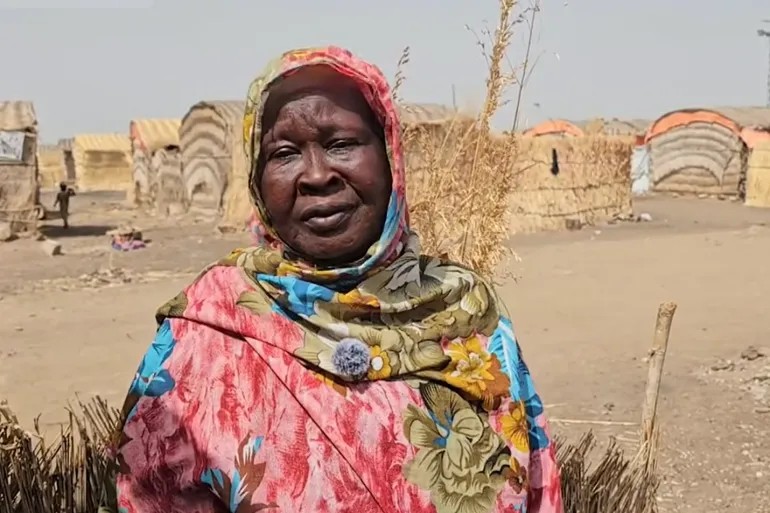
AFTER FLEEING INFERNO OF WAR IN EL FASHER AND TRAVELLING 995
MILES TO SAFETY, SANAA AHMED THOUGHT THE WORST WAS BEHIND
HER. But in Al-Sarraf Camp in east Sudan, she faced suffering of a different kind: “We
fled here with nothing. Now Ramadan has come, and we don’t even have a pot to cook
in or a cup to drink from. If you have a bucket or a jug, that’s it.” Sanaa is one of
thousands of displaced people who sought refuge in Al-Gedaref State, far from the front
lines of war. But safety has come at a steep price. The camp, intended as a sanctuary, has
become a site of deprivation: “The water is available, but there is no food, They give us
a meal, but it’s not a real meal, and it’s not enough.”For Muslims, Ramadan is a month of community, prayer and shared meals. For
displaced women of Al-Sarraf, it has become a daily struggle to find enough scraps to
feed their children at sunset. Majd Abdullah, another survivor from el-Fasher, described
the stark contrast between her past life and current reality: “Back home, Ramadan was
perfect. You would prepare everything a month or 2 in advance. But here, we fasted the
1st day, not knowing what we would break our fast with. We ended up eating with
neighbours because we had nothing.” The aid that does arrive is often woefully
inadequate. Majd described receiving a single bowl of porridge to feed a family of 7 or
10: “No organisation has entered with a food basket or cash assistance. We can’t feed
our children unless we go into the city to wash clothes or iron – menial jobs just to
survive.” The lack of food is compounded by total absence of basic household
necessities. Sumaya Saleh, who fled from Kutum in N Darfur, listed items they are
desperate for: cooking pots, charcoal and sugar. “The children are missing so much.
They ask for a biscuit, and you don’t have the money to buy it for them.”
The camp’s elderly residents are suffering….many suffer from diabetes and high blood
pressure but cannot access medication or proper care at local health centres. Mawaheb
Ibrahim, a diabetic who lost her mother, sister and uncle to shelling in el-Fasher, is now
caring for orphans in the camp with no resources: “I am a diabetic, and I had retinal
surgery. My blood sugar has risen to 477…I went into [ketoacidosis], and it affected my
ear. I’m just taking painkillers to sleep. I have no access to a doctor.
”Beyond hunger, sanitary conditions are deteriorating. Sanaa described the health
situation as medium but worsening, citing cases of diarrhoea and eye infections: “There
are huge amounts of flies. The bathrooms are hot and not clean enough. We need
spraying campaigns and cleaning tools.” While some hygiene kits and soap have been
distributed, the primary need – food – remains unmet. One unnamed displaced woman
described the communal kitchen as insufficient for the number of people it serves: “It
doesn’t satisfy a man, a woman or child. The topic of food baskets is completely
finished here; they don’t bring them.” For these women, the safety of Al-Gedaref has
become a slow-motion crisis of neglect. They survived the war, but are now fighting to
survive where they are not under fire. Al Jazeera
COURTS CONDEMNED 2 MOTHERS…TO DEATH BY STONING. Without massive
political pressure, these horrible sentences could be carried out soon. One woman is a
mother of 9. Her husband says one isn’t his. The other woman’s husband abandoned her
after she gave birth to their first baby 7 years ago. Now he’s back and accusing her of
adultery….courts sentenced them to a cruel and painful death by stoning after a sham
trial where the women didn’t even have lawyers. In a very similar case a few years ago,
Avaaz rallied a million global citizens, and a higher court overturned the sentence.
February 22
UN INDEPENDENT REPORT FILLED WITH HORRIFYING ACCOUNTS OF
MASS RAPE, MASS EXECUTION AND WEAPONIZED FAMINE. RSF openly
declared their intent to “clean” non-Arab population of Al-Fashir. …the worst thing
about this report may be that it holds back identifying UAE as the power providing
weapons. By failing to identify UAE it fails to identify the US, which sells weapons to
UAE. This omission highlights diplomatic immunity purchased by Emirates’ petro-
wealth, even as their proxy militia commits unspeakably shocking atrocities. …this
exposes the limitations of a UN dominated by Western imperial interests, where ‘sanctity
of intl law’ is selectively silenced to protect a strategic ally bankrolling a genocide.
UAE has become such a key security partner to US and Israel and UAE’s ruling class
involved in so much corruption with Trump and his family. Nov 2025, 2 Democrats…
introduced Stand Up for Sudan Act Senate 935, House 2059. There’s been little
progress…no sign it’s even been heard in committee, and nothing’s getting passed
because of near deadlock…. Despite the horror stories mounting daily, the only hope for
this bill is a big Democratic swing in mid-terms. Trump would…certainly veto, not
wanting to inconvenience his financial partners in UAE, and 2/3 vote in both chambers
would be required to override. …activists have no choice but try and stem the flow of US
weaponry to fuel genocide in Sudan via UAE and RSF. Black Agenda Report
RIVER NILE STATE SEIZURE OF 21 KILOS OF GOLD, marking a significant blow
to illicit networks that drain the country’s mineral wealth. Sudan has long struggled with
systematic smuggling of gold…, a practice that deprives the national treasury of billions
in annual revenue. State anti-smuggling forces reported intercepting 20 gold ingots…
concealed within a double-cabin pickup truck. The seizure was the culmination of
intensive field operations and monitoring. Finance Min told Agence France-Presse only
20 tonnes of gold were exported through official channels in 2025, out of 70 tonnes.
48%-60% of produced gold is smuggled across land borders and through unmonitored
airports. 2025 report by Swissaid documented…intl and regional networks draining
Sudan’s gold reserves. The report noted 70% increase in informal gold flows from
Sudan to UAE in 2024….neighbouring countries including So Sudan, Chad and
Ethiopia, have become transit hubs where Sudanese gold is laundered and rebranded
before entering global markets. Sudan Tribune
CHAD CLOSED BORDER CROSSINGS WITH SUDAN INCLUDING KEY ADRE
POINT, to prevent armed groups from crossing into its territory. The move comes as
fighting intensified between the Sudanese army…against RSF in N and W Darfur. RSF
fighters attacked a Chadian army camp in Tine, causing several casualties and
destroying military vehicles. Traders in El Geneina told Sudan Tribune closure of the
Adré crossing halted the transport of goods. Dozens of merchants use the route to move
food and fuel from Chad into Sudan. RSF faced repeated accusations of using the
corridor to transport weapons and military equipment delivered via Amdjarass in Chad.
The conflict in the border has increasingly taken on a tribal dimension, driven by close
social and demographic ties between communities on both sides of the frontier. Tine
emerged as a primary flashpoint because of its strategic importance as a commercial and
humanitarian artery between Darfur and eastern Chad. Chadian soldiers and civilians
fought alongside Sudanese Joint Force to push RSF out of the town. The development
highlights growing concerns the Sudanese civil war is destabilizing its neighbour.
SAUDI ARABIA’S BIN SALMAN SENT LENGTHY LETTER TO EMIRATI
OFFICIAL OUTLINING GRIEVANCES OVER UAE ROLE IN SUDAN AND
YEMEN. Citing multiple US and Western officials,…the crown prince recently wrote to
Tahnoon bin Zayed, UAE’s national security adviser, raising concerns about Abu
Dhabi’s policies in conflict zones, and seeking mediation. The letter…included a detailed
list of Saudi complaints regarding Emirati activities in Sudan’s civil war and
neighboring Yemen. It proposed mediation through the…defense min. …Riyadh could no
longer “tolerate” the continuation of Sudan’s civil war while UAE was backing the
paramilitary RSF. Middle East Monitor
WORLD HEALTH ORG ANNOUNCED 5 ATTACKS ON HEALTH CARE
FACILITIES…FIRST 50 DAYS OF 2026…. Attacks killed 69 people, emphasizing the
severe humanitarian impact of continued violence on civilians and medical staff. Al
Mazmoum Hosp in Sennar State was attacked. The assault left 3 patients dead. WHO
renewed calls for immediate halt to all attacks on health care, stressing that health
facilities, medical assets, health workers and patients must be protected.
February 20
PROFIT OVER PEOPLE: HOW THE WORLD FUELS SUDAN’S WAR. The war is
rooted in Sudan’s post-colonial history of militarized rule, peripheral neglect and
outsourced repression. Since independence, successive regimes governed through force
rather than consent…. The 2018–19 revolution briefly exposed another possibility when
millions of Sudanese came together to overthrow a dictator….But while protesters
dismantled al-Bashir, they inherited a state hollowed out by decades of
militarization. …this violence is produced and sustained through foreign states and
corporate actors that provide weapons, funding and political backing to both sides.
Through arms transfers, resource extraction, trade relationships and migration control,
external powers are embedded in Sudan’s war economy creating incentives to maintain
the violence rather than resolve it. Sudan fits a recurring global pattern: violence is
localized, responsibility diffused and profits internationalized, a structure replicated
from Congo to Gaza to W Papua. Sudan’s war is sustained by an extensive intl arms
network, resulting in an almost unimpeded flow of weapons.
UAE is central to arming RSF. Many investigations document sustained and intensified
transfers since 2023, including Chinese drones, Israeli-made weapons and
equipment….components from UK, France, Canada, Bulgaria and US have been traced
into RSF stockpiles, often diverted from legal exports from UAE. Both sides received
arms from China, Russia, Turkey, Serbia, Yemen and Iran. Chad, So Sudan, Libya,
CAR, Eritrea and Ethiopia have been identified as supply routes for weapons, fuel and
fighters. This demonstrates Sudan’s war is not tolerated but actively sustained by intl
actors. Despite overwhelming documentation of atrocities, embargoes are weakly
enforced and routinely violated. Why, in the face of mass civilian suffering,
displacement and famine, do states continue to permit weapons transfers that predictably
enable further violence?…global profit and geopolitical influence continue to outweigh
the value of Sudanese lives…war becomes a market, and Sudanese lives are collateral
within global supply chains of violence.
The reluctance of states to meaningfully confront atrocities in Sudan cannot be
understood outside…global capitalism, which continues to rely on extraction of
resources from the Global South under violence. It is financed through a network of
natural resources, livestock and commodities like gum arabic, linking local violence to
global consumption. Sudan possesses significant oil reserves and vast deposits of gold.
Its wealth…long attracted foreign powers and armed actors. RSF’s seizure of largest oil
field illustrates how control over resources translates directly into military power, while
gold revenues sustain SAF and RSF. Gold is especially vital for RSF since it easily
transported and rapidly convertible into cash, ideally suited to funding militias, paying
fighters and purchasing weapons. Russia operates gold mines via Africa Corps–linked
entities, with 10% of reserves sourced from Sudan, often exchanged directly for
weapons supporting Russia’s war in Ukraine. UAE and Saudi Arabia are central
players…importing Sudanese gold, oil and livestock. Dubai has become a major refining
and trading hub, handling nearly all officially recorded gold exports from army-
controlled areas. Sudan’s large herds supply Gulf markets, particularly Saudi Arabia,
whose domestic production cannot meet demand…. Armed actors along transport routes
impose informal taxes, seize animals and convert trade into war finance. Gum
arabic…now feeds the war economy. 80% of global supply originates in Sudan, where
SAF and RSF violently fight for control over harvesting areas and exploit informal
routes…to reach multinational supply chains. Half is purchased by European companies,
putting everyday products from Coca-Cola to cosmetics on shelves built through
coercion and armed control.
Sudan’s economic structure mirrors classic colonial extraction: raw materials flow
outward, violence is contained locally, value accumulation occurs elsewhere. While
Europe appears to import little directly from Sudan, this is very misleading. Trade is
extensive with UAE, Saudi Arabia and China that dominate Sudan’s resource flows.
Though formal colonial rule ended, Sudan functions as a neo-colonial extraction zone:
resources flow outward, violence is internalized and population is excluded from the
value it generates. Sudan’s significance extends…to its strategic geographic location
along the Red Sea… Control over ports…offers immense geopolitical and economic
leverage, including influence over maritime trade and access to regional markets. Gulf
states invested billions: Saudi Arabia backs SAF and UAE supports RSF with financial
aid, weapons and diplomatic support. These investments now intersect directly with
military operations and control of trade routes, ports and resource flows: control the
routes, extract the value, localize the violence.
2016–17, EU paid €160m to al-Bashir’s government to curb migration toward Europe.
While direct cooperation was suspended after 2019 RSF massacres…migration deals
contributed to the rise and empowerment of RSF by legitimizing cooperation with an
indicted dictator and security apparatus….While the immediate impact of migration
funding may be less visible…researchers warn of long-term effects: armed groups
learned that manipulating migration flows can attract European attention, funding and
legitimacy. European border security…externalizes violence: comfort, stability and
consumption in Europe are preserved at the expense of Sudanese lives.
Sudan’s war is…a concentrated expression of a global system that depends on unequal
exchange, violent extraction and moral distance. Armed violence, mass displacement,
famine and systemic exploitation are sustained…by regional and intl powers that profit
from instability. Sudanese lives are rendered expendable within supply chains that
sustain global consumption and geopolitical power. Global profit and strategic
positioning continue to outweigh the value of human life. The war does not end at
Sudan’s borders; it ends on supermarket shelves, in refineries and at ports where
violence has been converted into normal consumption. What began as a soft drink, bar
of gold or imported meat is bound to distant death and our consumption…Counterpunch
FOR SAF AND RSF CONTINUED FIGHTING IS RATIONAL STRATEGY TO
PRESERVE POWER AND IMPUNITY. Peace would threaten their political and
economic dominance….With public employees told to go back to work or risk losing
salaries, and livelihoods collapsed for countless others, many simply have no choice but
go along with the war. Antiwar voices are attacked, and the idea of peace is stigmatized.
War has become normalized, and the political and social costs of calling for peace grow
higher. This polarization is increasingly mirrored among Sudanese communities abroad
where it undermines…constructive dialogue that could push for peaceful settlement…. In
Europe, diaspora communities are sharply split between pro and antiwar positions, with
communities in UK and France particularly polarized. A further division is between
SAF and RSF supporters. At the same time, parts of the diaspora may be actively
mobilizing support for SAF and RSF not only politically but financially.
There is a stark paradox at the heart of diaspora politics: many left Sudan to escape war,
yet some now advocate for its continuation. It is bewildering to justify positions that call
for prolonging a war whose primary victims are civilians. Astonishingly, some of the
calls for the continuity of war come from those who championed political change in
2019 including some resistance committees members and prodemocracy groups. They
claim civilians who entered into partnership with the military during the transition
betrayed the young women and men who toppled the Islamist dictatorship. This
narrative shifts blame away from SAF and RSF and redirects it onto civilian leaders,
victims of the war, subject to politically motivated prosecutions, deprived of basic rights.
Within Sudan, polarization is actively engineered by de facto authorities SAF and RSF.
Anyone who protests the war risks being branded a traitor or collaborator, that can lead
to a death penalty or life imprisonment. AU and IGAD regularly blame civilian disarray
for the lack of effective interventions, yet provide little explanation. What is dividing
them? The answer is simple: The war itself. The longer it continues, the deeper fractures
become. The greater risk is partition. Sudan may not come out…as one country.
There are no moral grounds for why the war should continue. While SAF and those
behind it claim the war is one of dignity, there is no dignity in a war killing and
displacing millions. RSF’s rhetoric about a new and just Sudan cannot justify heinous
crimes committed by RSF. It is indefensible to support armed actors whose conduct has
become lawless and predatory, with women and children primary victims. The only
viable path forward is sustained and coordinated pressure on SAF and RSF to agree to a
credible and verifiable ceasefire. Sudan War Monitor
February 19
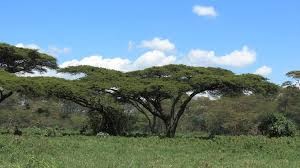
WAR DEVASTATES ANCIENT ACACIA FOREST, THREATENING ECOSYSTEM.
3 years of conflict reduced historic Al-Sunut acacia forest south of Khartoum to barren
fields of stumps, destroying a vital green shield against Nile floods and haven for
migratory birds from Europe. What was once a 1,500-hectare natural reserve has been
completely wiped out… The capital region lost 60% of its green cover since fighting
erupted with century-old trees cut down with electric saws for commercial timber and
charcoal production. The forest sheltered over 100 migratory bird species from Europe.
Agricultural engineer Al-Nazir Ali Babiker warns the loss of tree cover removes a
critical barrier against seasonal flooding, a recurring disaster that destroys homes and
displaces families. With forest protection inaccessible due to fighting, logging continues
unchecked. Wood gatherers traverse the dry landscape where families once picnicked.
Restoration efforts face daunting challenges: seedlings grow slowly, Forests National
Corp head Mousa el-Sofori laments, “some of these forests were centuries old.”
AfricaNews