
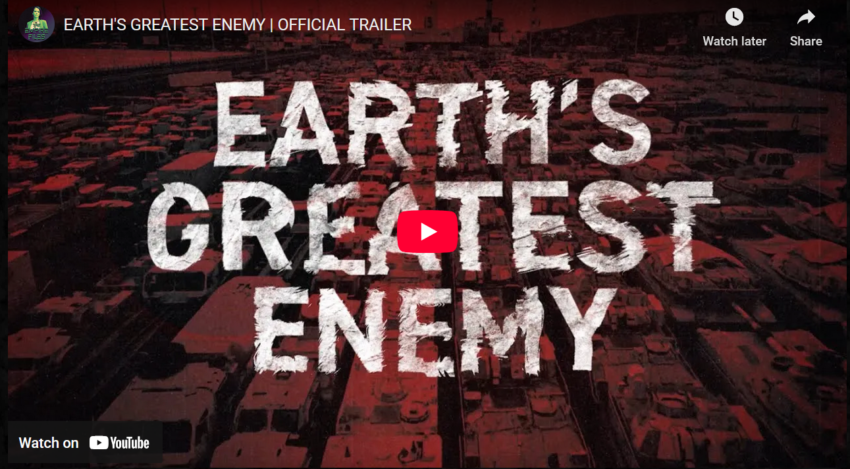
We’re sharing a film review by Kim Baxter, philosophy professor at CUNY’s John Jay College of Criminal Justice and a participating We Are Not Your Soldiers educator. The director’s tour with the film, “Earth’s Greatest Enemy,” continues through March. We encourage you to see it. Also note that Mike Prysner, writer and co-director, was an early We Are Not Your Soldiers presenter.
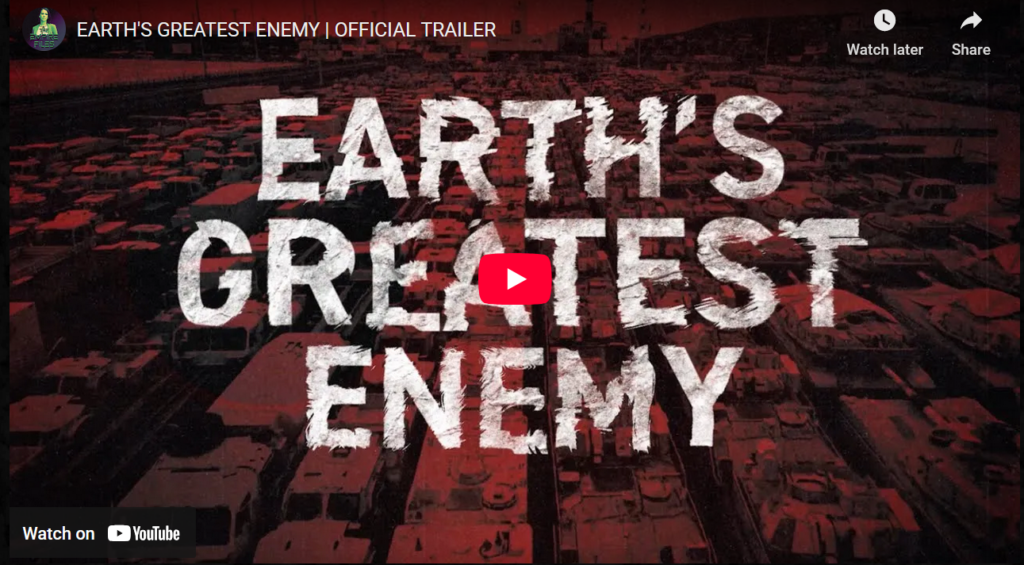
On November 8, 2025, documentary filmmakers Abby Martin and U.S. Army Iraq War veteran Mike Prysner were present for a Q&A session at the SVA Theater in Chelsea, Manhattan after a screening of their provocative, eye-opening new film “Earth’s Greatest Enemy.” Through examples within the United States and around the world, the film exposes the U.S. military—which purchases 270,000 barrels of oil daily—as the world’s biggest and most unaccountable institutional polluter.
For example, we learn about the ecological harm to marine life of RIMPAC (Rim of the Pacific Exercise), the world’s largest international maritime warfare exercise, hosted by the U.S. Indo-Pacific Command in Hawaii and conducted in the Pacific Ocean biennially since 1971. These exercises entail sinking decommissioned ships and shooting live rounds for six weeks, adversely affecting biodiversity and killing sea mammals.
We are shown the human impact of groundwater pollution from the Camp Lejeune Marine base in North Carolina—where from at least 1953 through 1987, as many as a million people consumed contaminated water with toxicant concentrations 240 to 3,400 greater than legally permitted. This caused a cluster of various cancers, miscarriages and stillbirths among both military and civilian personnel and their families. Many survivors still have federal lawsuits pending for their suffering. The Camp Lejeune Justice Act, a 2022 federal law, created a specific legal pathway for those who suffered injuries from this contamination, but it entailed a statutory deadline for filing a lawsuit which passed in August 2024.
The film transports us to various other locations—including Hawai’i, Alaska, Okinawa, and the Glasgow COP26 United Nations Climate Change Conference—where the filmmakers document the U.S. military’s ecocide and interview its victims. We also hear from activists who want the U.S. military—which maintains roughly 750 military bases in over 80 foreign countries—to end its presence in their land.
Ms. Martin, who also directed the documentary “Gaza Fights for Freedom” (2019), explained that “Earth’s Greatest Enemy” was five years in the making, but the Gaza genocide made their work feel more urgent the last two years. Sadly, as the filmmakers noted in the Q&A, there are many more examples of the military’s destruction of our world they could have included in the film if time had permitted.
The film is well-edited but the scope of the problem is colossal. The public record likely omits —or understates—some aspects of the military-industrial complex’s environmental impact. But “Earth’s Greatest Enemy” educates us about some important examples of the U.S. military’s known detrimental effects, provides eye-opening data that indicates its immense ecological footprint—and inspires urgently needed activism.
This screening was part of the ongoing directors’ tour with North American and U.K. screenings scheduled through the end of March. Anyone wishing to host a screening may contact the filmmakers via email: theempirefiles@gmail.com.