
December 29
STARVATION, GHOST TOWNS PLAGUE SUDAN AS AL-BURHAN DEMANDS RSF SURRENDER. The head of government-aligned SAF insisted the war…will only end with surrender of RSF. Al-Burhan’s maximalist stance against the rival paramilitary forces comes as the war-torn nation faces a collapsing humanitarian response, with starvation and displacement under fire and intensifying battles…turning villages into host towns. Speaking during an official visit to Ankara al-Burhan summarily dismissed the possibility of a political solution that does not involve disarmament of RSF. Al Burhan’s comments come as the civilian population faces a catastrophic and brutal reality on the ground. In the city of Kosti…thousands of families are sleeping rough, surviving on little more than bread and boiled lentils. “Some say they feel safe here in Kosti, but their stomachs are empty,” Ahmed Adam, Sudanese Red Crescent. The influx of displaced people has overwhelmed local capacities, creating critical gaps in essential supplies: “We have a real shortage of food items, medicine, especially medication for children. We need help from charity organisations.”
The crisis is exacerbated by a collapse in intl funding. UN has more than halved its appeal for 2026 to $23bn following major reductions in support from key donors including US, UK and Germany. WFP warns that rations in Sudan, where 21 million people face starvation, will be cut by up to 70%. Lamia Abdulla, humanitarian aid commissioner for White Nile State, warned the impact is already being felt: “WFP gives food for the displaced, but the biggest part of their assistance goes to refugees, so the aid cuts will pose a real challenge.” While hunger spreads, new military escalations are emptying vast swaths of the country. …the humanitarian exodus is a direct result of expanding military operations, particularly in N Darfur and N Cordovan: “There are towns now completely empty of their inhabitants, which can be described as ghost towns due to the continuation of battles. This continuous siege…has placed the residents in a deplorable state,…there is no escape from displacement as living conditions collapse.” Al Jazeera
SUDAN DOCTORS: 200 KILLED INCLUDING WOMEN, CHILDREN IN RSF N DARFUR ATTACK. …they were targeted and killed on an ethnic basis in Ambro Sarba and Abu Qumra, N Darfur following an attack by RSF. Mohamed Hassan of the doctors network told Radio Dabanga the victims…were targeted on an ethnic basis…following the attack on them by RSF, in continuation of their violations of all humanitarian and international laws. According to survivors, people were terrified by the RSF invasion, especially when they started burning houses, and took some men and shot them in front of their families…. Following those events, survivors began their displacement journey along rough roads and did not take sufficient food supplies with them….“We in the Sudanese Doctors Network affirm the continuation of violations in those areas will drive thousands of civilians towards Chad in the largest refugee exodus these areas have witnessed. …international silence and inaction in taking deterrent measures constitute
indirect complicity in these humanitarian tragedies.” The displaced and refugees are living in extremely complex humanitarian conditions, characterized by a severe shortage of food and drinking water, deteriorating health services, and the absence of safe shelter, which threatens the lives of thousands, especially children, women and the elderly. The doctors network called for immediate halt to the attacks to stop the displacement that began in these areas as a result of mass killings. It demanded safe and unrestricted humanitarian access for medical and relief aid, along with urgent support for the displaced and refugees. Dabanga
December 28
NO NEGOTIATION, NO TRUCE WITH RSF, SENIOR OFFICIAL….in Sudan’s Transitional Sovereignty Council ruled out any negotiations with RSF as fighting continues to devastate the country. Speaking…officials in Pt Sudan, the eastern city where the government is based, he dismissed the narrative that the war is aimed at achieving democracy. Instead,…the war is a “conflict over resources and desire to change Sudan’s demographics” and emphasised an opportunity to strengthen national unity. This comes days after PM Idris presented a plan to end the nearly 3-year war before the Security Council. Consistent with the army and government’s position, the plan stipulates RSF fighters must withdraw from vast areas of land they have taken…in western and central Sudan. They would have to be placed in camps and disarmed, before those who are not implicated in war crimes can be reintegrated into society. RSF repeatedly rejected giving up territory, with…a top adviser to Hemedti Dagalo describing it as “closer to fantasy than politics”. RSF fighters have continued to commit mass killings, systematic sexual violence and burying and burning bodies in Darfur to cover up the evidence of war crimes over several months, according to intl aid agencies working on the ground. The humanitarian situation on the ground has only turned more disastrous after the capture of el-Fasher. Al Jazeera
December 27
PM IDRIS GOVERNMENT READY TO ENGAGE WITH COUNTRIES BACKING RSF, in an effort to pave the way for peace…. Idris made the remarks implicitly referring to UAE, days after presenting an initiative to end the war to the UN Security Council: “There is a prevailing impression that we reject peace, but this visit proves we are advocates of peace and this war was imposed upon us”. The war displaced 12 million people, while tens of thousands have been killed, with the violence triggering one of the world’s worst humanitarian crises. “Even with countries supporting RSF, we will strive to improve Sudan’s relations with them as a prelude to peace and put an end to the war in a way that satisfies all people of Sudan. ” The New Arab
December 26
IN A HIGH STAKES MEETING, TURKISH PRES ERDOGAN DISCUSSED ESCALATING WAR IN SUDAN WITH AL BURHAN. The violence has led to one of the worst humanitarian crises in the world with 13 million people displaced. Erdogan highlighted the severe impact, especially in…El-Fasher, where human rights violations are rampant. Since the war began…the conflict has devastated communities, and the need for action has never been more urgent. Turkey is stepping up, offering crucial humanitarian aid and strengthening cooperation in key sectors, including trade, defense and agriculture. Erdogan stressed that peace, stability, and Sudan’s territorial integrity must be preserved. Redaction AfricaNews/AP
December 23
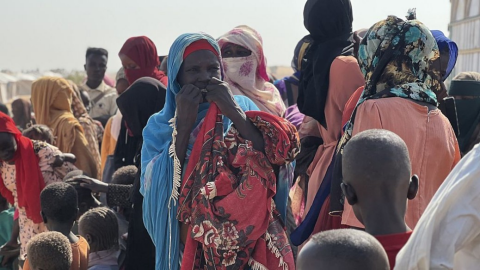
‘WE HAVE NOTHING:’ ENDLESS PAIN FOR DISPLACED CIVILIANS FLEEING WAR. The flow of displaced people fleeing the fighting…shows no sign of slowing – the latest from Heglig. In early Dec, RSF seized strategic Heglig oilfield in W Cordovan after…SAF withdrew. 1,700 displaced people, most children and women, escaped fighting in the southern region, and lack basic necessities. Some were fortunate enough to board trucks as they fled towns and villages. After an arduous journey, displaced people arrived at their new home Gos Alsalam Displacement Camp in Kosti, White Nile Prov. “We left without anything…we just took some clothes,” said an elderly woman who appeared exhausted and frail. Inside the camp, people arriving are faced with extremely harsh humanitarian conditions. Tents are being pitched in haste, but as the number of displaced grows, so do immense humanitarian needs. Yet, humanitarian support remains insufficient to cover even the bare minimum. “We have no blankets or any sheets, nothing. We are old people.” Nearly 3 years of war…have forced 14 million people to flee their homes in a desperate attempt to find shelter and safety away from the heavy fighting that has killed tens of thousands. 21 million across the country are facing acute hunger, in what the UN calls the world’s largest humanitarian crisis. Al Jazeera
December 17
RSF DESTROYED…EVIDENCE OF MASS KILLINGS THEY COMMITTED AFTER OVERRUNNING EL FASHER, a new report found. Yale Univ’s Humanitarian Research Lab, which used satellite imagery to monitor atrocities since RSF’s war with the army began, said the group “destroyed and concealed evidence of its widespread mass killings” in the N Darfur capital. RSF’s violent takeover of the army’s last holdout position in Darfur led to international outrage over reports of summary executions, systematic rape and mass detention. HRL…identified 150 clusters of objects consistent with human remains. Dozens were consistent with reports of execution-style killings, and dozens more reports of RSF killing civilians as they fled. Within a month, 60 of those clusters were no longer visible, while 8 earth disturbances appeared near sites of mass killing….the disturbances were not consistent with civilian burial practices. “Large scale and systematic mass killing and body disposal has occurred,” estimating the death toll to be in the tens of thousands. Aid groups and UN repeatedly demanded safe access to El-Fasher, where communications remain cut and…tens of thousands of survivors are trapped, many detained by the RSF. The New Arab
UK SANCTIONS 4 SENIOR COMMANDERS OF RSF INCLUDING SR LEADER DAGLO, accusing them of orchestrating mass killings, systematic sexual violence and deliberate attacks on civilians during the RSF’s months-long assault on El Fasher. The
move intensifies intl pressure on one of the most powerful figures in RSF hierarchy and marks the 3rd time Daglo has been sanctioned, following earlier designations by US and Western governments. The sanctions come less than a month after EU blacklisted Abdelrahim for his role in the Darfur campaign, stating he “played a pivotal role in the RSF campaign.” Abdelrahim, brother of RSF commander Daglo Hemedti, is already under US sanctions, along with Hemedti and younger brother Al-Goney Daglo for their roles in directing RSF operations and overseeing militia networks implicated in atrocities across Darfur. “There are reasonable grounds to suspect [Abdurahim] is or has been implicated in mass killings of civilians, ethnically targeted executions, systematic sexual violence including gang rape, abductions for ransom, arbitrary detentions and attacks on health facilities and humanitarian workers.” UK sanctions come less than 2 months after RSF seized El Fasher, the army’s last major military foothold in the region. The city fell 26 Oct ending an 18-month siege and collapsing the SAF Infantry Div. …thousands of civilians, soldiers and former combatants were killed along escape routes, inside hospitals and outskirts. Satellite imagery, survivor testimonies and footage filmed by RSF fighters reveal mass executions, targeted killings of fleeing men and shootings inside medical facilities—patterns of violence humanitarian analysts compared to “Rwanda-level mass extermination.”Abdelrahim arrived in El Fasher 2 days after the city’s capture…. His presence placed him in immediate proximity to atrocities committed during and after the takeover. Preliminary assessments by Sudan War Monitor and independent research organizations indicate the death toll reached several thousand, including civilians and disarmed soldiers executed after surrendering. This determination was a key factor in UK’s latest sanctions, adding to mounting international pressure on RSF leadership. The UK designation adds travel bans and asset freezes and cites his suspected involvement in ethnically targeted executions, gang rapes, abductions for ransom and attacks on hospitals and humanitarian workers…. British Foreign Secy Yvette Cooper said the atrocities “scar the conscience of the world,”…London would continue pursuing commanders “with blood on their hands” while expanding humanitarian relief for civilians trapped by the fighting: “The atrocities taking place…are so horrific they scar the conscience of the world. The overwhelming evidence of heinous crimes – mass executions, starvation and systematic and calculated use of rape as a weapon of war – cannot and will not go unpunished. Today’s sanctions against RSF commanders strike directly at those with blood on their hands, while our strengthened aid package will deliver lifesaving support to those suffering. UK will not look away, and we will always stand with the people of Sudan,” Cooper said. Alongside the sanctions, UK announced an additional £21m emergency assistance for communities affected by the war, bringing its total contribution this year to £146m. The aid package will support food distributions, medical care and protection services, particularly for women and children who fled RSF-controlled zones. Sudan War Monitor
December 15
SUDAN WITNESSES BURIAL OF 15,000 BODIES ACROSS KHARTOUM STATE. Since April 2024, Sudan’s Forensic Medicine Auth has overseen collection, transportation and burial of 15,000 bodies from neighbourhoods and schools across Khartoum State. Having been swiftly buried by civilians, often under duress or dumped in mass graves by fighters from the RSF, the bodies have now been laid to rest in
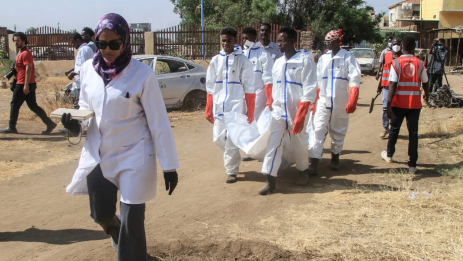
official cemeteries. Khartoum State Health Min told Sudan Tribune over the weekend they were aiming to make sure all bodies buried outside cemeteries had been moved inside them by the middle of 2026. RSF had forced civilians to bury their dead in neighbourhoods and schools. Residents of Khartoum and twin cities, Omdurman and Bahri, told Middle East Eye getting safely to cemeteries was impossible while fighting was raging in the capital. The campaign to collect bodies in Khartoum, which involved charities including the Red Crescent, began in March 2024. State authorities said efforts to move bodies to designated burial sites addressed the impact of Sudan’s war, as RSF prevented citizens from using cemeteries, forcing them to bury relatives in public
squares, schools, mosques and homes. In June Brig al-Rayah Dafallah, an officer in the army, told MEE corpses were being discovered in unusual places across Khartoum: “Bodies have even been found buried under the floor in houses.” In a morgue at a university used by RSF as a base, MEE found 3 tanks holding 20 corpses. Some were badly decomposed, collapsing together into a dark morass. Other impromptu cemeteries and mass grave sites litter Sudan. Victims of atrocities described seeing people buried alive, streets strewn with corpses, beds, blankets and mattresses used to drag bodies into squares, where they are dumped. In el-Fasher, satellite imagery analysed by Yale’s Humanitarian Research Lab has shown mass graves. No official or precise death toll for the war exists, but as early as Oct 2024, Waseem Ahmad, CEO of Islamic Relief, told MEE his team estimated the figure to be as high as 200,000.
December 13
6 PEACEKEEPERS LAID TO REST FOLLOWING DEADLY DRONE ATTACK. A solemn ceremony was organized in Abyei in honour of Bangladeshi peacekeepers killed in action following a drone attack at UNISFA logistics base in Kadugli, S Kordofan. UN Dep Spokesperson Farhan Haq told correspondents the ‘blue helmets’ were killed, and 9 others injured when UNISFA was targeted in a horrific drone attack. It is unclear at this stage who carried out the strike,…their “sacrifice for peace would never be forgotten” The mission said its top priority is to provide all necessary and appropriate medical care for those wounded. UNISFA added that it has taken all necessary steps to protect its personnel and facilities, including reinforcing protection measures at Kadugli logistics base….attacks targeting peacekeepers may constitute war crimes under international law and those responsible must be held accountable. The mission was established in 2011 and includes strengthening the capacity of the Abyei Police Svc in the disputed oil-rich region, monitoring and verifying redeployment of forces from the region, facilitating delivery of humanitarian assistance, and protecting civilians. 4,000 military and police personnel serve, alongside civilian staff. UN
IN THIS CLIP FROM AMNESTY INTL, SURVIVOR DESCRIBES WHAT HAPPENED WHEN SHE FLED EL FASHER WITH HER CHILDREN AND WAS STOPPED BY 3 MEN. “One of them forced me to go with them, cut my robe and raped me. When they left, my 14-year-old daughter came to me. I found her clothes had blood on them and were cut into pieces. Her hair at the back of her head was full of dust. ‘Mum, they raped me, too, but do not tell anyone. After the rape, my daughter became really sick. When we reached Tawila, her health deteriorated and she died.” Kholood Khair: This war started because…the national army, and RSF fell out of favor with each other. They were once very much allied. They committed the genocide together in Darfur 20 years ago. They led a coup against a civilian cabinet in 2021. It’s the world’s largest hunger crisis, largest humanitarian crisis, largest displacement crisis, and largest protection crisis because of the number of women and girls…exposed to sexual, gender-based violence. And this war…seems like a nonsensical conflict, because the level of fighting cannot possibly justify any political machinations of either of the sides. But this war has now mushroomed into something much, much larger. Almost every part of Sudan is somehow impacted by this war. People who pushed against military rule in the revolution of 2018-19 are…facing the most repression from both SAF and RSF…we’re seeing really a war against civilians. While SAF and the RSF are fighting each other, they’re really fighting the people of Sudan. And that’s why you get the nursery killings we saw last week. You see barrel bombs used by SAF against largely civilian sites. You see mass atrocity and genocide in Darfur. And all of that can be described…to really try and kill any kind of revolutionary zeal in Sudan and make sure they pave the way for their vision of military rule.
As the war continues, we see more of these proxy elements, the most obvious has been UAE. US’ own intelligence community, UN panel of experts on Darfur have shown UAE has been supporting RSF pretty much from the outset of the war, and probably before. RSF and SAF were part of the Saudi-Emirati Coalition on Yemen,…where their relationship really started. UAE now is interested in land in Sudan, arable land, fertile land for agriculture. It’s interested in supply lines that go through western…and southern Sudan RSF largely controls. It has some interest in Red Sea access. It’s interested in supply lines that go through western…and southern Sudan RSF largely controls. It has some interest in Red Sea access. It is interested in having…influence over the Red Sea, a very large and important commercial zone. It has given RSF huge huge volumes of weapons, and very sophisticated weapons, from as far away as China. But there are allegations German, Swedish, British, American and Canadian weaponry sold to UAE found its way to RSF’s hands in places like Darfur.
And this war…seems like a nonsensical conflict, because the level of fighting cannot possibly justify any political machinations of either of the sides. But this war has now mushroomed into something much, much larger. Almost every part of Sudan is somehow impacted by this war. People who pushed against military rule in the revolution of 2018-19 are…facing the most repression from both SAF and RSF…we’re seeing really a war against civilians. While SAF and the RSF are fighting each other, they’re really fighting the people of Sudan. And that’s why you get the nursery killings we saw last week. You see barrel bombs used by SAF against largely civilian sites. You see mass atrocity and genocide in Darfur. And all of that can be described…to really try and kill any kind of revolutionary zeal in Sudan and make sure they pave the way for their vision of military rule.
What we’ve seen recently is an uptick of mercenary action reported to have come through the Global Security Services Group, UAE-based company, that gets Colombian soldiers…phased out of the Colombian military. And those people have found new livelihood sources through this UAE-based company, most of them have now found themselves in Darfur. Now, there are some reports these mercenaries will continue to be part of the coalition in Sudan, as we have seen them in Yemen and Libya. This is part of a broader UAE security infrastructure… we’re now seeing brought to bear in Sudan. US has a lot of power. The question is: Will they use it? Because Sudan, even though it is the world’s largest conflict by scale right now, it is not very important, has not been a priority country for the US which means increasingly what we’re seeing is that US allies are able to…be involved in the war in Sudan, whether it’s by supporting one of the armed actors or, in the case of Egypt and Turkey, increasing its weapons support to SAF and allowing these proxy elements to take part in order to keep their allies in the region happy. And the biggest priority in the region for US is Israel. And here we see Arab countries, particularly UAE an ally of Israel in the region, probably one of the few, has been able to use that relationship, to leverage against Washington what it can get away with, as far as US is concerned. And this is what puts Sudan, unfortunately, in a very difficult position. The…potential ability for civilians in Sudan to get an end to the fighting, get a peace deal, some kind of ceasefire, all of that is complicated by the regional picture, and the interests of American allies.
Filippo Grandi: What is very real is that people are fleeing this advance of the RSF. I was in…Al Dabbah….north of Khartoum, where there is a smaller camp. The biggest camp is Tawila taking people from El Fasher. A smaller camp taking people also from El Fasher, but also from Kordofan and other places. And their stories are, unfortunately, the same: rape, murder, forced recruitment of children, separation of families and sheer robbery. …We are barely responding. I only visited this particular site, which is not very big, 11,000-12,000 people, but arrivals all the time. We saw people just arrive, literally. Nathaniel Raymond: What we’re seeing, through very high-resolution satellite imagery, is 140 large piles of bodies that appear the end of Oct into early Nov, and we see a pattern of activity by RSF that indicates they’ve been burning and burying bodies for almost…5 weeks. We see none of the pattern of life we expect in a place with civilians. There’s no activity at water points or on the streets. And there’s no sign of civilian vehicles, donkey carts or cars. We see a ghost town, where the only visible activity is RSF in…armed pickup trucks, moving objects consistent with human remains around, burying them and burning them.
ICC Judge Joanna Korner: Abd-Al-Rahman’s conviction is the first acknowledgment that people of Darfur were not victims of mere intertribal conflict….They were victims of a deliberate campaign, orchestrated by those in power, executed by Janjaweed, led by Abd-Al-Rahman under authority of the government of Sudan, even if not specifically ordered by anyone in particular.
Khair: A lot of people will feel 20 years is far too little for what Ali Kushayb committed, and others will feel it’s not enough. There are 4 other indictees, including al Bashir, and Ahmed Haroun…. Both Bashir and Haroun are currently being protected by SAF. And this just shows you the extent to which neither RSF nor SAF want to see justice done for previous crimes, or indeed for current crimes, and blocked every single justice mechanism. Darfuri people and communities that I speak to say at least now we’re seeing some kind of justice, some kind of recompense at the global stage, because we’re not going to get it at the national stage.
No government in Sudan has ever been interested in bringing justice for those from places like Darfur and Kordofan. So, it’s some measure of justice, but by no means enough. What we have seen in Sudan’s history is that no military actor has ever won a war outright, whether SAF or any group, no matter how strong they are. And so, investing in a military victory, investing in this narrative that we will get some kind of victor, is probably not going to serve us. We need to focus on the victims. UN… humanitarian aid is very poorly resourced….about 16% funded. And those are the people we need to focus on. There are emergency response rooms and mutual aid groups….volunteer-led groups of civil society actors that are at the brunt, at the forefront of the humanitarian relief, and nobody is really looking at them sufficiently. Nobody is helping them. No one is putting money and resources to them…about 16% funded. And those are the people we need to focus on. There are emergency response rooms and mutual aid groups….volunteer-led groups of civil society actors that are at the brunt, at the forefront of the humanitarian relief, and nobody is really looking at them sufficiently. Nobody is helping them. No one is putting money and resources to them to enable them to save lives. And they have won a string of awards. They have been nominated for the Nobel Peace Prize twice. But we have not seen that translate to political support, and financial support. I think investing in those groups, both for the humanitarian response and for… allowing them to weave back the social fabric that this war has ripped apart, I think that is a much better investment of time than focusing on the belligerent parties. Democracy Now
December 10
DOCTORS’ NETWORK ACCUSE RSF OF HOLDING 19,000 PEOPLE IN DETENTION IN INHUMANE CONDITIONS. The detainees are held mainly in Dagreiss and Kober prisons in S Darfur. …dozens of people died from deteriorating health conditions inside the prisons, there were at least 4 deaths a week. It said infectious diseases spread due to overcrowding, poor hygiene and absence of medical treatment and isolation. Detainees have been dying of cholera..there were shortages of medicines, drinking water and adequate food. In Oct RSF seized control of El Fasher…after a siege lasting 500 days. There were widespread atrocities and tens of thousands of people were killed. UAE has been accused of backing RSF. …RSF carried out widespread detention campaigns in Darfur….targeted civilian professionals and political activists. RSF are holding prisoners of war in detention centres. …there were no humanitarian and legal standards, with detainees deprived of their basic rights. …5,434 detainees from various civilian professions, politicians and media workers, have been documented. Most were arrested in Khartoum and Darfur and include 73 medical staff members. The network called on UN and intl organizations to pressure RSF leaders to release civilian detainees, provide necessary care and allow families to learn the fate of their relatives. It called for an end to arbitrary arrests of civilians and improvements to prison health conditions,…release of detainees who had not been charged. The New Arab
December 8
RSF SEIZED CONTROL OF HEGLIG OIL FIELD OVERRUNNING SAF LAST REMAINING TERRITORY IN W KORDOFAN, delivering yet another defeat to the army…. Heglig is Sudan’s most strategic petroleum facility and transit point for So Sudan’s crude exports to Pt Sudan, making the takeover a development with immediate
regional implications. Following the collapse of the SAF garrison, hundreds of soldiers fled south into So Sudan. RSF units briefly entered So Sudanese territory during the pursuit and made limited contact with So Sudan People’s Defence Forces personnel before withdrawing….the brief incursion underscores the heightened sensitivity of the region, where So Sudan’s economy is heavily dependent on an uninterrupted oil corridor running directly through Heglig. The fall of Heglig means SAF no longer maintains any operational presence in W Kordofan. Any prolonged instability around Heglig or the pipeline corridor could threaten So Sudan’s fragile macroeconomic stability at a time of severe currency shortages, inflation and declining production capacity. In recent years, So Sudan’s economic relations with UAE, leading intl sponsor to RSF, have become increasingly important. Sudan War Monitor
SUDANESE ARCHAEOLOGIST SHADIA ABDRABO STUDIES PHOTOGRAPH OF POTTERY MADE IN HER COUNTRY 7,000 BC. She carefully types a description of the Neolithic artifact into a spreadsheet. As the war between RSF and SAF rages on, the Curator from Sudan’s Natl Corp for Antiquities & Museums is on a yearlong research grant with one mission: build online database of the nation’s archaeological sites, museum collections and historical archives.
Soon after the war started museums were looted and destroyed. It’s unclear what exactly went missing, but Abdrabo says her task is to find out and time is of the essence: “We have to work fast to secure our collections. We’ve already lost 2 museums and we don’t want to lose more.” She says regional museums in El Geneina and Nyala were almost completely destroyed, while in Khartoum, the Natl Museum which held 100,000 objects before the war was ransacked by militias…. The Natl Museum had pieces dating to prehistoric times, including from the Kerma Kingdom and Napatan era when Kushite kings ruled as well as Meroitic civilization that built Sudan’s pyramids. Galleries displayed later Christian and Islamic objects. Among its most valuable items were mummies dating to 2,500 BC, some of the oldest and most archaeologically significant in the world, as well as royal Kushite treasures. UNESCO raised the alarm on reports of plundering saying the “threat to culture appears to have reached an unprecedented level. My heart was broken, you know? It’s not just objects that we lost. We lost research, studies, many things.”
December 1
CIVIL DEMOCRATIC ALLIANCE/SOMOUD DEMANDED IMMEDIATE PROBE BY ORG FOR PROHIBITION OF CHEMICAL WEAPONS into credible reports the army used chemical weapons….revealed by the US,…international media outlets.”…the use of chemical weapons constitutes a “blatant violation of international humanitarian law, the Chemical Weapons Conv.” It called SAF to immediately cease their use, “enable… relevant UN mechanisms to conduct an independent, swift, transparent intl investigation to uncover the full truth, hold those responsible accountable.” US determined the government of Sudan used chemical weapons in 2024. …an investigation by France 24 Observers…provided evidence documenting the army’s likely use of chlorine gas in 2 incidents in 2024 at al-Jaili oil refinery…the chlorine barrels, traced to a consignment from India for water purification, dropped from an aircraft, a capability only held by the SAF. Sudan Tribune
KHARTOUM RESIDENTS UNDER THREAT FROM ENVIRONMENTAL HAZARDS in war-ravaged city 6 months since Armed forces retook Khartoum…. putting the health of millions at risk. 2 ½ years of conflict…has taken a heavy toll on the economy, environment and public health. Across the country, damaged factories, leaking chemicals and collapsing public services are threatening the health of millions. “Our factory was hit, and we lost control of stored materials. RSF burned large parts of it, and we were worried about leaks, but there was no access for repairs and no authorities to manage the site safely,” Mamoun Geely, factory owner in Omdurman Industrial Area. In Khartoum, critical industrial and energy infrastructure lies in ruins. Some sites still contain hazardous chemicals and…pollution is seeping directly into communities already facing deep hardship. “Health facilities were occupied…and became a breeding environment for diseases. This prevented any efforts to defeat the pandemics, as the state was a war zone. Medical staff were targeted and killed and ambulances looted,” Taha Bedawi, environmental expert. Buildings destroyed by explosive weapons released… asbestos, a dangerous source of chronic respiratory illness. With no capacity to clear the rubble, families remain exposed to toxic dust. Water and sanitation plants have been destroyed, leaving waste systems non-functional. Solid waste accumulates in open areas, draining into the Nile and increasing risk of major disease outbreaks. For families near industrial zones, pollution has become part of daily life. Contaminated water is fueling malaria, cholera and typhoid. “I got sick a few days after returning home. I have dengue fever and typhoid. Most of my family members are sick. The pollution is everywhere,” Insaf Mohamed. Health professionals are calling for urgent intervention as Sudan faces environmental damage that may take years even decades to repair. AfricaNews
November 30
HOW EUROPE’S MIGRATION POLICY AND ARMS EMPOWERED SUDAN’S WARLORDS. European funding aimed at curbing migration inadvertently strengthened Sudanese paramilitaries, while weak export oversight allowed the flow of weapons. Sudan was teetering on the edge of crisis long before open war erupted. Decades of authoritarian rule under al-Bashir resulted in a fragile economy, fragmented security and entrenched paramilitary structures. Political instability, localised rebellions and simmering rivalry between SAF and RSF…escalated into full-blown conflict. Sudan was effectively split into contested zones, with major urban centres Khartoum and Omdurman transformed into battlefields, and millions displaced internally or forced across borders. EU played a consequential role in these developments. For nearly a decade, it pursued a strategy of externalising migration control, directing aid, training and equipment to African state to reduce irregular migration towards Europe. In Sudan, this produced unintended and devastating consequences. Funding initially justified under migration management and capacity building intersected with arms flows, Gulf intermediaries and weak oversight. European money and materiel, intended to stabilise populations and impose border forces to buffer migratory ambitions,…indirectly reinforced the very actors now perpetrating war crimes.
2014-18, EU channelled $232m into Sudan…. These programmes formally aimed to strengthen migration control, border security and anti-trafficking enforcement. In reality, they entrenched cooperation between EU and Sudan’s security structures, including units that merged into RSF. 2017, the Enough Project…published Border Control from Hell, warning “the gravest concern about EU’s new partnership with Sudan is RSF, one of the most abusive paramilitary groups, stands to benefit from EU funding” and “equipment that enables identification and registration of migrants will reinforce surveillance capabilities of a government that violently suppressed citizens for 28 years”. EU had to suspend several migration-control activities because there was a risk resources could be diverted for repressive aims.
What the EU Really Does in Sudan 2018: If the EU knew of the risk of diversion, why did it still invest hundreds of millions…where control over training, equipment and funds was manifestly weak? EU…also provided weapons, albeit indirectly. As conflict deepened, investigators started uncovering foreign-manufactured weapons and ammunition circulating among RSF and SAF. Amnesty Intl released an investigation disclosing armoured personnel carriers equipped with French-made defensive systems. AI’s analysts verified images and videos from multiple locations, if deployed in Darfur would breach the longstanding UN arms embargo. Investigations by France24 and Reuters traced 81mm mortar shells in an RSF convoy in N Darfur back to Bulgaria. The Bulgarian government had not authorised re-export of the shells. The Guardian reported British military equipment, including small-arms target systems and engines for APCs, had been used by RSF….These findings illustrate a pattern: European-made arms and weapons systems, legally exported to 3rd countries, have been diverted into Sudan’s conflict, despite embargoes and supposed safeguards. Although UAE denies it plays any role, its position as intermediary hub for re-exported weaponry has been repeatedly documented. Under UK and EU regulations, governments must deny or revoke licences when there is a clear risk of diversion to conflict zones or human rights abusers. European-made arms and weapons systems in Sudan demands a rigorous reassessment of post-shipment monitoring and enforcement. Despite this, European and British governments continued to issue new export licences to violators, including UAE. Middle East Eye shows UK approved $227m military exports to UAE April-June even after being informed Emirati-supplied equipment reached RSF. European countries are not an exception in failing to ensure weapons are not diverted to war zones under embargo.
My own country, S Africa, faced criticism over the lack of control over arms shipments. Natl Conventional Arms Control Comm faced international and domestic scrutiny after S African-manufactured weapons and ammunition were used by Saudi and Emirati forces in Yemen. 2019, NCACC delayed or withheld export approvals, especially for the most lethal items, amid disputes over inspection clauses and human rights concerns. S African authorities demanded access to facilities in importer countries to ensure compliance with end-user agreement – something UAE and Saudi Arabia with other countries, refused to provide. By 2022, previously withheld consignments were cleared under renegotiated terms. Evidence suggests S African weapons may have been diverted to Sudan. The case illustrates even when there is political will to ensure compliance with end-user agreements for arms sales, enforcement can be challenging. If democratic governments wish to reclaim credibility, end-use monitoring must be enforceable, not a bureaucratic concession. NCACC in Pretoria and export authorities in Brussels, Sofia, Paris and London must publish transparent audits of past licences, investigate credible diversion cases, and suspend new approvals where risk remains unmitigated. EU must ensure migration management funding cannot be coopted by armed actors. Al Jazeera
November 28
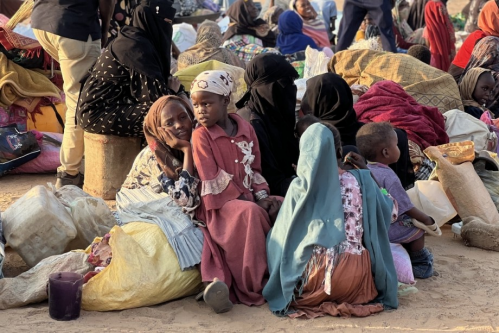
UN CALL FOR URGENT ACTION TO TACKLE HUMAN TRAFFICKING IN FASHER, now under control of RSF. This appeal came by UN special rapporteurs. The statement said following RSF’s takeover of el Fasher and surrounding areas, worrying reports of human trafficking emerged…. RSF captured el Fasher after surrounding the city since May 2024. The crisis worsened as security conditions deteriorated and tens of thousands fled, fearing violations committed by the forces. RSF’s siege of Fasher and nearby areas…forced 470,000 to flee repeatedly. 6 million children, 27% under age 5, are displaced within Sudan or seeking refuge in neighbouring countries. Reports of sexual violence spread across many areas. UN special rapporteurs stressed that women and girls in RSF-controlled regions face serious risks of sexual violence and exploitation.
In El Fasher, a skeleton medical team in the last functioning hospital scrambled to treat the wounded pouring into a makeshift emergency room….shells rained down on Saudi Hosp, injuring civilians and combatants. “It felt like the Day of Judgment,” one nurse told Reuters, “we had to jump over bodies to reach patients; we couldn’t bury them because drones were circling overhead.” Another witness recounted that bombardment continued the next day and RSF fighters entered the hospital. RSF fighters seized a trader, Abdullah Youssef, whom they abducted along the road. He saw bodies scattered throughout the complex, including children, women, elderly people and patients unable to escape because of medical conditions. RSF fighters removed people from the hospital, holding some for ransom and killing others: “They took the young men and killed them on the road.” WHO said shelling killed a nurse and injured 2 other healthcare workers,…in a separate attack, 460 patients and their companions were shot dead.
Satellite imagery…shows what appear to be signs of mass killings at the hospital. An analysis by Yale U’s Humanitarian Research Lab found clusters of human-sized objects, adding that later images suggested bodies being burned, with clearly charred white remains and plumes of black smoke. The attacks on Saudi Hosp are a stark example of what doctors described as a “systematic campaign” by forces to dismantle healthcare in besieged El Fasher, part of broader efforts to force out civilians and seize control of the capital. Reuters/Al Mayadeen
RSF CONVERTS HOSPITAL IN W KORDOFAN IN MILITARY BASE, Sudan Doctors Network. RSF…has been preventing the hospital from fulfilling its essential role in providing healthcare for the population. “This military use of the health facility constitutes a blatant violation of the sanctity of medical institutions and undermines civilians’ right to access treatment….the hospital is suffering from a severe shortage of healthcare workers, leaving remaining medical services extremely limited and unable to meet patients’ needs.” Al Jazeera
RSF PUSH FOR KORDOFAN LEAVES SUDAN AT RISK OF PARTITION. In the sights of the paramilitary force…are cities and towns of the vast central region, Babnusa and el-Obeid. The momentum is currently with RSF, which defeated SAF, unleashing a tidal wave of violence where they killed 1,500 people and forced thousands to flee. SAF soldiers are still able to repel RSF fighters in Babnusa, a major transport junction connecting several parts of the country. But continuing to hold the city will be difficult for SAF, and if it does fall, RSF will likely press forward towards el-Obeid, a vital gateway towards Khartoum. SAF now risks losing Kordovan. “RSF has momentum, which they will carry on through with,” Dallia Abdelmoniem, political analyst, who pointed out RSF ally SPLM-N already controls Nuba Mtns, S Kordofan:“Hemedti was never going to be satisfied with controlling Darfur – he wants the whole country.” With SAF overstretched and cut off from reliable arms procurement, Abdelmoniem believes the balance of power is shifting: “SAF is weakened unless they miraculously get their hands on weaponry equal, if not better, to what RSF has.” RSF advances have taken place despite ongoing mediation efforts from the Quad aimed at an end to fighting. Al Burhan rejected a ceasefire agreement proposed by the Quad. RSF announced an apparently unilateral 3-month ceasefire…yet continued to attack Babnusa. Quad mediation efforts…may perplexingly be the reason for the escalation. “The pressure for a ceasefire coming from the Quad…is pushing SAF and RSF to gain a territorial advantage as quickly as possible” Kholood Khair, Confluence Advisory. “Each side will try to maximise its position.”
Both sides had been amassing weapons over the summer rainy season, when conditions were difficult for fighting. Now that conditions are dry, weapons are being put to use, particularly as RSF is emboldened following its victory in el-Fasher. The strategic importance of Kordofan makes it an important prize, particularly if any ceasefire deal freezes the areas under the control of each side. “Kordofan’s location makes it important to control due to its agricultural, livestock and petroleum resources. The battle for Kordofan is not merely territorial – it is about controlling Sudan’s economic backbone.” Arbab added there is a military logic to RSF’s push towards Babnusa, as it is the gateway linking their forces in Darfur to el-Obeid. Should the city fall the political shockwave will be enormous. It’s a huge mercantile centre, regional capital and major economic win. It brings RSF several steps closer to Khartoum.” Kordofan’s escalation is intensifying the fault lines fragmenting Sudan’s political and ethnic map. The fall of el-Fasher cemented fragmentation of west Sudan, but there were dozens of armed groups, aligned to SAF, RSF or independent, each controlled their own fiefdoms. For Khair, the real driver of disintegration is not territory but identity: “This war has become extremely ethnicised, by SAF and RSF, so they can mobilise troops. …you now have a split of communities who believe their ethnic interests are served by SAF, by RSF, or other groups.” This ethnic competition is now steering the trajectory of the war more than military strategy. Abdelmoniem warns some within SAF may be willing to accept fragmentation: “There are elements within SAF who would be happy for fragmentation so they can continue to rule over the Arab Sudanese side. Losing Darfur is not an issue, and they’re willing to forgo the alliance with joint forces”..,allied to SAF. Many Sudanese in Darfur are non-Arab, and have been targeted by RSF. “how do you contend with public opinion when Sudanese people will view SAF as the entity that lost or broke up the country?” Arbab…believes formal partition is unlikely: “Division is not currently on the table, because the structure of alliances on both sides requires a political project encompassing all of Sudan. Social complexities and diversity of actors make such an option extremely difficult.”
Kordofan faces the prospect of a humanitarian disaster on the scale seen in Darfur. “The atrocities committed will be on a different scale. We might not get video uploads but crimes will be committed.” Abdemoniem said intl inaction emboldened all armed actors: “…impunity prevails and will only increase the longer the intl community is content with releasing statements and not doing much else.” Global attention was focused on el Fasher because the violence contained “elements of ethnic cleansing and crimes against humanity”. But Kordofan’s dynamics differ. In Babnusa, SAF and RSF forces come from the same overlapping tribal and ethnic communities, making violence distinct from Darfur’s massacres. Yet risks remain profound: reprisal killings, sieges, and mass displacement. …humanitarian access to Kordofan is already near impossible: “I don’t see SAF…and RSF granting access into areas they control.”
November 28
INSIDE KHARTOUM: SUDAN’S RAVAGED CAPITAL WHERE PARAMILITARIES LOOTED HISTORY. Sudanese are slowly returning and breathing new life into the city but vital parts of its heritage may be lost forever. Khartoum Hosp, a colonial-style building dating back to the British era, is out of action. Tower blocks and government buildings across the capital are blackened and burned. Palace Rd in the historic heart of the city, was once one of Khartoum’s busiest thoroughfares. Now it’s almost empty, no cars and in places the loudest sound is birdsong. The Republican Palace…was damaged. Embassies have been torched and the central bank where the army managed to head off a raid on gold reserves is in disrepair. The commercial sector was looted and burnt. No shops are open. Hospitals have been wrecked and equipment stolen. This destruction is the appalling legacy of the civil war ignited when RSF began battling the military.
Bashir, president during conflict in Darfur, regularised militias into the RSF, seeking to establish a power base that could rival his country’s powerful military and security services. RSF leader Daglo Hemedti, and commander of SAF al-Burhan, ousted Bashir in 2019. After removing Sudan’s nascent civilian government in 2021, the pair ruled together until tensions over plans to fold RSF into the regular military exploded into violence. 15 April 2023, Khartoum woke to sounds of war. For weeks, RSF had been
deploying around key areas of the city, so when war broke out, paramilitaries were well placed to seize much of the capital. RSF fighters established a reign of terror characterised by ruthless malevolence. Their atrocities are all too well-documented: Rape. Abduction. Torture. Theft. Sexual slavery. Mass killing. Many of Khartoum’s 7 million residents fled. The wealthy went abroad, to Egypt, Libya and Chad. The poor made long, perilous treks to safe areas where they flung themselves on the mercy of relatives or stayed in camps for displaced people. Khartoum and sister cities across the White and Blue Niles, Omdurman and Bahri, became the epicentre of the war. Slowly the military made progress and in May declared there was no longer any RSF presence…. Much damage to the city seems to have been inflicted during battles last spring. The military, accused of war crimes over allegedly indiscriminate air strikes in urban areas, says RSF fighters made improvised bases in Khartoum hotels, hospitals and homes. People are returning to their homes, many looted and contents destroyed. Ministers in Pt Sudan…are sending out advance parties in preparation for authorities to permanently return. When they do arrive, they will find a city much of whose soul has been stripped away.
For years, the history of Sudan has been celebrated and cherished in one place: the Natl Museum, a haven of tranquillity and scholarship adjacent to the Blue Nile. Its artefacts cover an incredible range of history, from mysterious biblical kingdom Kush, through ancient city Meroe up till the arrival of Islam. It contains remarkable relics rescued when Egypt’s Aswan Dam flooded swathes of ancient sites along the Nile ½ century ago. The museum is still standing though pitted with bullet marks but the contents have largely been looted. The huge room which housed the most significant collection of Nubian artefacts in the world is empty apart from dust, broken windows and piles of rubble. Archaeologist Rehab Khider returned to the museum 6 months ago: “We found very valuable archaeological pieces scattered all over the road outside”. 2,000 priceless artefacts had been stolen. RSF fighters lived inside the museum along with their families. In their greed “they even shot the mummies”. She suggested they were searching for gold and wrecked more than 25 of the fragile and ancient preserved corpses: “I am so proud for our identity, but RSF came here and destroyed our culture.” MEE found a pile of smashed glass, broken pottery and old bones. Inspection showed we were looking at remains of a display cabinet containing an ancient grave found near the 4th cataract of the Nile, lovingly reconstructed at the museum before being desecrated. Outside the museum is a carefully restored temple built by great Egyptian Queen Hatshepsut 3,000 years ago and brought to Khartoum…during construction of the Aswan Dam. Somebody shot and damaged even this sacred site.
RSF is not just a menace to the future of Sudan. It is destroying its past. Culture Min Khalid Ali Aleisir: “RSF do not just want to kill Sudanese people, they want to erase our country too”. Sudan is a “diverse, multicultural society” with more than 500 tribes, and needed protection. Many challenges lie ahead but maybe Sudanese can take comfort from one precious remnant RSF was unable to destroy. The massive statue of King Taharqa, the “Black Pharoah” and ruler of a great kingdom stretching from Khartoum to the borders of Palestine, remains in place. Encased in a steel box,…he was too massive and heavy to move or destroy. Taharqa is a magnificent reminder of Sudan’s glorious past, and perhaps in these terrible times he can portend a happier future.
“I WAS AFRAID THEY MIGHT TAKE IT ALL AND I WOULD DIE. But I had no way to resist or to flee. I was tied down and there were soldiers outside, carrying weapons and ready to kill anyone.” MEE can reveal RSF fighters have forcibly taken blood from civilians in N Darfur. Adam was arrested by RSF fighters 26 Oct close to el Fasher airport: “They put us in one of the hospitals then moved us to the commander’s house…” During his days in captivity, RSF soldiers took blood from him: “When they finished withdrawing blood, after a really long period of time they’d allow me out of the room.” …he realised he wasn’t alone and the house…was as a makeshift blood bank. “I saw containers full of blood….There were many beds separated by curtains, with RSF soldiers withdrawing blood from victims, people fleeing el-Fasher.” He counted more than 50 people subjected to this procedure. …he and dozens of others taken captive were forced to cook, clean and do laundry for the soldiers: “When we finished the day’s work, they kept me inside a small, dirty bathroom with one other person.” After a week in captivity, he was told… if he wanted to be released, he would have to pay a ransom. Others who found the money had been asked to pay again. “Me and two others decided to escape….It was a hard trip as we needed to walk for many hours in the night and…very fatigued because of blood withdrawal and bad food we had been forced to eat.” Adam fainted many times on the road, but he made it to Tawila, that hosts 650,000 civilians and 300 foreign aid workers. Other victims and aid workers told MEE RSF soldiers arrested people on the road from el-Fasher and withdrew their blood then and there: “I was arrested with my cousins as we fled for Tawila,…They put ropes around us
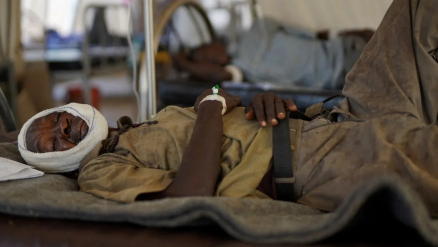
and withdrew our blood. They bring devices with them and have a small ambulance unit in the military vehicles. They were laughing as they withdrew the blood, telling us, ‘You’re a slave, don’t worry, you won’t die, we need this for our soldiers’.” Ahmed, school teacher, told MEE he saw RSF fighters “withdrawing blood from civilians and even military personnel arrested with us. That was brutal….I think they are storing it for their injured fighters.” 450 civilians, including women, old people and children, were detained…3 days. “…Me and my cousins were moving in the city amid intensive fire. We saw people dying, bodies lying on the streets dead or injured, someone begging for us to help them, but we couldn’t.” Ahmed was sad and afraid, “but everybody was fleeing, no one cared about anything other than escaping that hell”. RSF appeared in dozens of vehicles to prevent civilians from escaping. “…we understood this is a genocide.” Ahmed was moved to the house of an RSF commander, where fighters blackmailed him and his cousins… “We agreed to pay $7,000…we asked them to let us go back to get our luggage, but when we got there we found none of the 400 people we left behind there.” When Ahmed asked where these civilians were, he was told not to ask again. “I realised they assassinated them.” Other sources, including local and intl aid workers and organisations monitoring Sudan’s war, confirmed RSF has taken blood from civilians in N Darfur. An aid worker who worked in Darfur many years told MEE he had seen many cases of young people suffering because of blood being withdrawn: “It is one of the most brutal acts of the RSF. They detain those attempting to flee and take their blood. This kidnapping has happened along the road and they suffer from blood withdrawal, they are thirsty, hungry and witnessed atrocities they will not forget.” An intl aid worker…said they had seen cases of blood being withdrawn by RSF fighters in Zamzam Camp for internally displaced people. “We heard incidents were recurring after the fall of el-Fasher….we can’t track the huge numbers of violations that continue to take place.” Middle East Eye