
August 9
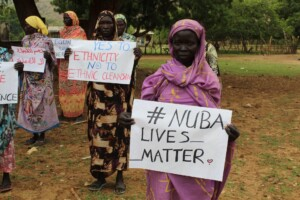
AS THE WORLD MARKS INTERNATIONAL DAY OF WORLD’S INDIGENOUS PEOPLES,…in Sudan 13 million people have been displaced, 8.8 million internally and 4 million sought refuge in neighbouring countries. IOM confirmed 11.3 million internally displaced, 8.6 million uprooted by the conflict, 3.9 million fled. The aim of Intl Day of Indigenous Peoples to empower people and take a hand in their own destiny stands at odds with the realities of Sudan’s indigenous communities. The Masalit, Fur, Zaghawa, Nuba and Beja, long subjected to structural marginalisation, face escalating displacement, loss of heritage and restricted access to basic rights. …many indigenous youth forced into displacement, deprived of education and security or have died whether inside the country, neighbouring states or dangerous journeys across borders in search of safety and opportunity. UNICEF reports 7 million children displaced and 15 million in urgent need of humanitarian assistance, making generations at risk of being lost entirely.
Sudan’s indigenous groups crisis is rooted in decades of structural marginalisation. Colonial land laws, particularly 1970 Unregistered Lands Act, stripped indigenous pastoralist and farming communities especially in Darfur and Nuba Mtns of ancestral lands by declaring all unregistered land state property. Post-independence regimes deepened exclusion through Arab-centric identity policies, dismantling native administrations and marginalising non-Arab populations. 1999, humanitarian expert Roger Winter warned of deliberate cultural liquidation by the Sudanese government in The Nuba People: Confronting Cultural Liquidation….entire Nuba villages destroyed, languages suppressed and communities displaced under the pretext of counterinsurgency or development. During the Al-Bashir dictatorship patterns were weaponised. …armed Arab militias known as Janjaweed launched systematic campaigns of destruction against non-Arab farming communities in Darfur…mass killings, widespread displacement and destruction of entire villages. HRW described the legacy as…entrenched impunity and state-enabled ethnic cleansing.
Sudan’s indigenous communities have endured a long history of state-led exclusion and violence. These continue to shape targeted displacement and cultural erasure unfolding. Sudan’s indigenous communities, particularly the Nuba, have used the Intl Day of World’s Indigenous Peoples to assert their identity, showcase cultural resilience and demand constitutional inclusion. 2014, hundreds gathered…to mark the day with traditional music and calls for justice: “We still suffer from racial discrimination and exclusion,” while another spoke of relatives displaced by war in S Kordofan. A Nuba academic…lamented “We are not included in the banner of the UN…we will work until we are recognised.” Calls were made for representation in national media and state recognition of Sudan’s indigenous populations in constitutional frameworks. Despite intl declarations of support…local communities have yet to see these principles translated into protections or policy. According to the HRW 2024 The Massalit Will Not Come Home RSF and allied militias carried out a campaign of ethnic cleansing in El Geneina, W Darfur, resulting in deaths of thousands and displacement of hundreds of thousands into Chad, predominantly from Masalit ethnic group. HRW documented mass killings, sexual violence, village destruction, targeting of civilians sheltering in health facilities. One survivor described how RSF fighters stormed a medical clinic: “They started shooting at us and killed everyone except me and a woman.” Satellite imagery, mass grave documentation and testimonies confirmed entire neighbourhoods were destroyed or emptied. Radio Dabanga reports the discovery of 30 mass graves in El Geneina and accusations RSF forces razed displacement camps to conceal evidence. HRW Sudan Chapter noted RSF forces and allied militias carried out widespread abuses, including massacres, ethnic targeting, sexual violence, attacks on displacement camps and torture. It warned that state collapse created a power vacuum in which RSF expanded territorial control, particularly in resource-rich areas of Darfur and Kordofan, where atrocities against non-Arab communities were concentrated. 2024, UN experts confirmed Masalit civilians were being killed, raped and expelled, UN Fact-Finding Mission reporting “thousands of civilians have been killed, with many more subjected to rape and other forms of sexual violence, forced displacement and serious human rights violations.” Camps that served as sanctuaries have become battle zones. RSF attacked Zamzam and Abu Shouk camps, displacing 400,000….Malnutrition soared. Sudanese Doctors’ U reported 522,000 child deaths from hunger. In Chad, displaced girls as young as 12 were raped while collecting firewood. Indigenous youth act as agents of change, yet self-determination remains…a struggle for survival. Amid violence and systemic neglect, grassroots efforts persist….In Nuba local educators, artists and activists continued cultural documentation and community teaching under extreme circumstances. Organisations worked to preserve cultural memory and raise awareness about the persecution of Nuba people, especially during years of conflict and state-led marginalisation.
August 8
GOVERNMENT TO RETURN TO KHARTOUM IN OCTOBER, PM SAYS. Sudan’s federal government will return to the capital when the international airport will also reopen to air traffic…. The government and federal institutions have been operating from …Pt Sudan since war erupted in April 2023, forcing their evacuation from the capital. Idris…stated that the country’s reconstruction was a priority and Khartoum required extensive replanning. He described life as returning to parts of the capital, saying Omdurman was now “brighter than Paris” and activity in Bahri was at 80% of normal levels. Khartoum oil refinery…needs $1.2b for rehabilitation. He accused RSF of destroying equipment and looting copper from electrical cables at the facility. RSF has controlled the refinery since the war began, and the strategic facility suffered extensive damage during military operations. Idris said there were significant pressures within state bodies and claimed a “5th column” infiltrated parts of the state. The prime minister described his official visit to Egypt as “successful by all measures,” saying it resulted in agreements on easing visa procedures for Sudanese citizens, accommodations for students and a plan to deport Sudanese nationals held in Egypt on immigration grounds. Egypt offered support for the electrical interconnection between the nations, for which Sudan has a debt of $110 million. Sudan Tribune
AU CONDEMNS RSF PARALLEL GOVERNMENT,…calling it an illegitimate attempt to fragment the country: “There can be no viable or sustainable military solution to the ongoing conflict. We strongly reject the creation of the so-called parallel government by the Sudan Founding Alliance/Tasees, led by the RSF.” AU reiterated its call for “an immediate, permanent and unconditional cessation of hostilities” and full support for “genuine, inter-Sudanese inclusive dialogue towards a negotiated political settlement.”…alarm over “famine and starvation” with specific concern for besieged city El Fasher. It urged RSF to lift the blockade to allow critical humanitarian aid to reach civilians….demanded all humanitarian agencies be granted “rapid, safe and unhindered.” Commending the recent appointment of Dr Idris as civilian PM and amendment of constitutional powers, AU encouraged the intl community to back efforts to restore constitutional order. Sumoud, headed by former PM Hamdok, said such statements constitute a flagrant breach of AU principles, which reject legitimacy of any government formed after the 2021 military coup. Sudanese Congress Party told Al Jazeera the AU chairperson’s statements were “contradictory to the Union’s declared stance” and warned no military solution would resolve Sudan’s deepening crisis. AU sounded a warning to external actors, condemning “all forms of external interference…fuelling the Sudanese conflict.”
August 7
PM IDRIS PLEDGED TO REBUILD KHARTOUM ON VISIT TO CAPITAL, ravaged by more than 2 years of war…. Touring the destroyed airport, bridges and water stations, the premier outlined mass repair projects in anticipation of the return of some of the millions who fled the violence. Tens of thousands are estimated to have been killed in the once-bustling capital which 3.5 million people fled. But reconstruction is expected to be a herculean feat, with…the cost at $700b nationwide, 1/2 in Khartoum alone. The army-aligned government which moved to Pt Sudan has begun to plan the return of ministries even as fighting rages in the country. Authorities have begun operations to properly bury corpses, clear thousands of unexploded ordnances and resume bureaucratic services. On a visit to Sudan’s largest oil refinery, Al-Jaili north of Khartoum, Idris promised “national institutions will come back even better than before.” The refinery, a blackened husk, was recaptured but the facility which once processed 100,000 bbls/day will take years and $1.3b to rebuild. Idris is a career diplomat and former UN official appointed by army chief al-Burhan…. Al Arabiya
RESIDENTS OF EL FASHER…EATING ANIMAL FEED as a catastrophic hunger crisis deepens, UN said calling for unimpeded aid access to the region. A prolonged siege and soaring food prices left thousands in the N Darfur capital facing starvation, OCHA: “The suffering is immense, with people trapped, displaced or returning to ruin.” UN reiterated urgent calls for a pause in fighting to allow aid to reach the city, where no road deliveries have been possible for more than a year. The economic collapse pushed the cost of basic goods to $1,000/household/month, the highest in the nation. The cost of food exceeds $700, 8x the average in other parts of the country. Humanitarian agencies are battling a spreading public health crisis. A sanitation campaign was launched in El Fasher to prevent disease outbreaks in overcrowded displacement sites during the rainy season. Partners are scaling up their response to a cholera outbreak in nearby Tawila, which has absorbed 330,000 people fleeing conflict. The cholera outbreak is also surging in Blue Nile State, where 2,800 cases have been recorded since late June. 14 deaths have been reported there. Sudan Tribune
SUDAN CHARGES 17 LEADERS OF RIVAL TASIS ALLIANCE WITH WAR CRIMES. Public Prosecution…filed new lawsuits against 17 leaders of Tasis alliance, including commander Daglo, accusing them of war crimes and attempting to undermine the state. The alliance…comprises a diverse array of political and armed group leaders who established a parallel government to rival the army-led administration in Pt Sudan. The list of accused individuals includes prominent figures al-Hilu, leader of SPLM-N rebel group, and former Darfur rebel leaders Idris and Hajer. The charges stem from violations against civilians in cities El Fasher in N Darfur, and Kadugli and Dilling in S Kordofan. The lawsuits cite continuous attacks, shelling to displace residents and imposing sieges that led to starvation. A separate charge accuses the alliance of undermining the constitutional order by forming a parallel government. The offences include waging war against the state, crimes against humanity, war crimes and genocide. The prosecution has begun taking statements from witnesses and victims to complete its investigation. The new legal action follows other recent moves against RSF leadership. Sudan Tribune
40+ COLOMBIAN MERCENARIES KILLED AS EMIRATI AIRCRAFT DESTROYED .…SAF claim to have destroyed an aircraft carrying “mercenaries and military equipment destined for the paramilitary RSF” as it landed in S Darfur capital Nyala, under RSF control. SAF say an airstrike targeted the aircraft that had taken off from the Gulf. Colombian mercenaries died in the attack, which destroyed “consignments of weapons and equipment intended for RSF. There have been reports verified by UN experts of Colombian mercenaries, allegedly sponsored by UAE, in Darfur since last year. La Silla Vacía carried reports, pictures and videos of Colombian mercenaries allegedly working for the RSF and ‘training child soldiers in Sudan’….300 former Colombian soldiers arrived in Sudan to reinforce the RSF in 2024….UAE reportedly suspended flights to and from Sudan after the Sudanese Min of Foreign Affairs accused the country of supplying its rival with foreign mercenaries. Dabbing
August 6
SUDANESE AUTHORITIES INDICTED DAGALO/ HEMEDTI, LEADER OF RSF, AND BROTHER ABDEL RAHIM DAGALO IN ABSENTIA on charges including killing Darfur’s governor and genocide linked to mass ethnic violence. This indictment comes as the US declared the RSF committed genocide, citing systematic ethnic killings and sexual violence against groups such as the Masalit. High-ranking sanctions were imposed on Hemedti and his brothers along with several RSF-linked companies. ICC signaled plans to seek arrest warrants for perpetrators of atrocity crimes in W Darfur, noting disturbing parallels with the genocide of the early 2000s. AfricaNews
SUDAN ACCUSED UAE OF SENDING MERCENARIES TO FIGHT ALONGSIDE RSF against the army in the country’s civil war. Sudanese Foreign Min said the government possesses “conclusive evidence” that mercenaries from Colombia and neighbouring African countries were funded and supported by Emirati authorities: “this unprecedented phenomenon poses a serious threat to peace and security in the region and across the continent,” stressing that hundreds of thousands of mercenaries from African countries have been deployed. Middle East Monitor
July 30
…MILLIONS OF CIVILIANS VULNERABLE TO…HUMAN TRAFFICKERS. Sudan stands as a tragedy where protracted war, forced mass displacement and organised crime intersect. “This is a crisis of humanity, of safety and of childhood. The lives and futures of millions of innocent civilians…hang in the balance” UNHCR. Mixed Migration Centre warned “If the conflict drags on…and further fragments, we are likely to see an increase in arbitrary detention for ransom as well as trafficking in persons”. UNHCR 2024 “Death in the Desert” based on interviews with 31,000 refugees and migrants, documented the most commonly reported dangers along migration routes including “kidnapping for ransom, trafficking, extortion, rape, robbery, trafficking, organ removal, detention and expulsion.” 7.67 million internally displaced people in Sudan and 4.7 million refugees…fled to neighbouring Chad, Egypt, Ethiopia and So Sudan. These staggering figures reflect the scale of migration and heightened risk of exploitation, coercion and abuse along irregular and unprotected routes. “The sea was rough and it was a very difficult trip, but we were exhausted by all that we endured in Libya. We had no other choice, either we cross or die,” Bahr el‑Din Yakoub, 25‑year‑old Sudanese refugee who reached Europe via smuggling routes. Women and children in particular bear the brunt of the war and face higher risks than any other group, experiencing forced labour, sexual exploitation and organ removal….especially prevalent along routes through Libya and Egypt. 2025 4Mi INFOGRAPHIC by Migration Centre: “28.9% of Sudanese women interviewed… experienced trafficking or exploitation during their journey.”
2024 US DOS Trafficking in Persons Report: “Sudan does not meet minimum standards for the elimination of trafficking and is not making significant efforts to do so.” Without sustained international attention and intervention, including prosecution of traffickers, protection for displaced populations, cross-border cooperation and investment in survivor-focused health and psychosocial support services, Sudan risks continuing down a path where trafficking will not remain a byproduct of war but one of its most damaging lasting consequences. Human trafficking intensified dramatically since the outbreak of conflict in 2023, African Centre for Justice & Peace Studies: “Human Trafficking in Sudan: Roots, Context & Current Challenges” describes…“a humanitarian crisis and organised crime” driven by “violence, fragile security, poverty, political conflict and social divisions.” Dabanga
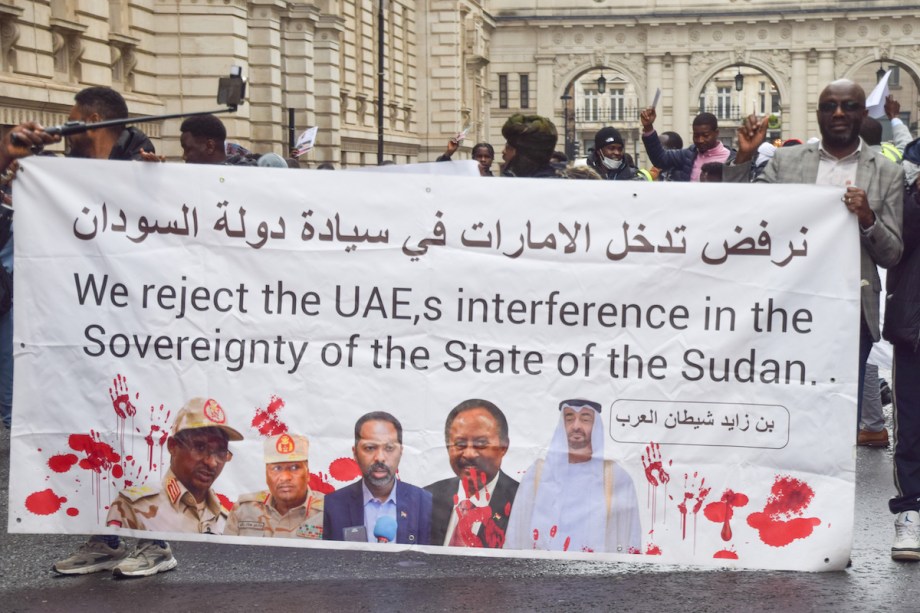
5 REASONS WHY UAE IS FIXATED ON SUDAN. Sudanese army accused Libya’s Haftar of a joint border attack with the RSF. Although this marks the first time direct Libyan involvement…has been alleged, it adds to growing evidence the UAE, Haftar’s main supporter, is involved in the civil war. UAE has been accused of financing and arming RSF….under the guise of humanitarian aid for displaced Sudanese in Chad. … A report by the French Inst for Research in Africa: “Gulf States: A Paradoxical Economic Lifeline for Sudan” highlights how Gulf countries were deeply engaged in Sudan’s economy…under al-Bashir. …in trade, banking, agriculture…thanks to readily available capital.
Sudan’s gold industry has become the lifeblood of its civil war. Nearly all trade is channeled through UAE which enriches the army and paramilitaries. UAE has been the primary buyer of Sudanese gold since 2010s and leading destination for smuggled gold from Sudan. An estimated 90% of Sudan’s gold production, USD $13.4b in illicit trade, is smuggled, passing through transit routes in Chad, Egypt, Ethiopia, Uganda and So Sudan before reaching UAE. Gold became a strategic asset for Sudan in 2011-12….due to loss of 75% of oil reserves following So Sudan’s secession, discovery of significant gold deposits in N Darfur, and rising global gold prices. The government centralized control over gold, and by 2012 it made up 60% of exports. The discovery of gold in Jebel Amer brought wealth and local governance to N Darfur. Tribes waged fierce wars to assert control before the area came under Janjaweed and then RSF. After Bashir’s fall, the transitional government wanted ownership of the mines. When civil war erupted both forces were vying for control of the state and financial resources. RSF captured Sudan Gold Refinery which held 1.6 tonnes of refined gold and unprocessed stock valued at $150.5m….Sudan Min Resources gold production reached 64 tons in 2024.
Since the 70s, Gulf states invested in Sudan’s agricultural sector…to tackle regional food insecurity. The idea of Sudan serving as “breadbasket of the Arab world” fueled… mechanization, formally backed by Gulf nations. As leading agricultural producer in Africa and the Middle East, agriculture continues to be the cornerstone of Sudan’s economy,…Sudan plays a key role in fulfilling UAE’s food demand…UAE imports 90% of its food due to limited arable land and water. UAE developed a global agricultural network covering 1m hectares of farmland….A significant share of this farmland is in Africa, with Sudan attracting a large portion of investment focused on animal feed…crop production and livestock. Emirati companies…were cultivating 50,000 hectares of land in Sudan. …Emirati efforts to secure additional agricultural deals were rejected by the Sudanese government. …they involved disproportionate profits for UAE while offering minimal benefits to local communities. Emiratis preferred to loot the land’s wealth, when they failed to land grab, they began to directly colonize, using the RSF. With a 700k coastline along the Red Sea, Sudan is strategically important for UAE regional ambitions….for control over key ports. Sudanese officials…revealed the government was negotiating a deal with UAE-based logistics giant Dubai Ports World to manage the Container Terminal at Pt Sudan. The proposed agreement faced strong opposition from Sudanese Ports Authority and trade unions, who rejected private operation of such a critical national asset. Al-Monitor reported DP World signed a $5m lobbying contract with Ari Ben-Menashe…former Israeli intelligence operative hired to lobby to secure a 20-year concession.
Before the war, Sudan’s banking sector was underdeveloped as a result of prolonged US sanctions that cut off…the global financial system. 2017 US began easing restrictions, allowing Sudan to reconnect with international banking institutions. 2 decades ago, the government offered state-owned Bank of Khartoum for sale….Sudan’s largest and oldest bank. The government sold 60% to Dubai Islamic Bank….privatized El Nilein Bank, selling 60% to Bahraini Al-Salam Bank and Emirati investors….where Tradive Gen Trading owned by Hemedti’s brother holds an account to facilitate transfers to RSF. Natl Bank of Abu Dhabi is connected to an RSF account recycling gold revenues. Many joint banks in Sudan include Gulf investors, politicians, politically connected elites… Most foreign banks in Sudan are headquartered in Gulf states, primarily Saudi Arabia, UAE and Qatar. 7 foreign banks hold 23% of Sudan’s banking assets…. One could argue UAE’s involvement in the war is to secure its position as a leading provider of financial services in Sudan.
ADF Magazine argued Sudan’s war developed into a proxy conflict between 2 Gulf nations vying to expand influence. On the side of SAF is Saudi Arabia, which built a close relationship with Burhan. UAE aligned itself with RSF. The countries have been allies united by regional interests including hostility toward Iran and opposition to Islamist movements. Economic competition strained their relationship… SA mandates multinational companies establish regional hqs in the Kingdom…. Saudi leaders view the Red Sea vital to economic growth, tourism and safeguard oil exports….SA sought to position itself hosting peace talks to boost its reputation, particularly under bin Salman. Sudan is paying the price for this fractured relationship…. Sudan will remain tragically caught in the crossfire. Black Agenda Report
July 29
SUDANESE RETURN HOME FROM EGYPT TO RECLAIMED AREAS IN KHARTOUM. Hundreds of Sudanese families are returning home, as voluntary repatriation gains momentum amid post-conflict rebuilding efforts. Dozens of Sudanese families gathered at Cairo’s main railway station, carrying bags and belongings as they prepared to return home after fleeing the conflict. They are among thousands of displaced Sudanese making their way back from Egypt to areas recently retaken by the SAF from the RSF in Khartoum and its outskirts since the beginning of the year. The families were waiting to board a train headed for Egyptian city Aswan. From there, they will travel by bus to Sudanese capital Khartoum. 190,000+ Sudanese cross back from Egypt in 2024. Al Mayadeen
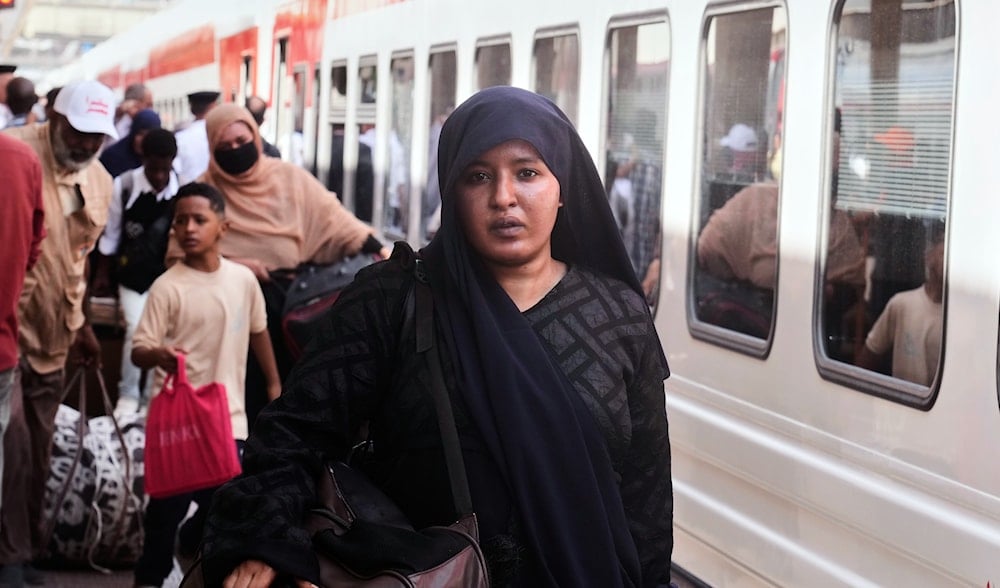
- A Sudanese woman, who was driven from her home and is now returning, prepares to enter her train to Aswan at Cairo’s Ramses railway station, Egypt, Monday, July 21, 2025. (AP)
KABASHI KAFI DID NOT KNOW HIS ESCAPE FROM THE HELL OF WAR AND DEATH IN SUDAN AS A REFUGEE IN UGANDA WOULD END WITH HIS DEATH, when he was attacked by refugees from So Sudan in Kiryandongo camp due to conflict over meagre aid provided by UN organisations The camp housed 30,000 Sudanese refugees. In July, it was subjected to successive knife attacks by So Sudanese refugees….resulted in the death of 1 refugee and injury of 20. Hussein Timan…told New Horizon the camp had been subjected to attacks by the Nuer community. A Nuer leader said…the primary reason for the attacks was “expropriation of land used by Nuer refugees to cultivate and resettlement of Sudanese refugees there, economic hardship after reclassification of those ineligible for WFP support. They feel aggrieved because Sudanese refugees shared public services with them, water, schools and the health centre.” Sudanese refugees fled…and gathered inside a reception centre of UNHCR. …the homes of Sudanese families in Kiryandongo were destroyed, leaving families and children in shock and fear. …refugees fled to Kampala and other cities, awaiting restoration of security in the camp. Sakina, Sudanese refugee living in Kiryandongo camp with her 4 children and 3 grandchildren, recounted her escape: “I came with my children to Uganda in search of safety. I received a residential plot of land, which I built with bricks, and opened a shop as an additional source of income, in addition to aid we receive.” Sakina began to adapt to the new situation and help her children learn and pave their way to a future….recent events paralyzed her plan, leaving her unable to manage: “After the attack, we lost all sense of security. We were unharmed because the attackers did not break into our home, which we closed for 3 days following the attacks.”…her fears did not leave her as her shop remained closed, especially since she found everyone had fled, except her neighbour who remained with her 3 children….she had a vegetable garden planted on land UNHCR had given her. She had come to rely on it for her livelihood, and for its sake she had defied fear and insisted on staying. New Horizon/Sudan Media Forum/Dabanga
July 28
MAJOR POLITICAL PARTIES…CONDEMNED…PARALLEL GOVERNMENT BY ALLIES OF RSF, warning the move threatens to partition the war-torn country. The condemnation followed announcement by Tasies coalition…in RSF-controlled territories. The body named RSF commander to head a 15-member presidential council and appointed PM. “We reject any government, whether it’s a civilian cover for the RSF militia or the army’s government….” Kamal Karrar, Communist Party Central Comm. “RSF was seeking a political cover to strengthen its hand in future negotiations….US is to host talks with Egypt, Saudi Arabia and UAE to explore solutions to the war.” Political figures…warned the move would deepen existing schisms. “The instigators of the war deliberately deepened these threats,” Sudanese Congress Party….the country was witnessing a “race for counter-legitimacy, fueled by internal and external agenda.…” Sudan Tribune
RSF REPEATEDLY CROSSED INTO SO SUDAN, causing panic and displacing residents, gov of Bahr el Ghazal State said….unauthorized movements undermined national security as So Sudan grapples with spillover from the conflict in its northern neighbour: “It undermines our sovereignty, territorial integrity, safety and security of our people.” RSF…entered Bor-Madina with weapons….while Pres Kiir ordered borders to remain open for civilians seeking refuge, armed movements must be controlled by the military. The gov’s remarks echo warnings from Kiir about the growing risk the conflict will spill across the border, threatening regional stability. Sudan Tribune
ESCALATING FOOD CRISIS DISPROPORTIONATELY IMPACTING WOMEN, with female-headed households 3x more likely to be food insecure than those led by men….“Gender Snapshot” Gender in Humanitarian Action Working Group Sudan…details a severe and worsening food crisis for women. ¾ of female-headed households are food insecure, a figure that rose from 64% in 2024. Severe hunger nearly doubled within a year….45% of female-headed households report poor food consumption, almost double male-headed households….conflict, displacement and collapsing markets pushed millions into acute food insecurity, with women-led organizations at the forefront of the response, operating community food kitchens. However, these groups are “systematically underfunded” forcing some to reduce services. 1 organization operating 60 food kitchens had to shut down 35 kitchens because funds dried up. The report calls for humanitarian action to prioritize… assistance to the most at-risk groups, including female-headed households, pregnant and breastfeeding women and adolescent girls. It strongly recommends flexible direct funding to women-led organizations providing essential food aid on the frontlines. The report advocates for meaningful inclusion of local women’s groups in the design, planning and coordination of food assistance programs to ensure aid is effective and reaches those most in need. Sudan Tribune
RAPIDLY SPREADING CHOLERA IN DARFUR, part of an escalating humanitarian crisis….4 hunger-related deaths in Abu Shouk Camp for displaced people…amid acute shortages of food and medicine. At the same time, a severe cholera outbreak is taking hold. UN recorded 1,500 suspected cases in Tawila since June, with 500 people receiving treatment. SLM declared its areas “humanitarian disaster zones,” reporting confirmed cholera cases in camps in Tawila and Golo, Central Darfur….the outbreak began July 21 and spread quickly due to overcrowding and lack of medical care. UN is making an urgent appeal for $120m to contain the outbreak and provide life-saving support for the next 3 months. Soaring food prices compound the crisis in El Fasher, where the cost of a basic food basket was 6x the national average. Sugar prices surged by 960% and sorghum by 160%, OCHA. The reports come as Global Hunger Index, Integrated Food Security Phase Classification officially declared famine conditions in parts of N Darfur. UN warned the situation is likely to worsen during July-Oct lean season, particularly in areas of conflict. Despite the challenges, aid agencies distributed essential supplies to 2,000 newly-displaced families in N Darfur last week. 60% of displaced families…still lack adequate shelter. Sudan Tribune
July 27
FAMILIES OF PEOPLE DETAINED…CALLED AU TO BROKER PRISONER EXCHANGE….Both sides have detained thousands, held incommunicado in poor conditions. The families urged the body “take a leading role in facilitating a neutral internationally monitored initiative” for a prisoner swap: “The families are concerned for the safety of their detained relatives in the absence of confirmed information about their conditions.” The appeal highlighted reports of dozens of civilian and military prisoners dying in RSF-run detention centres from torture and lack of food and medical care, particularly when the group controlled large parts of Khartoum. The families urge warring parties to disclose lists of detainees, allow communication with relatives and protect vulnerable prisoners such as women, children and the disabled. …RSF transferred thousands of prisoners to W Darfur. It said many are now held in prisons in Nyala. Sudan Tribune
July 15
RSF COMMITS HORRIFIC MASSACRE IN N CORDOVAN. 11 people, including 3 children, have been killed in a heinous crime committed by forces affiliated with RSF in Shag al-Noom, Sudanese Doctors Network reported. The network described the killing as the worst brutal attack violating humane norms and international charters. RSF first launched an attack on the area with the aim of looting but they were forced to withdraw under resistance from residents. The forces returned armed with heavier weapons….The number of victims is likely much higher with some residents putting the figures of dead and wounded at 300 civilians as RSF chased people escaping…. Al Jazeera
July 7
CORRUPTION OBLITERATES HUMANITARIAN AID DISTRIBUTION IN KHARTOUM STATE. According to WFP, which provided relief for 10m Sudanese…, the individual quota includes 7,140g of flour, 450 milliliters of oil, 1,020g of lentils and 150g of salt. The experiment covers 40,000 individuals, seen as a model of transparency. But later the government’s Humanitarian & Voluntary Work Comm intervened, directing Sudanese Development Call to dismiss most employees for affiliation to Emergency Rms or lack of loyalty to the Pt Sudan government, a clear violation of independence of humanitarian work. The Comm overstepped its legal role, limited to supervision and interfered in implementation. The task of distributing humanitarian aid was entrusted to local authorities, mobilization committees and popular Resistance Comms. This was accompanied by intimidation and harassment of citizens. Beneficiaries reported numerous irregularities, including closure of distribution centers ….manipulation of distribution cards with some distributed to organizers’ families and friends, and some families holding more than 1 card, contrary to the system that allows each family a single card. …theft and exclusion of eligible beneficiaries (widows, divorced women, elderly, orphans and disabled individuals). Instead aid was given to individuals who arrived in luxury cars. Al Jazeera
July 2
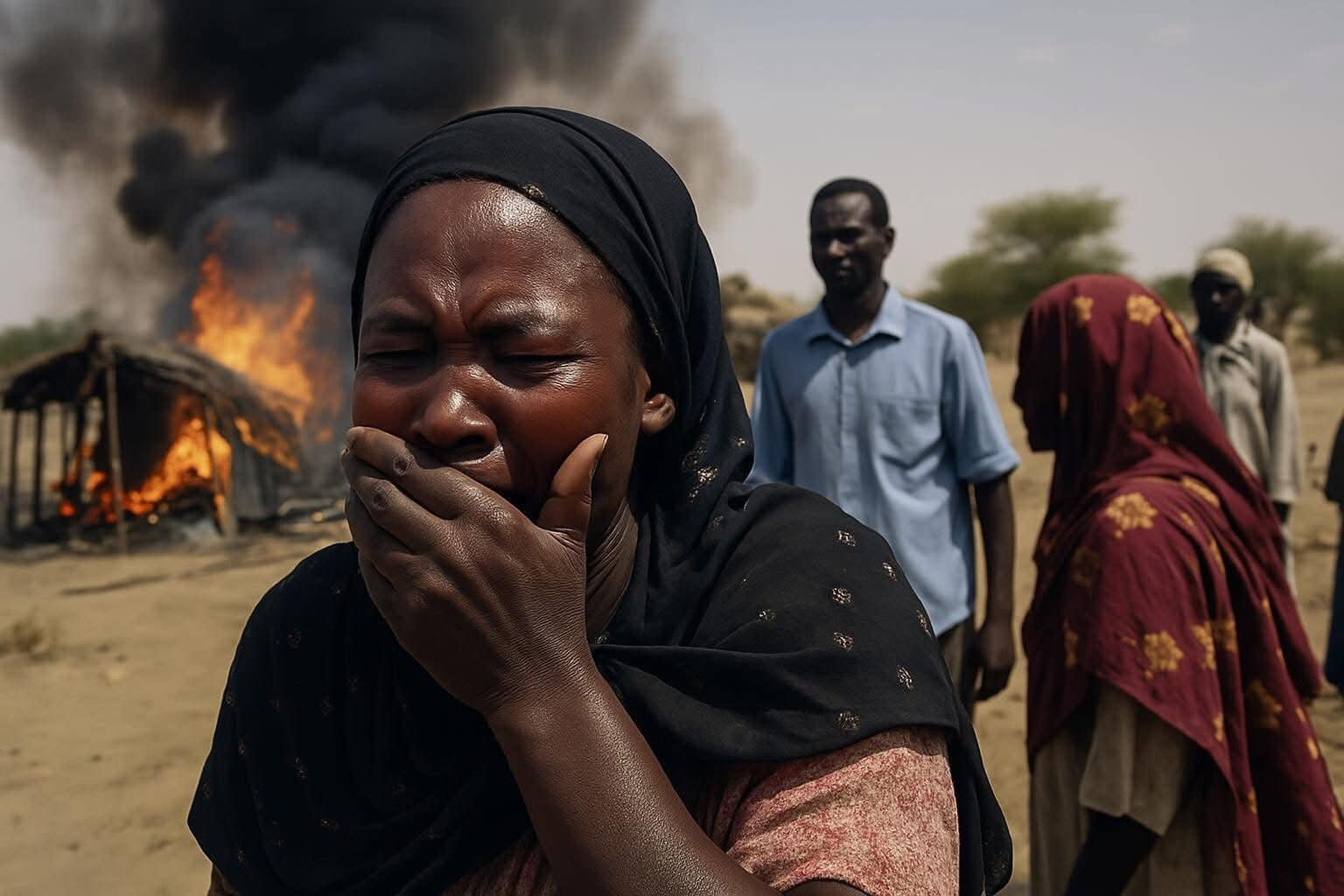
“STRANGE FACES LAW”…ENACTED BY DE FACTO GOVERNMENT UNDER SAF. The law’s premise was that individuals whose facial features appeared unfamiliar or “strange” would be subjected to scrutiny and filtered out for further investigations. … to detain large numbers of people primarily from west Sudan and areas with a high concentration of non-Arab ethnic groups (in contrast to those considered Arab from north riverine Sudan). In a country with 500 ethnic groups and immense diversity, facial features became a tool for the law’s discriminatory and divisive nature. This racialized logic, embedded in the military’s governance, signals the deeper failure of Sudan’s post-revolutionary promise of leadership, imagination and political structure. Since the army’s advancements, regained territories witnessed summary executions and arbitrary detentions targeting the same ethnicities….under pretexts such as collaboration. A massive wave of evictions for decades-old informal settlements has been taking place in the capital, primarily inhabited by targeted ethnic groups….justified by claims of involvement in criminal activities driven by collapse of the state, loss of income sources and erosion of basic means for survival. These arbitrary and discriminatory acts have garnered significant popular support, even from former revolutionary actors.
Over 2 years, normalization of violence and othering has been perpetuated not only by historically right-wing, racist and extremist factions of Sudanese politics, but by supposedly progressive intellectuals and revolutionary groups and individuals. Nationalist sentiments backing the army quickly metamorphosed into a narrow ethno-regionalism championed by the hegemonic north riverine minority. This marginalized all those outside these ethno-regional lines, including Darfuri people—who endured immense suffering at the hands of the militia. Citing the militia and foreign allies (primarily UAE) as existential threats to the Sudanese nation-state has been overstated. The reality is that the conflict is fundamentally a power struggle between 2 armed factions intent on obstructing the revolutionary path to secure control over the country’s resources, chiefly gold. The extraction of gold intensified under both sides, with direct and indirect support from UAE.
The conflict emerges in the aftermath of what was celebrated as a triumphant moment of the December revolution, toppling 30-year dictatorship of al-Bashir and his Islamist regime notorious for atrocities against darker-skinned populations of So Sudanese and Darfuris. The resurgence of human rights violations is deeply shocking, raising questions about how this could happen after 5 glorious years of struggle for freedom, peace and justice. The answer…can be found in part in the powerful insights of visionary Sudanese thinker Abdulla Bola….such violations against significant portions of the population were historically legitimized through a hierarchical framework: “the basic structures of human rights violations…mental, conceptual, social, cultural, psychological and political structures existed in our society before Islamists seized power. These served as bases of support, reservoirs and shelters for aggressive energy and fostered psychological conditions conducive to human rights violations.” Bola’s argument reframes state violence not as an aberration…but as a deep continuity the revolution failed to rupture and unwittingly reinforced. The targeting of “strange faces,” popular support for the army’s purges and exclusionary rhetoric of post-revolution elites are not betrayals of the revolutionary moment but expressions of structures left intact. Discrimination along religious, ethnic and regional lines shaped Sudan’s history, leading to the secession of So Sudan and genocide in Darfur. This evolved targeting those associated with the militia’s social constituency, nomadic Arab tribes across west Sudan and interpenetrating borders that stretch through the Sahel up to Niger….These entrenched lines of division and othering, reinforced by decades of slavery and colonial divide-and-rule long defined the sources of cultural, political and economic hegemony in modern Sudan….the absence of ideological clarity and structural vision allowed a historical elite to regroup and reclaim power, even as revolutionary energies persisted on the street. The movement’s most radical forms of collective action, grounded in horizontality and local rootedness, gradually ran up against the limits of spontaneity and structural ambiguity. These are the same pitfalls that confronted other uprisings across the region and the world—yet in Sudan, they played out with particular intensity and consequence. (For his complete paper, see Razaz H. Basheir, Africa Is A Country)
June 28
US ACCUSED PARTIES TO THE CONFLICT OF DENIAL OF HUMANITARIAN ASSISTANCE AS A TACTIC OF WAR….“SAF, RSF and other armed actors continue to impede humanitarian access, causing famine, immense loss of life and wasted resources” acting Rep to UN Dorothy Shea before the Sec Council. Shea stressed the conflict continues to be the world’s largest humanitarian crisis completely man-made. US proposes 3 actions…the need to remove bureaucratic impediments that delay… supplies and personnel. …open all border crossings into Sudan before humanitarian purposes. …visas and permits issued for humanitarian workers…within 1 week of application: “We will consider the readiness of parties to facilitate humanitarian access and enable humanitarian delivery when making decisions about funding, programming and partnerships on broader initiatives.” Al Jazeera
US SANCTIONS SUDAN’S GOVERNMENT…USE BY KHARTOUM’S MILITARY OF CHEMICAL WEAPONS LAST YEAR. The sanctions which include restrictions on US exports, arms sales and financing to the government are to remain in place for at least 1 year. Assistance to Sudan will be terminated “except for urgent humanitarian assistance and food or agricultural commodities or products.”…certain measures will be partially waived because “it is essential to national security interests of the US. US calls on Sudan to cease all chemical weapons use and uphold its obligations” under the Chemical Weapons Conv signed by nearly all countries that prohibits their use….NYT reported Sudan’s military used chemical weapons on at least 2 occasions in remote areas….the weapon appeared to be chlorine gas, which can cause severe respiratory pain and death. The New Arab
April 15
SUDAN’S COUNTERREVOLUTIONARY WAR: SYSTEMATIC TARGETING OF PRO-DEMOCRACY ACTIVISTS. The war…is not only a power struggle between military factions, but also an attempt at silencing those who dare envision a different future for Sudan rooted in democracy and justice. 2 years into the devastating war SAF regained control of Khartoum. SAF’s victory carries significant symbolic and strategic implications, given its status as epicenter of the power struggle….this war has proven to be more than a power struggle between SAF and RSF….The pattern of relentless and systematic attacks on civilian groups, particularly pro-democracy actors, by both SAF and RSF has shown both factions share a vested interest in suppressing Sudan’s democratic movement.
As SAF consolidated control over Khartoum 2 years after the war started, a familiar paradox unfolded. Sudanese citizens celebrated, relieved to end 2 years of terror and suffering under RSF control. On the other hand, pro-democracy activists and grassroots organizers found themselves under renewed attacks, this time from SAF-aligned militias. This duality of liberation and repression is not an isolated phenomenon but part of a broader pattern….Whenever one warring faction gains control of an area, it allows opponent troops to withdraw peacefully, only to unleash retaliatory violence against civilians. While motives may differ, civilians have consistently borne the brunt of violence…. Notably, the attacks on civilians have mostly focused on pro-democracy activists, particularly members of Resistance Comms and ERRs. Resistance Comms are Sudan’s prominent pro-democracy grassroots movement. They spearheaded the revolution which toppled Bashir’s authoritarian regime in 2019 and continued to play key roles. They were pivotal in resisting the military coup orchestrated by SAF and RSF in 2021. They grew to become influential actors in Sudan’s political sphere, embodying democratic ideals through their decentralized structure and community-based activism. When the war erupted, Resistance Comms shifted focus toward humanitarian efforts by establishing ERRs. These grassroots initiatives, nominated for the Nobel Peace Prize last year, have been providing food, water, emergency medical care and evacuations for thousands of families trapped in conflict zones. Resistance Comms and by extension ERRs remain deeply committed to the belief that sustainable peace in Sudan cannot be achieved without pursuing democratic governance. Throughout the conflict, pro-democracy activists were targeted. RSF’s attacks are more indiscriminate and affect broader populations, and employs widespread terror tactics to suppress any resistance. RSF killed, injured and unlawfully detained scores of civilians and raped women and girls across the country. In W Darfur, they committed a documented genocide. They perceive pro-democracy activists, particularly Resistance Comms and ERRs, a direct threat to their ability to govern. Numerous documented instances of RSF detaining activists in secret centers where they were subjected to brutal torture and executions.
SAF and allied militias also repeatedly targeted pro-democracy activists, but under vague accusations of being RSF collaborators…. In areas SAF recaptures, lists of alleged RSF collaborators often dominated by names of pro-democracy activists circulate widely, serving as justification for summary executions and extrajudicial killings. …part of a broader campaign to eliminate pro-democracy actors. The narrative of collaboration is weaponized not only to justify killings but to mobilize public support for such atrocities. The pattern was documented in Gezira, Sinnar, Khartoum and other areas. The systematic and persistent targeting of pro-democracy actors is a defining feature of Sudan’s war, exposing its deeper nature as a counterrevolution against democratic aspirations. This counterrevolutionary war aims to dismantle Sudan’s democratic movement, crack down on civic spaces, eliminate civilian-led governance. SAF and RSF share an interest in suppressing pro-democracy actors and movements that challenge their authority. This explains why civilians are consistently targeted whenever frontlines shift. As fighting subsides, attacks against civilians spike either as punishment for alleged collaborators or elimination of potential opposition.
Islamists, loyalists of Bashir’s regime, are the most ardent supporters of this counterrevolutionary agenda. Islamist leaders openly declared their intent to punish pro-democracy activists for their role in ousting Bashir during the 2019 revolution. To them, the war is not just about defeating RSF but eradicating remnants of Sudan’s revolutionary movement. The influence of Islamists is most noticeable through their alliance with SAF. This partnership emboldened SAF to reintroduce tools of oppression reminiscent of Bashir’s regime. A key player is Al-Bara’ Ibn Malik Brigade responsible for leading assaults on pro-democracy actors. The alliance between SAF and Islamists debunks claims suggesting SAF can be a pro-democracy ally. While some pro-democracy activists aligned with SAF to counter the existential threat posed by RSF, this is arguably tactical and temporary. It may not necessarily reflect ideological support for SAF or its Islamist backers. Many pro-democracy activists siding with SAF made it clear that once the war ends, they will resume their pro-democracy role that will likely expose them to further targeting by SAF and Islamist factions.
Given the counterrevolutionary nature of this war, a military victory cannot guarantee peace; it would only entrench autocratic rule at an unimaginable cost to life and freedom….pursuing peace processes is still a paramount priority. Such efforts must center pro-democracy civilian actors rather than legitimize warlords or military leaders. It should address the counterrevolutionary aspects of the war by ensuring the democratic agenda is included and pro-democracy actors, in particular grassroots groups, are engaged. The recent events in Khartoum are a stark reminder that neither of the warring factions prioritizes civilian protection or democratic governance. It reconfirms their mutual goal to crush Sudan’s democratic movement once and for all. Any military victory will only entrench authoritarian rule, annihilating the legacy of Sudan’s revolution and advocates. Only a political solution that centers on civilians can end this war while protecting Sudan’s democratic future. Pro-democracy activists are bearing the brunt of this war; they have shown remarkable resilience in providing humanitarian assistance amid grave dangers, while being a prime target for SAF and RSF. Yet, they must not be viewed merely as casualties but as indispensable architects of any viable post-war governance structure. Tahrir